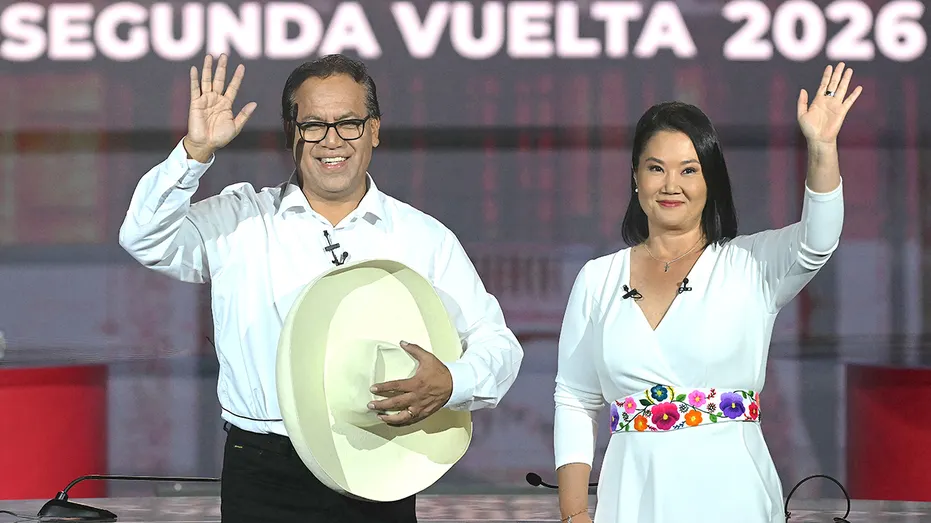
SouthernWorldwide.com – Peru is on the cusp of a pivotal presidential runoff election scheduled for June 7, a vote that holds significant implications not only for the nation’s trajectory but also for the geopolitical balance across Latin America.
The election pits two distinct candidates against each other, each vying to become Peru’s ninth president in a tumultuous decade. Keiko Fujimori, a conservative candidate, is championing a platform centered on law and order, free-market principles, and strengthened ties with the United States. Her opponent, Roberto Sánchez, represents a leftist movement, which many perceive as a continuation of the regional ideological currents that have often challenged U.S. interests.
This electoral contest is viewed as a stark choice between two contrasting futures for Peru. One path, represented by Fujimori, suggests a return to more open and competitive economic and security policies, fostering closer collaboration with the U.S. The other, embodied by Sánchez, signifies a potential second attempt at left-wing governance, mirroring the broader ideological divisions present throughout South America.
The election unfolds against a backdrop of persistent political instability in Peru. The country has grappled with a rapid succession of presidents over the past ten years, and a deep chasm continues to divide its urban and rural populations.
The outcome of Sunday’s election is anticipated to be exceptionally close, with the final results potentially taking several days to be confirmed, according to reports from the Associated Press.
For Washington, Peru’s election transcends a domestic political event; it serves as another critical test for the evolving political landscape of Latin America. In recent years, a discernible trend toward center-right or conservative governments has emerged in several regional nations, including Argentina under Javier Milei and Ecuador under Daniel Noboa, administrations generally more aligned with U.S. interests.
A victory for Keiko Fujimori would solidify this trend, potentially aligning Peru with a growing bloc of nations that favor robust crime-fighting strategies, enhanced partnerships with the United States, and market-driven economic policies.
Fujimori herself has articulated a vision for Peru, stating, “We want to seize this opportunity by generating greater stability, legal certainty, and confidence for investment. Peru must always be a country open to the world, committed to freedom, free competition, and the free market. Our goal is to lay the groundwork so that investors from the United States and around the world find in Peru a reliable, stable, and attractive country in which to invest, produce, and create jobs.”
Analysts suggest that a Fujimori presidency would likely foster a positive relationship with the United States. She is described as a pragmatic leader who upholds the constitutional framework and the rule of law, further bolstered by her academic work at Florida International University (FIU), which has established ties with the U.S.
Conversely, a Roberto Sánchez administration could introduce friction into U.S.-Peru relations. During his campaign and in presidential debates, Sánchez has been critical of Peru’s acquisition of F-16 jets from the U.S., suggesting that such funds could be better allocated to healthcare or education. Concerns have also been raised regarding his alleged ties to illegal mining and accusations of drug trafficking, factors that could strain diplomatic ties with Washington.
Peru’s strategic importance is underscored by its position as a focal point of competition between the United States and China in Latin America. The country possesses substantial copper reserves and is a significant gold producer, making it a key area of interest for both global powers. China has been actively promoting large-scale investment projects, including an already operational mega-port. In response, the U.S. has proposed renovating Peruvian naval bases and investing in similar port infrastructure initiatives.
A win for Fujimori would likely be interpreted in Washington as a continuation of the recent shift towards center-right governance observed in parts of Latin America. Fujimori’s campaign has emphasized restoring public safety, stimulating economic growth, and preserving Peru’s market-oriented economic model. Her proponents believe these policies will attract greater foreign investment and strengthen bilateral cooperation on security and economic matters.
A victory for Sánchez, however, presents a different outlook. While he has recently softened some aspects of his platform, including a stated commitment to private property, free trade agreements, and macroeconomic stability, questions persist about his administration’s approach to U.S. relations and its alignment with regional leftist movements.
Ultimately, the choice of Peru’s next president will play a crucial role in determining whether this significant South American nation moves closer to Washington’s orbit or pursues a more leftward political direction.
Voting is a mandatory civic duty in Peru for citizens between the ages of 18 and 70, with over 27 million individuals registered to cast their ballots, as reported by the Associated Press.