SouthernWorldwide.com – The term “words taken down” might not resonate much outside of Capitol Hill, but within the House of Representatives, it signifies a significant disruption.
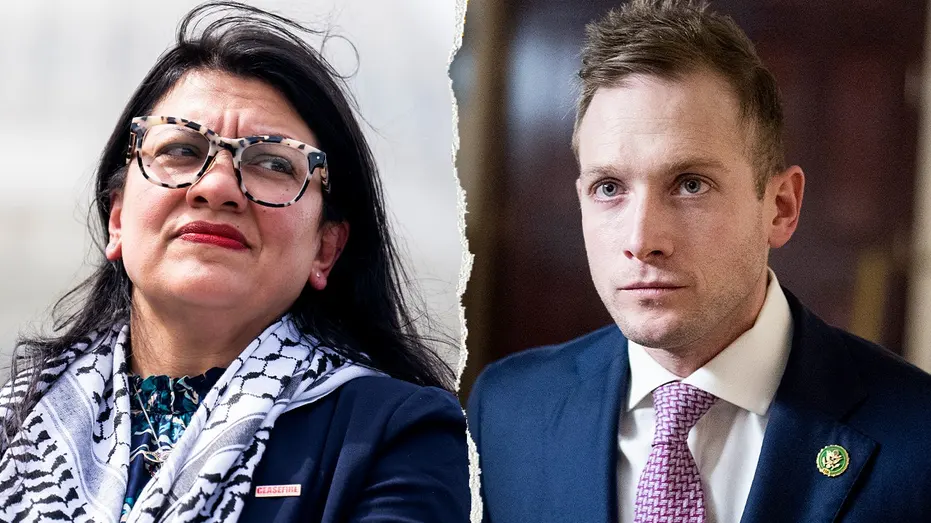
Recently, the House experienced such a disruption during a debate on a war powers resolution concerning Lebanon. Representative Rashida Tlaib, a Democrat from Michigan, introduced the measure with the aim of limiting President Donald Trump’s military actions in Iran, particularly as other regions in the Middle East showed signs of escalating conflict.
Tlaib, a Palestinian-American and one of only two Muslim women in Congress, is known for her outspoken stance against Israel and is often considered one of the more controversial members of the House.
“We must end U.S. participation in the Israeli apartheid regime’s invasion of Lebanon. The Israeli military continues to target journalists like Amal Khalil and use our tax dollars to commit war crimes,” Tlaib stated during the proceedings.
However, the floor debate quickly devolved into a heated exchange when Representative Max Miller, a Republican from Ohio, directly challenged Tlaib. Miller, who is Jewish, made personal attacks and referenced Hezbollah, accusing Tlaib of advocating for terrorists and a terrorist regime.
“Its members are butchers that you like to hang out with to a certain extent,” Miller charged. “Yes, you advocate for terrorists on a daily basis. You advocate for a terrorist regime every single day.”
Tlaib responded vocally from across the chamber, though her exact words were not discernible as she was not using a microphone. Miller then taunted her, saying, “Oh, I’m sorry. Are we getting a little emotional?” This remark further incensed Tlaib, who shouted back at Miller with increased volume.
Presiding over the debate, Representative Jay Obernolte, a Republican from California, intervened due to the escalating verbal conflict. He called for a respectful and deliberate debate, asking if Tlaib intended to make a motion.
Tlaib, having reached a microphone, responded, “Yes, Mr. Speaker, I am. That is a direct attack on my character. I please request to strike the words down.” This formal request initiated the “words taken down” procedure.
Although Tlaib’s phrasing of the parliamentary request might have been slightly imprecise, her motion effectively halted all business before the House, including the debate on the war powers resolution. Obernolte instructed Miller to be seated, and the ensuing process temporarily suspended all legislative activities.
The motion to “strike the words down” is parliamentary equivalent of a formal complaint. While it doesn’t guarantee a penalty, it triggers an investigation into whether the spoken words violated House rules.
During this period of stasis, no other business could be conducted on the House floor. Speeches, amendments, and votes were all put on hold until the validity of the spoken words was determined.
The practice of “words taken down” involves the House’s official staff and stenographers meticulously documenting language uttered by a member that may contravene House rules. These rules prohibit members from making personal attacks on their colleagues, questioning their motives, or engaging in personal disparagement.
Tlaib clearly believed that Miller had violated these rules with his comments about her “hanging out” with and “advocating for terrorists,” as well as his remark about her “getting emotional.”
If the alleged violation is evident, leadership or staff might ask the offending lawmaker to retract their statement and apologize. If the member refuses, the House must rule them out of order. The offending speech is then expunged from the record, and the member is barred from speaking on the floor for the remainder of the day.
Should the presiding officer rule that the member violated the rules, an appeal of that ruling is possible. This would require a roll-call vote where the entire House decides whether their colleague broke the rules. Alternatively, another member could move to “table the appeal,” effectively voting to set aside the appeal, thus avoiding a direct vote on the original appeal.
After an hour of delay, it became apparent that Miller was unwilling to apologize or retract his statements. Obernolte then ruled that Miller’s words, which included allegations of Tlaib being a “butcher” and affiliated with a terrorist organization, impugned her patriotism and loyalty. These remarks were deemed to be personal and out of order.
“The words of the gentleman from Ohio contain an allegation that the gentlewoman from Michigan is a ‘butcher’ and affiliated with a terrorist organization,” Obernolte stated. “Such remarks impugn the patriotism and loyalty of the member of the House.” He concluded that the “remarks contain personalities and are not in order. Without objection, the offending words are stricken from the record.”
Consequently, the House sanctioned Miller for violating decorum rules and suspended him from speaking on the floor for the rest of the day.
Representative Brian Mast, Chairman of the House Foreign Affairs Committee, managed the Lebanon war powers debate for the Republican party. With Miller muted, Mast conveyed his colleague’s message: “‘Yes, I said it. I own it. And I stand by it.'”
Mast then attempted to submit articles into the record, including one titled ‘Rashida Talib, member of secret Facebook Group where Hamas Terrorists glorified,’ and a transcript concerning Tlaib’s alleged comments about genocide. Tlaib objected to both submissions.
The author recalls a similar parliamentary confrontation in 1994 involving Representative Maxine Waters and then-Representative Pete King. In that instance, the House ruled Waters out of order, and then-Speaker Tom Foley personally handled the disciplinary action.
The day following the Tlaib-Miller incident, Obernolte announced a bipartisan framework for establishing guardrails for Artificial Intelligence. When asked how an AI chatbot might handle such a dispute, Obernolte suggested that AI is adept at applying rules to specific situations. He believed an AI would have made the same correct ruling in the Tlaib-Miller case, identifying the engagement in personalities as a violation.
Considering that in the past, the Speaker of the House would personally intervene in such disputes, the question arises whether AI could ever be entrusted with such refereeing duties in the House of Representatives. The prospect of AI arbitrating parliamentary proceedings, especially concerning potentially controversial remarks, raises intriguing possibilities for future legislative conduct.