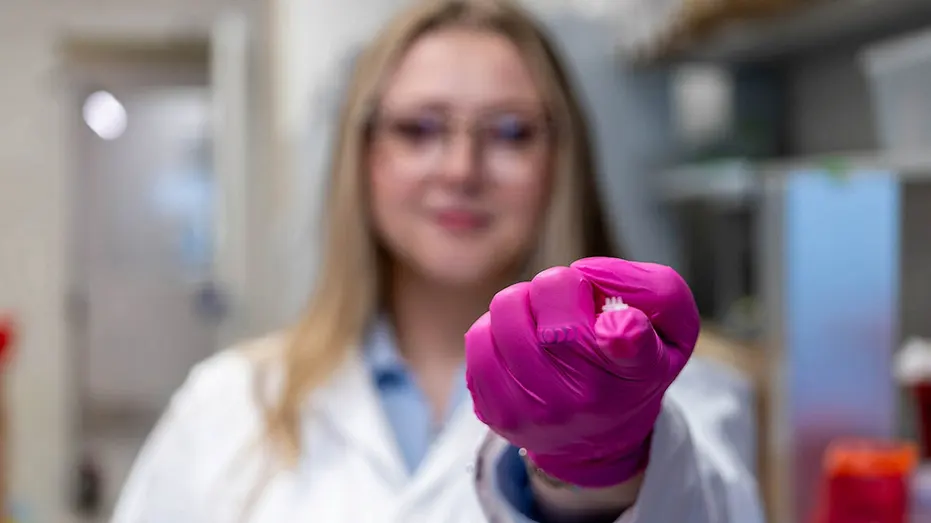
SouthernWorldwide.com – A groundbreaking “living bandage” is poised to transform the treatment of severe injuries by significantly accelerating the healing process, according to recent research. This innovative patch, developed by scientists at Rice University in Texas, functions as a miniature, continuous factory, delivering therapeutic proteins directly to various types of wounds.
Treating chronic wounds presents a considerable challenge for medical professionals. This is largely due to the difficulty in providing consistent, localized signals that prompt the body to initiate tissue repair. The body naturally utilizes small chemical messengers called cytokines to manage inflammation and healing.
However, conventional treatments such as ointments and injections often fall short. This is because delicate proteins can degrade too rapidly or be washed away from the wound site before they can exert their beneficial effects.
To overcome these limitations, the research team engineered a cell-based patch designed to be applied directly to the wound. Within this device, specially programmed cells are tasked with manufacturing and releasing three specific healing cytokines: IL-10, IL-12, and Transforming Growth Factor-beta.
These engineered cells are securely housed within a protective material. This material acts as a barrier, allowing essential nutrients and therapeutic proteins to reach the skin while simultaneously preventing the body’s immune system from attacking the cells within the patch.
The system also incorporates a unique hydrogel that facilitates the seamless integration of the patch with the wound bed. Researchers have indicated that future iterations of this technology may include electronic components for enhanced functionality.
Pre-clinical trials conducted on rodents and pigs demonstrated the patch’s efficacy in accelerating wound healing. Analysis of the cells’ genetic material confirmed that the treatment successfully activated the necessary biological pathways for tissue regeneration.
Professor Omid Veiseh, faculty director of the Rice Biotech Launch Pad and leader of the laboratory development, highlighted the promising results from the animal studies. He stated that the findings underscore the potential of continuous, localized cytokine delivery to support critical biological processes involved in tissue repair.
Veiseh further explained that by maintaining a steady presence of these signaling molecules at the wound site, the body’s natural healing mechanisms can be more effectively engaged. Genetic analysis revealed a coordinated increase in genes associated with tissue regeneration and immune modulation, providing a scientific basis for the observed functional improvements.
A key advantage of this platform is its inherent customizability. The engineered cells can be readily modified to produce different combinations of proteins and growth factors, allowing for tailored treatments based on individual patient needs.
Study co-author Christian Schreib, Ph.D., emphasized that the ability to precisely control both the type and timing of cytokine delivery offers a pathway to more refined management of the healing process. Future research will focus on enhancing the platform’s versatility, potentially incorporating methods like optogenetics to regulate cytokine secretion in real-time using light.
It is important to note that this technology is still in its nascent stages and has not yet undergone testing in human subjects. Extensive further research is required to determine its potential applications and safety in human patients.
The comprehensive findings of this study have been published in the esteemed journal Nature Biomedical Engineering.