SouthernWorldwide.com – Scrutiny is intensifying over the financial safeguards for the Obama Presidential Center, with subcontractors reportedly owed millions and concerns mounting that taxpayers might ultimately bear the cost if the project faces financial difficulties. The foundation behind the center has yet to fully establish a promised $470 million safety net designed to prevent a public bailout.
As part of its agreement with the city, the Obama Foundation committed to creating this fund, known as an endowment. This was a condition of its 99-year lease for a 19.3-acre section of Jackson Park, which was publicly owned and acquired for a nominal $10 payment.
Disputes over payments to contractors have resurfaced, reigniting worries about the endowment. Critics argue the fund was specifically intended as a fallback should the project encounter financial distress. However, the Obama Foundation maintains that taxpayers are not at risk, asserting that the project is financed through private donations.
Reports of ongoing payment disputes with contractors and subcontractors exacerbate concerns about the largely unfunded reserve. This situation suggests a potential for significant financial burden to fall on the public if the project falters.
Richard Epstein, a law professor at New York University who has legally challenged the project, highlighted that the reserve fund was meant to mitigate precisely this kind of uncertainty. He explained that if the endowment remains underfunded, the building could fall into disrepair, posing safety risks and leaving no one to cover the costs.
The city, therefore, might be compelled to assume additional responsibilities to maintain the facility. Epstein’s concerns are amplified by the allegations that contractors are still awaiting payment, underscoring the need for thorough investigation into these claims.
These subcontractor disputes raise significant questions about the center’s long-term financial viability. An endowment is designed to provide a continuous income stream, essential for covering future operational expenses and absorbing financial shocks. Typically, endowments are invested, with a portion of the earnings used to support the institution over time.
The Obama Foundation has stated that the Obama Presidential Center is “fully funded” and intends to make “substantial investments” into the endowment in the upcoming years. They emphasized that the project is supported by generous private contributions as it approaches its grand opening celebrations.
The $470 million figure for the endowment was publicly discussed and subsequently mentioned in the Obama Foundation’s 2020 annual report. A fundraising chart within the report indicated that “$470M of our fundraising goal will go toward seeding an endowment that will sustain Obama Foundation activities and the operations of the OPC for generations to come.”
The foundation had previously projected that annual operating costs could reach approximately $40 million. Nonprofit endowments are generally structured to disburse a small percentage of the fund annually, often between 4% and 5%, while the principal remains invested. This strategy aims to generate investment income to support operations in the long run without sole reliance on future fundraising efforts.
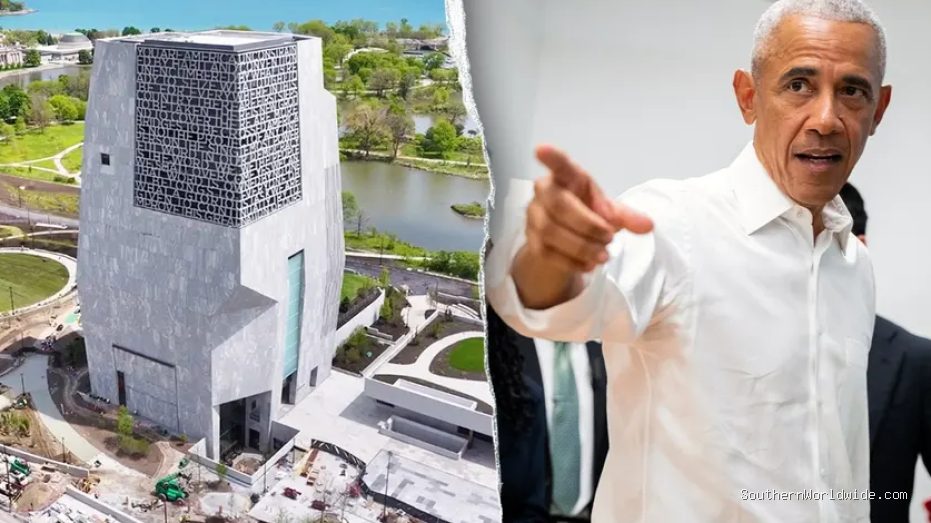
The Obama Presidential Center itself encompasses a museum tower, a digital library, athletic facilities, conference spaces, and offices for the Obama Foundation. The foundation is responsible for its construction and will manage its day-to-day operations moving forward.
Epstein, however, contested the foundation’s perspective. He argued that an endowment’s purpose is to provide substantial financial security, and a future fundraising commitment does not equate to a fully established endowment. He suggested that under the foundation’s interpretation, a minimal contribution could be seen as fulfilling the obligation, which he believes is insufficient.
He stressed the necessity of a significant capital reserve to support ongoing processes and ensure resilience against market fluctuations. The current situation, with alleged unpaid subcontractors and an underfunded endowment, raises serious questions about the project’s financial stability and the potential implications for public funds.