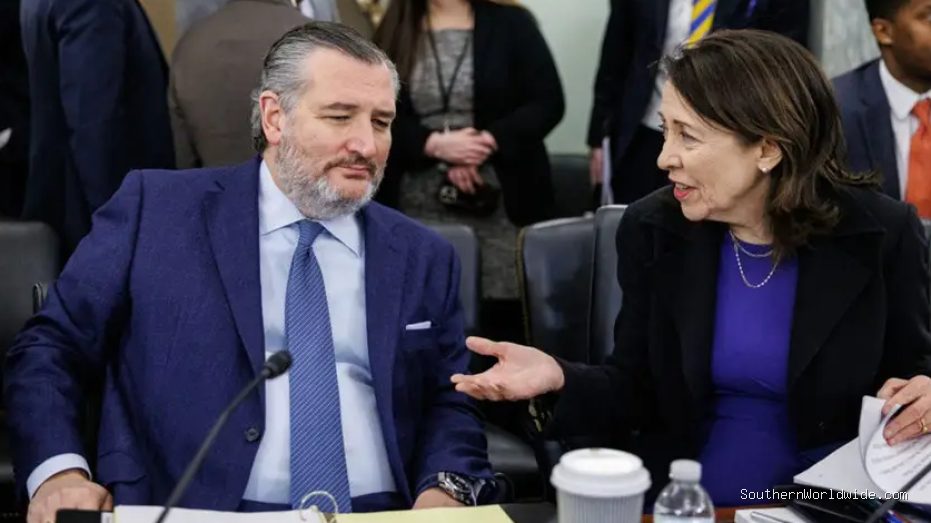
SouthernWorldwide.com – In a significant development for college athletics, the Senate Commerce Committee has advanced the Protect College Sports Act, paving the way for a full Senate vote despite opposition from major conferences like the SEC and Big Ten.
The bipartisan bill, championed by Senators Ted Cruz and Maria Cantwell, successfully navigated a crucial markup session, signaling a determination to move forward without being dictated to by the wealthiest conferences.
“What we did today was say we’re not going to let the most powerful, richest conferences dictate to the rest of America what’s going to happen to 500,000 athletes,” Senator Cantwell stated following the 19-9 vote.
This advancement marks a historic moment, as it’s the first time a college sports bill has passed a committee vote and is now headed for a potential floor vote.
While numerous leagues have voiced support for the legislation, the SEC and Big Ten have publicly expressed their reservations, releasing a joint statement outlining their concerns.
“From the outset, we identified a set of essential revisions to the PCSA necessary for the long-term sustainability of college athletics,” the conferences stated. “We have worked with both majority and minority staff to advance those revisions, which focus on better supporting student-athletes and stabilizing the college sports environment. We continue to believe revisions are needed to secure our support for the bill.”
The statement further indicated that despite their “sustained engagement and good faith efforts,” their “critical revisions have not been accepted.” They noted, however, that several Commerce Committee members share their concerns.
Senator Cruz emphasized the collaborative effort behind the bill, stating, “No one got everything they wanted. But, we did create a framework that stabilizes college athletics.”
The opposition from the SEC and Big Ten appears to stem from several key areas, including provisions related to the ‘voluntary’ pooling of media rights and concerns about the legislation potentially targeting the formation of a ‘Super League’.
However, a concession was made on Wednesday night regarding the anti-expansion provision. The language in the bill has been amended to include the Big 12 and ACC, with the revenue threshold for conferences being prevented from joining forces lowered from $1 billion to $700 million.
Senator Cantwell has made it clear that the opposition from the two dominant conferences will not deter the progress of the bill.
The path forward will likely involve intense lobbying over the coming month, with various issues still open for discussion and potential changes.
Several revisions were incorporated into the legislation this week, including the separation of Olympic and women’s sports from the media rights pooling provision. This change ensures that a minimum scholarship and roster size limit will be established, independent of revenue generated from television deals.
Previously, these protections were contingent upon the media rights being pooled together.
Pushback on the bill is anticipated from multiple fronts. The legislation includes language that could limit player compensation and the ability to transfer, leading opponents to warn lawmakers of a potential increase in lawsuits if player movement is restricted.
Additionally, there has been opposition from various groups regarding unions that are against collective bargaining for student-athletes.
Despite these challenges, Thursday’s committee vote is considered historic, especially in light of previous failed attempts in the House to pass similar legislation, such as the SCORE Act.
With the Senate Commerce Committee opening the door for the Protect College Sports Act, it has reached a significant milestone. However, the clock is ticking, with only 50 days until Congress recesses for the summer.
The crucial question remains whether Senate Majority Leader John Thune can garner enough support to bring the bill to the floor for a vote, and whether Cruz and Cantwell can secure the necessary backing for its passage.
Furthermore, the House of Representatives will also play a role in the ultimate fate of this legislation.