SouthernWorldwide.com – While acknowledging President Trump’s strategic use of tariffs as leverage for fairer trade, Stephen Moore argues that certain tariffs are counterproductive, ultimately harming American consumers and businesses.
Moore, a proponent of free trade, understands the role tariffs can play in negotiations. He sees Trump as a skilled negotiator who uses the threat of tariffs to encourage other nations to adhere to trade rules and create a more level playing field.
However, he points out that not all tariffs make economic sense. Specifically, he highlights tariffs that increase prices for consumers without a viable domestic alternative. These tariffs exacerbate affordability issues for families.
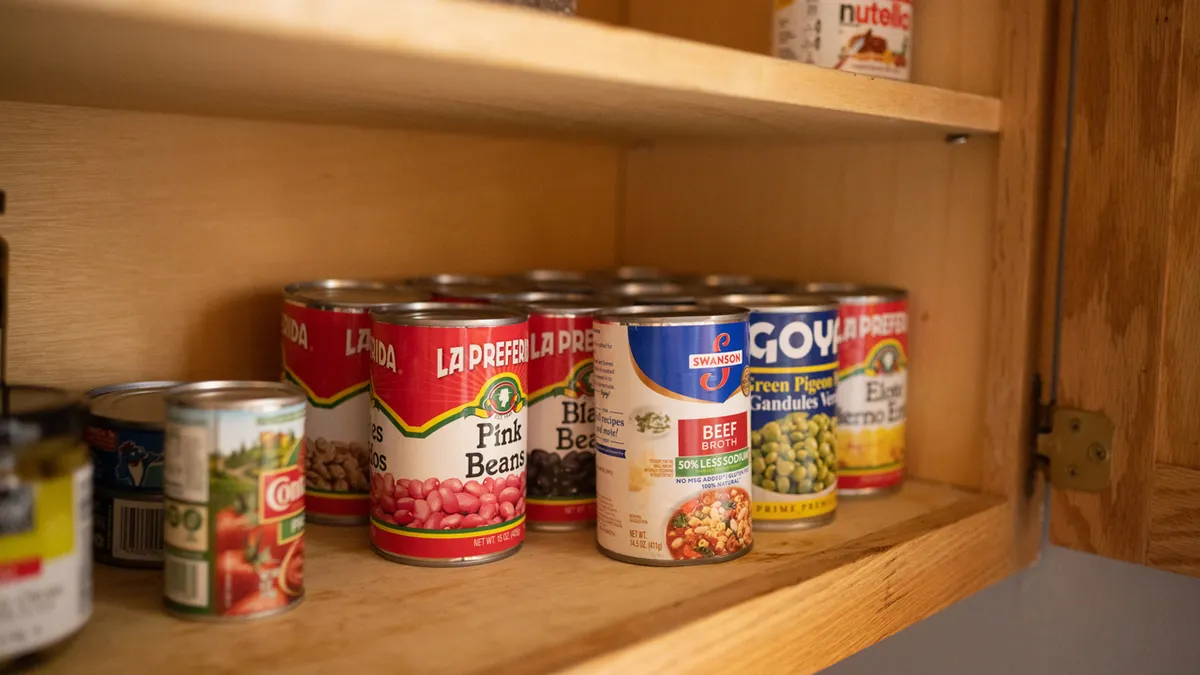
The impact is already visible in grocery prices. Moore notes that many grocery items have seen price increases of 25% to 30% in recent years. Canned goods, such as peas and peaches, have experienced an even steeper rise of 40% during the same period.
He warns that continued price hikes could lead to increased voter anger, potentially impacting Republican fortunes in upcoming elections.
The focus then shifts to the specific tariff on imported “tinplate steel.” This tariff is a significant contributor to the increased cost of canned fruits and vegetables, with these higher costs being passed directly to consumers at the checkout counter.
Moore attributes this situation largely to short-sighted trade policy. The article highlights that U.S. steel manufacturers have reduced their tinplate production in recent years. This has compelled U.S. can makers to rely more heavily on imported tinplate steel.
The reliance on imports has grown substantially. Eight years ago, U.S. can makers sourced 42% of their tinplate steel from abroad. Today, that figure has risen to approximately 70%.
President Trump imposed a 25% tariff on tinplate steel in 2018. This tariff was subsequently increased to 50% in June of the following year. These tariffs have directly increased the operational costs for the domestic canned food industry.
Ultimately, these increased costs are borne by consumers in the form of higher food prices. Moore emphasizes the significant impact this has, stating that roughly one-third of the wholesale price of canned fruits and vegetables is attributable to the cost of the can itself.
Consequently, canned fruits and vegetables are experiencing price increases at nearly three times the rate of all food items. Crucially, Moore states there is no offsetting benefit to this situation.
While tariffs are intended to stimulate domestic production, the situation with tinplate steel appears different. U.S. Steel is not expected to resume tinplate steel production until at least next year, and this will only be at one facility.
Even if additional domestic production comes online next year, Moore argues that the volume will be insufficient to meet the demands of American can manufacturers and food producers. Furthermore, the tariffs have not spurred increased production of American-grown canned foods; in fact, the opposite effect has been observed.
Adding to the problem, as the costs for the U.S. canned food industry rise, American producers are being undercut by imported canned goods filled in foreign countries, notably China. This has created a “race to the bottom” for U.S. retailers.
Moore suggests that these tariffs may be leading to job losses in the U.S. rather than saving them.
The article cites a specific example: Del Monte Foods announced in January 2026 the closure of its fruit cannery operations in Modesto, California. This resulted in the loss of 600 full-time jobs and an additional 800 to 900 seasonal positions.
A union representative for the affected workers directly blamed the steel tariffs. They explained that the tariffs increased the cost of canned foods, making it more difficult for domestic products to compete with imported peaches that arrive already canned.
The situation is further complicated by the fact that foreign entities are undercutting the prices of superior American-grown and -made canned food products. Last year alone, over two billion pre-filled cans of food were imported into the United States.
This growing dependence on China to fulfill American consumer needs raises concerns about food insecurity, particularly for vulnerable populations. It also creates uncertainty for U.S. farmers who struggle to compete on price with lower-quality Chinese food imports.
Moore contends that due to these tariffs, American consumers face a difficult choice: pay more for American-made canned food or opt for less expensive, often lower-quality and less safe, foreign canned food.
He argues that this outcome is contrary to the “America First” principle. The tariff on cans is detrimental to American farmers, steelworkers, and steel companies. It is also bad for consumers and iconic domestic brands like Campbell’s soup, Green Giant corn, and Red Gold tomatoes.
Conversely, Moore states that these tariffs benefit China and other American rivals. Therefore, he concludes that President Trump should immediately repeal the tinplate steel tariffs, describing the policy as “mmm, mmm BAD.”