SouthernWorldwide.com – The Supreme Court has significantly expanded the president’s authority to remove officials from independent agencies, overturning a nearly century-old ruling that had provided a crucial layer of protection against at-will dismissals.
This landmark decision, handed down on Monday, effectively dismantles the constitutional protections that prevented presidents from firing members of the Federal Trade Commission (FTC) without cause. The ruling overturns the precedent set in the 1935 case of Humphrey’s Executor v. United States.
In Humphrey’s Executor, the Supreme Court had affirmed Congress’s power to shield officials in multi-member independent agencies from presidential removal. This was intended to insulate these bodies from political interference and ensure their decisions were based on merit rather than presidential whim.
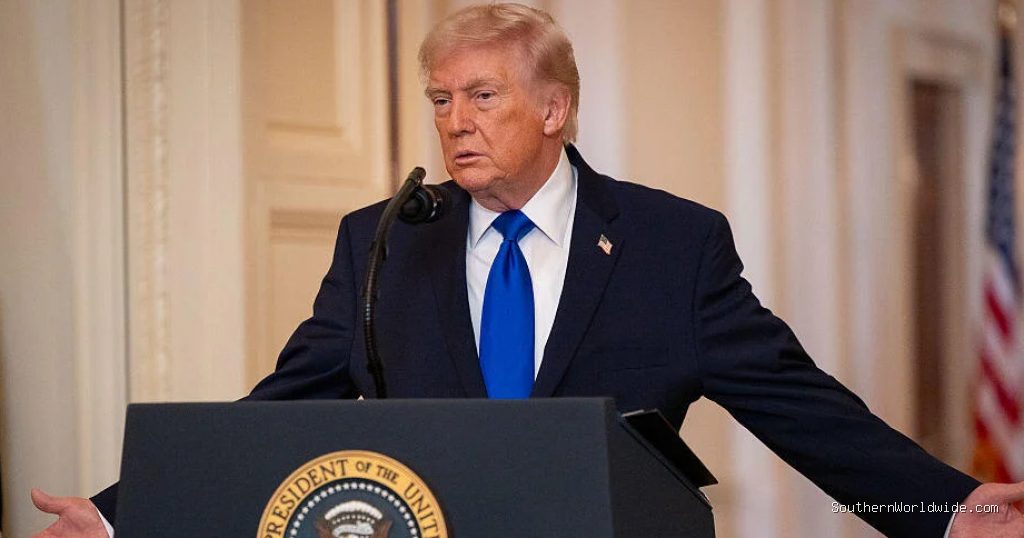
However, the current conservative majority on the Supreme Court, in a 6-3 decision in the case of Trump v. Slaughter, has now reversed this long-standing precedent. Chief Justice John Roberts, writing for the majority, argued that restricting the president’s ability to remove those who exercise executive power on his behalf undermines his constitutional authority.
“Subordinates who exercise the President’s power are subject to removal by him,” Roberts stated in his opinion. “Then, and only then, can they remain accountable to the President, and the President to the people.” This sentiment underscores the majority’s view that presidential accountability necessitates direct control over executive appointees.
The implications of this ruling extend far beyond the FTC. Congress has established numerous other independent agencies, some with over two dozen members, whose leadership has traditionally been protected from arbitrary dismissal. These protections typically stipulated that removal could only occur for specific reasons, such as inefficiency, neglect of duty, or malfeasance in office.
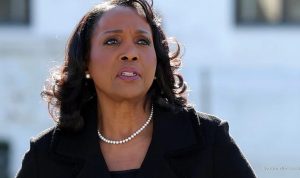
The case that led to this pivotal decision involved Rebecca Slaughter, an FTC commissioner. Mr. Trump, during his first term, had appointed Slaughter to the commission. She was later reappointed by President Joe Biden. In March 2025, Slaughter was informed that her tenure was “inconsistent” with the administration’s priorities and was subsequently fired without cause.
This action directly contradicted the FTC Act of 1914, which established that commissioners could only be removed for cause. Slaughter challenged her dismissal, arguing that President Trump had violated the law. Initially, a federal district court sided with Slaughter, ordering her reinstatement.
The U.S. appeals court in Washington, D.C., also upheld her right to continue in her position. However, in September of the previous year, the Supreme Court granted the Trump administration’s request to allow Slaughter’s removal while the broader legality of FTC removal protections was under consideration.
This decision marks the latest in a series of actions where the Supreme Court has allowed the president to remove members of various independent bodies. Prior to the Slaughter case, the Court had already cleared the way for Mr. Trump to dismiss members of the National Labor Relations Board, the Merit Systems Protection Board, and the Consumer Product Safety Commission.
Yet, the Court has maintained a more cautious approach in other instances. It has so far allowed two other officials to remain in their posts pending further litigation: Lisa Cook, a member of the Federal Reserve’s Board of Governors, and Shira Perlmutter, the register of copyrights.
Arguments were heard in January concerning Mr. Trump’s attempt to remove Cook from the Federal Reserve. The Supreme Court has previously distinguished the Federal Reserve from other independent agencies, characterizing it as a “uniquely structured, quasi-private entity that follows in the distinct historical tradition of the First and Second Banks.”
In a separate opinion, also authored by Chief Justice Roberts, the Supreme Court rejected Mr. Trump’s effort to remove Cook while the challenge to her dismissal proceeded. This suggests a nuanced approach by the Court, possibly differentiating between the Federal Reserve and other independent agencies.
The ruling in the Slaughter case is part of a broader trend where the Supreme Court has gradually eroded the protections established in Humphrey’s Executor, thereby increasing the president’s power over independent agencies. In 2020, the Court invalidated removal protections for the director of the Consumer Financial Protection Bureau, and in 2021, it did the same for the head of the Federal Housing Finance Agency.
This latest decision solidifies the expansion of presidential power, potentially altering the landscape of governance by allowing presidents greater latitude in shaping the leadership of key independent regulatory bodies.