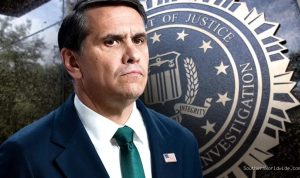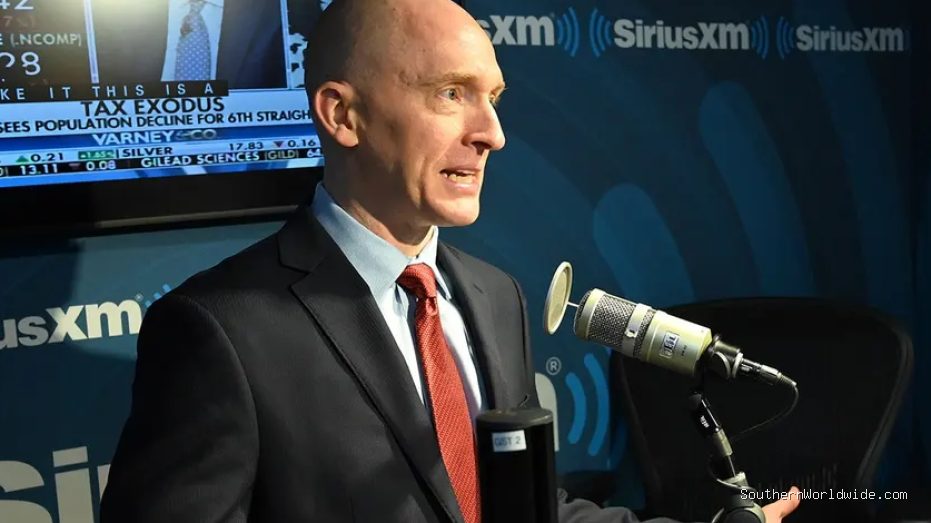
SouthernWorldwide.com – The Supreme Court has decided not to revive a lawsuit filed by former Trump campaign advisor Carter Page. The lawsuit challenged the FBI’s surveillance activities conducted during the investigation into alleged ties between Russia and Donald Trump’s 2016 presidential campaign.
The justices officially denied Page’s appeal. This decision upholds the rulings made by lower courts, effectively concluding his attempt to hold former FBI Director James Comey and other former government officials personally accountable for what he claimed was unlawful surveillance. Justice Ketanji Brown Jackson did not participate in the proceedings of this particular case.
Carter Page, who advised Trump’s 2016 campaign on foreign policy matters, was the subject of secret surveillance warrants. These warrants were approved by the Foreign Intelligence Surveillance Court in 2016 and 2017 as part of the FBI’s extensive “Crossfire Hurricane” investigation.
It is important to note that Page was never formally charged with any crime. He has consistently denied all allegations that he acted as an agent for Russia.
The controversy surrounding this case became a significant part of the broader Trump-Russia investigation. This was particularly after a report from the Justice Department’s inspector general highlighted numerous errors and omissions within the FBI’s applications for the surveillance warrants targeting Page.
Following the inspector general’s findings, former FBI and Justice Department officials who were involved in approving these warrants later stated that they would not have authorized the applications if they had been fully aware of all the issues identified by the investigators.
In direct response to these critical watchdog findings, the FBI implemented a series of corrective measures. These actions were designed to significantly improve the accuracy and completeness of future applications submitted for surveillance purposes.
Carter Page subsequently filed a lawsuit against James Comey and other former officials. He alleged that they had violated his constitutional rights by submitting flawed applications to gain surveillance authority. However, the lower courts dismissed his case, citing various reasons, including the fact that Page had not sued the specific officials who were directly responsible for carrying out the surveillance.
More recently, Carter Page reached a settlement with the federal government amounting to $1.25 million. This settlement was related to his claims concerning the surveillance. Despite this, he had sought to continue his legal pursuit of claims against individual former officials.
The Supreme Court provided no specific reasoning for its decision to decline reviewing the case, which is standard practice when appeals are rejected. This marks another development in the ongoing legal aftermath of the Russia investigation.
The investigation itself examined whether individuals associated with Trump’s 2016 campaign had coordinated with Moscow’s efforts to influence the presidential election. Ultimately, Special Counsel Robert Mueller’s report concluded that Russia did indeed interfere in the election. However, the report did not establish that any members of the Trump campaign had criminally conspired with Russia.