SouthernWorldwide.com – The Supreme Court’s recent decision concerning the Voting Rights Act has been met with strong reactions, particularly from the left, who argue it undermines the rights of Black citizens. However, the ruling did not disenfranchise any Black voters; instead, it challenged a system where politicians and activists manipulated electoral maps to create racially defined districts, a practice the author views as unjust.
For years, the author has observed congressional districts drawn in increasingly convoluted ways, stretching across highways and rivers, and through narrow corridors, solely to encompass clusters of Black voters. This practice, the author contends, prioritized race over geographical proximity, common issues, or shared interests, reducing Black citizens to mere components on a map rather than recognizing them as integral parts of communities.
This approach, which suggested that Black people could not achieve political influence without being specially arranged and protected by a racial bureaucracy, has long been a point of contention for the author. The implication was that Black individuals needed such measures to be politically relevant, a notion the author found inherently flawed and demeaning.
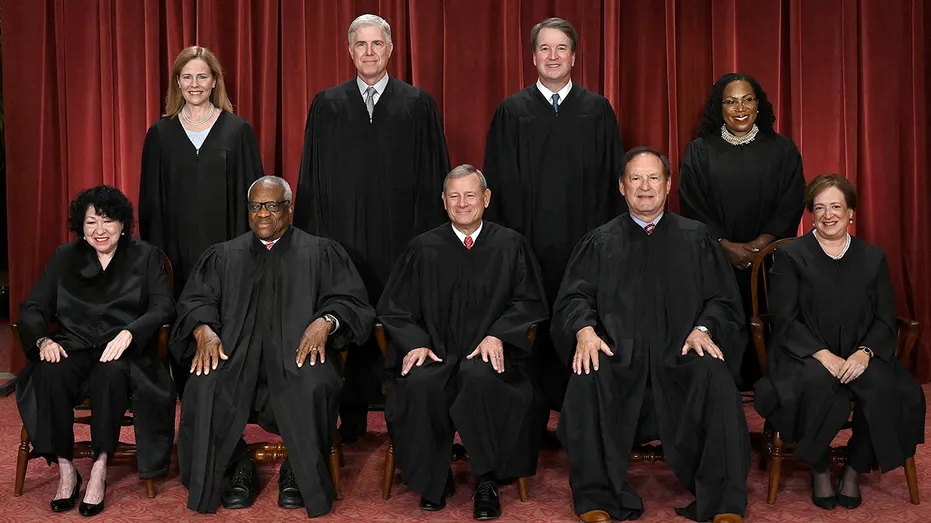
The Supreme Court’s decision in *Louisiana v. Callais* has now altered the application of Section 2 of the Voting Rights Act, significantly limiting the race-based criteria used in redistricting. This ruling does not repeal the Voting Rights Act, nor does it restrict voting rights, the ability to run for office, organize, or win elections. Instead, it asserts that race should not be the paramount factor in drawing electoral districts while claiming to advance civil rights.
SUPREME COURT JUST GAVE BLACK VOTERS A SHOT AT REAL POWER BEYOND SAFE SEATS
The immediate reaction from many on the left has been alarmist, with some commentators likening the situation to the Jim Crow era of the 1950s and declaring the Voting Rights Act to be effectively destroyed. This portrayal, the author argues, ignores the nuances of the ruling and evokes extreme historical parallels that are not reflective of the current reality.
Baca juga di sini: ICE Under Fire for Substandard Conditions at For-Profit Detention Facility
The author expresses particular frustration with what they describe as “race charlatans” who exploit such rulings for personal gain. These individuals, according to the author, are adept at framing any unfavorable decision in terms of white supremacy, segregation, and historical oppression, often diluting the meaning of terms like “white supremacy” through their casual and strategic use.
These “racial performance artists” are accused of leveraging historical injustices and fears of racism to advance their own agendas and profit from a narrative of victimhood. The author deems this practice to be morally reprehensible.
HOW MAINSTREAM MEDIA BECAME ‘PART OF THE RACE GRIEVANCE INDUSTRY’ HARMING BLACK NEIGHBORHOODS
What is most disheartening to the author is the refusal of certain Black opportunists and “white-guilt liberals” to acknowledge the ruling as a step toward genuine equality under the law. The author sees this moment as a departure from a system that has historically relied on government-mandated racial sorting to define Black political power. Instead of embracing this progress, these groups, in the author’s view, actively work to undermine it by invoking the specter of systemic racism and suggesting that Black citizens cannot succeed under the same legal framework as others.
This narrative, the author asserts, is deeply problematic and counterproductive.
The author believes these individuals are not truly advocating for the Black community but are instead protecting their own influence and relevance. If Black Americans begin to view this ruling as an opportunity to achieve equality based on their status as citizens, rather than through specially designed districts, the entire “grievance industry” stands to lose its power. Consequently, they resort to alarmist rhetoric, such as accusations of “white supremacy” and “Jim Crow,” to maintain their platform and perceived importance.
IT TAKES DISCIPLINE TO RESIST THE TEMPTATION OF IDENTITY POLITICS AND LEAN INTO CHARACTER. BUT IT’S WORTH IT
The author reflects on a time when the term “Black” carried a profound sense of pride, resilience, and dignity. It signified a people who had overcome immense hardship with perseverance, self-respect, and faith. This legacy, passed down through generations, emphasized hard work, steadfastness, and the preservation of dignity. However, the author laments that many of the most vocal contemporary voices speaking on behalf of Black America are perceived as “hustlers” who exploit racial tensions for personal gain, all within a country that grants them the freedom to disseminate such narratives.
This, the author concludes, is a profound tragedy. Instead of encouraging Black individuals to engage with and persuade their neighbors, the prevailing message from these voices is one of perpetual dependence on racial categorization for survival. Rather than being seen as active builders of society, they are consistently portrayed as passive victims.
As a pastor, the author explicitly rejects this narrative of victimhood. True dignity, in the author’s view, is derived from a higher power, and genuine political influence is cultivated through active organizing, persuasion, participation, and building alliances with those who share common values and community ties, irrespective of race. The author aspires for Black individuals to embrace this form of empowerment, distinct from the influence peddled by “grievance merchants” or “race hustlers,” and to seek authentic power.
The author emphasizes the need for faith in one’s own agency, confidence in one’s voice, and the courage to be subject to the same laws as all other citizens.
The author concludes by stating that identifying as Americans is not an act of racism but a testament to progress.