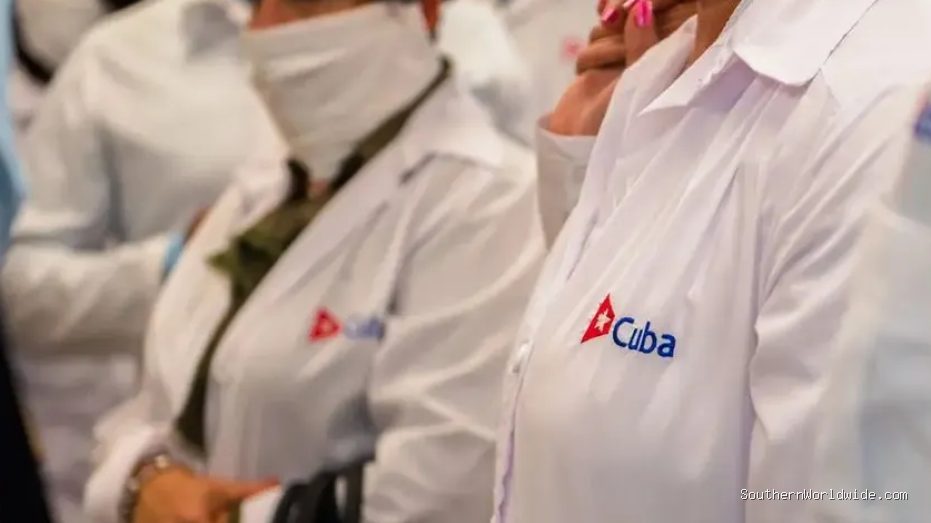
SouthernWorldwide.com – A new law authored by Representative Mario Diaz-Balart and approved by Congress in February 2026 aims to penalize nations complicit in the human trafficking of Cuban doctors facilitated by the Castro regime’s international medical missions. The House is expected to vote on a similar provision for the 2027 fiscal year soon.
For many years, the Cuban government has generated substantial revenue by compelling its medical professionals to work in undesirable locations under harsh labor conditions. These doctors, however, receive only a fraction of the earnings generated by these missions.
The regime in Cuba reportedly earns between $4 to $8 billion annually from this program. Operatives of the regime retain a significant portion, estimated at 75% to 95%, of the doctors’ salaries.
US SANCTIONS FIVE CUBAN ENTITIES, CASTRO FAMILY MEMBER IN LATEST PRESSURE CAMPAIGN, RUBIO SAYS
According to the U.S. State Department, the Cuban regime confiscates doctors’ passports, uses their families remaining in Cuba as a means of coercion, assigns supervisors to monitor them, and punishes families if a doctor chooses to defect.
Reports from the State Department dating back to 2010 have described this program as exploitative. In 2020, the State Department officially classified the practice as “human trafficking” or “forced labor” orchestrated by the Cuban regime.
A recent amendment within the Consolidated Appropriations Act of 2026 specifically targets countries that financially support the authoritarian Cuban dictatorship for these exploited medical workers. The State Department is now mandated to identify and notify all countries or groups that pay for these personnel.
Nations that remain on this list for two consecutive years risk losing all U.S. foreign aid. Additionally, foreign officials implicated in these practices may face a ban on entering the United States, and their assets and properties within the U.S. could be frozen.
This legislation is already demonstrating tangible results. Countries such as Guatemala, Jamaica, Guyana, St. Vincent and the Grenadines, Paraguay, and Honduras are either reducing their reliance on Cuban doctors or completely terminating their participation in the program.
Some nations, like the Bahamas, are exploring alternative arrangements, such as attempting to pay the doctors directly instead of through the Cuban regime. This approach has previously been rejected by the dictatorship. In response, the Trump administration has enforced this law by implementing visa restrictions on officials from Brazil, Grenada, and several African nations involved in the program.
This legislative measure ensures accountability, a factor that previous Democratic administrations had reportedly overlooked. It serves to expose those who profit from the program and imposes serious punitive consequences, including the cessation of U.S. aid, travel bans, and financial sanctions. Furthermore, the law offers substantial support to the oppressed Cuban populace by safeguarding Cuban doctors from exploitation and abuse, while simultaneously curtailing a vital source of funding for the regime.