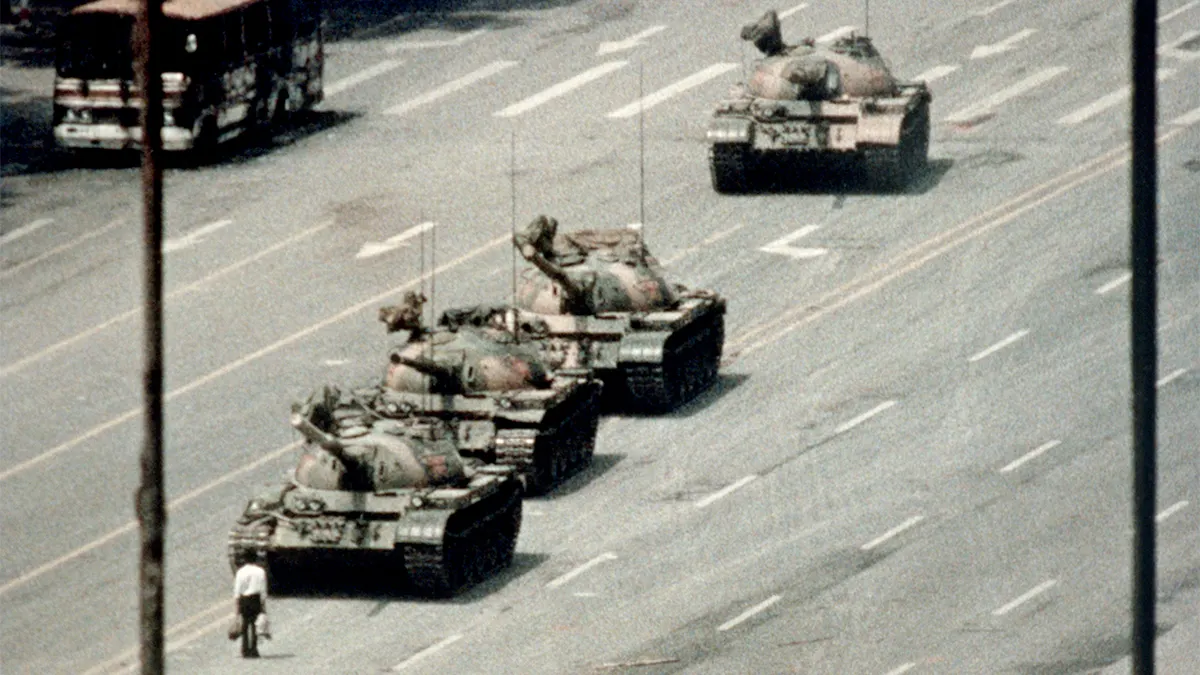
SouthernWorldwide.com – On June 4, the 37th anniversary of the Tiananmen Square Massacre was observed, a day when countless Chinese citizens peacefully advocated for political reform and democratic openness. Their aspirations were met with the brutal force of tanks.
On that tragic day, the Chinese Communist Party deployed the People’s Liberation Army against these unarmed protesters. Families were torn apart, and China lost a generation filled with idealism.
More than three decades have passed, and China has yet to provide an accounting for those who were killed, imprisoned, or disappeared. Instead, the regime actively seeks to erase the memory of a massacre that the world must never forget. However, despite the CCP’s concerted efforts, Tiananmen remains indelible.
The iconic image from that day features the lone “Tank Man” standing defiantly before a column of tanks. His bravery serves as a powerful reminder that the yearning for freedom is not a Western concept, nor is it imposed from abroad; it is a universal human desire.
As has been stated, a critical choice confronts us all: one must either align with the spirit of the Tank Man or with the oppressive force of the tank. There is no middle ground. This principle extends to the issue of transnational repression.
The same Party that sought to suppress truth within its borders now extends its reach to pursue and silence truth internationally. While the methods and technology have evolved, the scope of their influence has significantly expanded.
Within China, the CCP employs surveillance, censorship, imprisonment, torture, forced disappearances, and fear as tools to maintain its grip on power. Today, the consequences of actions taken in China no longer remain confined to its territory. The Party aims to dictate what is said about China and who is permitted to speak about it, even in other nations.
In my capacity as Chair and Co-Chair of the CECC over recent years, I have consistently highlighted the CCP’s documented and persistent pattern of global abuses that extend beyond China’s borders. This pattern was evident as early as 2014 with the establishment of Confucius Institutes.
Over time, the CCP’s tactics have become increasingly digital and more ruthless. These include detaining family members in China, engaging in doxxing, deploying spyware, utilizing deepfakes, issuing bounties in places like Hong Kong, and establishing illicit police stations on foreign soil, including within the United States. The underlying objective, however, remains the same: to instill fear and deter individuals from speaking the truth, employing nearly any means necessary.
Transnational repression is an integral component of a broader, interconnected strategy by the CCP that targets and endangers American citizens. This practice is not only outrageous but also completely unacceptable and must be brought to an end.
The CCP’s strategy is evident in various forms, including fraudulent networks that defraud U.S. citizens, the illicit flow of fentanyl that devastates our cities, the acquisition of land near military installations by entities linked to the PRC, attempts to corrupt our politicians and electoral processes, the theft of private personnel and biometric data, and intellectual property theft from businesses and academic institutions.
While these issues may appear disparate, they share a common objective: to exploit our open society, gain leverage, undermine our institutions, disseminate propaganda, and penalize Americans for opposing Beijing’s agenda. Transnational repression represents the most personal manifestation of this strategy, bringing the pressure campaign directly to the doorstep of students, journalists, dissidents, artists, and their families. This underscores the importance of responses at both the state and local levels.
A victim might initially contact local law enforcement, a student might approach a university official, a state attorney general might identify a recurring pattern, and a state legislator might realize that existing laws are insufficient to address the threat. However, the critical questions remain: do local officers recognize this danger, do universities possess the knowledge to protect their students, do states have the necessary resources, and does the federal government possess a coherent strategy?
Currently, I am collaborating with Chairman Sullivan, Senator Merkley, and Representative McGovern on the Transnational Repression Policy Act. This bipartisan and bicameral legislation aims to define such abuses, enhance coordination among agencies, provide training for officials, offer support to targeted communities, and ensure accountability for perpetrators.
If the CCP threatens individuals within our borders, there must be thorough investigations and prosecutions. If it extends its reach across our borders to spread fear, sanctions must be imposed. If it holds family members hostage to silence a critic, we will demand their immediate release and expose the cruelty inherent in such tactics. And if it attempts to censor a free populace, we will vigorously defend and promote the rights that Beijing fears most: freedom of speech, freedom of religion, freedom of assembly, and the right to speak truth without fear.
A regime that harbors fear of a student’s inquiry, a refugee’s protest, an artist’s sculpture, or the simple remembrance of Tiananmen is not a powerful and confident superpower. It is, in fact, fearful. And fear, when wielded by a dictatorship, becomes a dangerous instrument, manifesting as coercion, censorship, and repression that transcends borders and infiltrates our communities. Therefore, our response must be unequivocal.
Because in the United States of America, unlike in China, no individual requires the Party’s permission to speak, to worship, to protest, to remember, or to live in freedom.