SouthernWorldwide.com – My 13-year-old son’s social studies textbooks seem to be written by committees focused on dulling boys’ minds to make them susceptible to politically correct indoctrination.
The term “social studies” itself was coined by a Progressive Era committee.
In 1916, the National Education Association’s Committee on Social Studies defined social studies as those subjects relating to the organization and development of human society and man’s role within social groups. Their intention was to present history through social narratives for politically useful interpretations.
This detrimental idea quickly gained traction across the nation.
Consequently, for over a century, boys have not been told the authentic accounts of how George Washington, despite having two horses shot out from under him at the Battle of the Monongahela in 1755, still tried to persuade the stubborn British general to alter tactics as their forces were being decimated. They also miss learning how a then 23-year-old Washington managed to save the remnants of the British army.
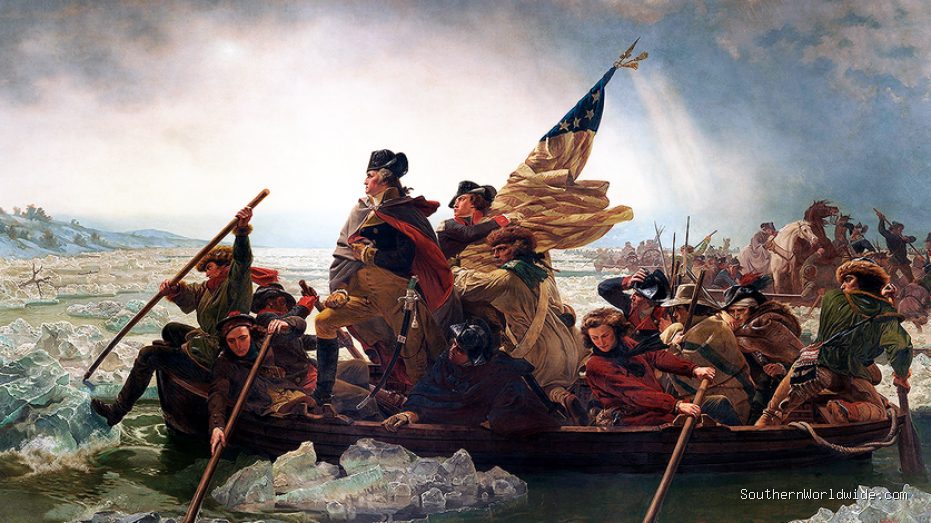
Today’s textbooks fail to vividly set the scene for how Washington inspired a freezing army to cross the Delaware River and capture Trenton on Christmas in 1776. They certainly do not place students in the room to witness an older Washington wiping his glasses as he shamed his former officers for attempting to make him a dictator or king during the Newburgh Conspiracy in 1783.
All these compelling stories have, at best, been reduced to mere dates on a page.
The narratives of adventure and human accomplishment are absent. In their place are accounts of social ills and conflicts between races, genders, and economic classes.
While these themes are important, instead of immersing today’s students in the actions of historical figures, our boys are subjected to passively written prose, or worse, preachy lectures, seemingly designed to uninspire them. This approach appears to be a safe, committee-driven method of avoiding the very elements that truly teach.
We now question why our boys are struggling in school. When this occurs, we discuss the need for active boys to move, play sports, and experiment. While this is valid, no one addresses how genuine tales of adventure have been diluted into bland, politically correct content.
Instead of simply informing boys about Thomas Edison’s numerous patents or his invention of the long-lasting incandescent lightbulb, why not share that he was once dismissed from school as “addled” when he was a boy? Why don’t teachers explain that one of Edison’s experiments caused a train fire when he was 12, during which time he was also publishing his own newspaper on that very train?
While telling these stories, educators could explain that shortly after being removed from the train, the stationmaster at Mount Clemens, indebted to Edison for saving his son’s life, taught Edison telegraphy, thus charting the course of his life and ultimately changing the world. An educator could then describe Edison’s later work in his “Invention Factory,” a place that likely inspired the character of Tony Stark, or Iron Man.
If teachers began sharing such true adventure stories, I guarantee that boys in the classroom would remain seated and attentive for much longer. Real stories resonate with us. In fact, they contain the very themes that school administrators aim to highlight through social studies classes; however, instead of dumbed-down narratives intended for indoctrination, these would be teaching well-rounded, honest history.
Consider Davy Crockett. We could sidestep specific dates and focus on his position amidst the cultural clashes between westward-expanding European settlers and Native American tribes. Alternatively, we could discuss his courageous opposition to the Indian Removal Act. After losing his congressional seat for a second time due to this moral stance, he famously (though this is a popular paraphrase) declared, “You may all go to hell, and I will go to Texas.” Then, we could recount his final stand at the Alamo and even display a picture of the knife he wielded in his last battle, which is now exhibited at the San Jacinto Museum in Harris County, Texas.
Boys would go home still talking about such an account!
Instead of pursuing such engaging narratives, committees responsible for writing our children’s textbooks altered the approach during the Progressive Era, reducing historical figures into convenient caricatures as they filtered history through politically correct lenses.
Parents must push back, as genuine stories are what captivate and educate boys. True accounts of the Founders and other great leaders remain with us. Anyone who has heard about Teddy Roosevelt’s capture of three outlaws in Dakota Territory in 1886 can vividly imagine him marching them at gunpoint for 36 consecutive hours. Upon reaching the town of Dickinson, everyone, including the apprehended criminals, was surprised he hadn’t simply hanged them on the spot.
America boasts some of the most remarkable heroes, yet we are not adept at recounting their stories in contemporary times. This is precisely why I authored “Cool Heroes for Boys—20 True Tales of Adventure” for my son and for American boys. However, rather than merely handing them a book, engage in discussions about these heroes, the challenges they faced, and their successes and failures. You will discover that it is the authentic stories of adventure that ignite boys’ interest in learning.