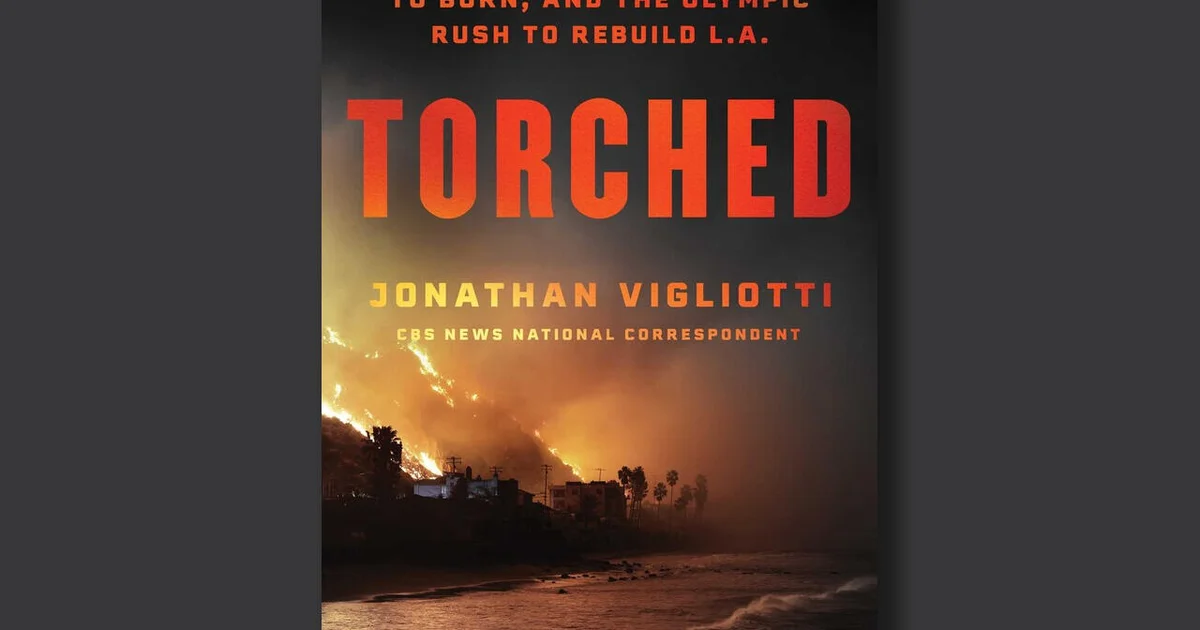
SouthernWorldwide.com – Jonathan Vigliotti, a CBS News national correspondent, has authored a new book titled “Torched: How a City Was Left to Burn, and the Olympic Rush to Rebuild L.A.” The book delves into the catastrophic wildfires that devastated Southern California, highlighting the inadequate response and the subsequent challenges of rebuilding.
Vigliotti, who covered the wildfires extensively, offers a critical look at the events and their aftermath. The book serves as a warning about the vulnerabilities exposed by such natural disasters and the urgent need for effective strategies in both disaster response and reconstruction.
The excerpt from the book vividly describes the initial stages of the wildfire and the ensuing chaos. It paints a picture of a community caught off guard, struggling against a rapidly escalating inferno.
Optical Illusion
The dramatic cliffs overlooking the Pacific Ocean, with their sandstone and shale formations, create an illusion of massive tree trunks. This natural spectacle reminded early settlers of palisades, defensive structures made of wooden stakes, which inspired the name for Pacific Palisades.
Established in the early 1900s, Pacific Palisades was promoted as an idyllic escape from the bustling city of Los Angeles. Situated between the Santa Monica Mountains and the ocean, it was envisioned as a “paradise where the mountains meet the sea.” Despite its proximity to Los Angeles, reaching the area was a challenging endeavor in its early days, often taking a full day’s journey.
From its inception, the Palisades attracted adventurous individuals who continuously shaped its identity. Initially, it was a frontier for the burgeoning Hollywood film industry, with a studio executive establishing a base for filming America’s first Westerns.
Later, it became a haven for Methodists seeking a spiritual community away from the excesses of the Roaring Twenties. This group is credited with naming the town and constructing its first modest bungalows in 1922. In the 1940s, the Palisades offered refuge to intellectuals and artists fleeing Nazi persecution.
By the turn of the 21st century, the original bungalows were largely replaced by opulent estates. These grand homes became fortresses for the entertainment elite, adorned with symbols of success like Oscar trophies, seemingly offering a shield against any impending disaster.
The development of the Palisades was seen as a testament to humanity’s ability to conquer wild landscapes, with the assumption that nature would yield to human endeavors. However, this perception, much like the wooden stakes that gave the town its name, proved to be an illusion.
January 7, 2025, marked a turning point, a day of reckoning for the community.
The first signs of the wildfire appeared shortly before 10:29 a.m. in the Santa Monica Mountains. Emergency radio transmissions reported a vegetation fire with visible smoke in Temescal Canyon. Residents captured footage of flames engulfing the hillside.
The location was tragically familiar: a patch of chaparral, recently scarred by fireworks, held a smoldering ember that had been secretly burning for days. This hidden threat, fanned by a light breeze, quickly ignited, filling the air with the taste of ash.
The response from fire crews was not swift enough, marking the first critical failure. Without an established fire line in the hills, the flames rapidly descended, unchecked, into the residential areas below through the cul-de-sacs.
The fire advanced into streets like Floresta Place, Bienveneda Avenue, and La Puerta del Sol. These areas had previously been identified by the Los Angeles Fire Department as defensible only if the flames were contained in the hills. In the absence of official guidance, residents began to evacuate on their own.
Sunset Boulevard became a scene of gridlock, with cars bumper-to-bumper. By the time fire engines arrived, they were unable to proceed through the congested traffic.
“Civilians abandoning cars are impeding firefighting operations. Shelter in place at the top of Palisades Drive,” a desperate plea was heard over the radio. Panic had already taken hold, transforming Sunset Boulevard and other major routes into impassable bottlenecks. Fire engines were forced to reroute or turn back.
Every blocked road meant another neighborhood became inaccessible. The Palisades found itself isolated, left to fend for itself.
Residents who remained on their properties attempted to combat the forty-foot flames with nothing more than garden hoses. They cried out, “Where are the firefighters?” as the inferno fed on dry chaparral and eucalyptus trees, vegetation so flammable it seemed as though it had been doused in gasoline.
By nightfall, winds reaching 100 miles per hour raged through the canyons. What began as a brush fire transformed into a single, all-consuming front that devoured the town.
A plume of smoke, visible from space, billowed and churned above the blaze at midnight. At its most intense, the fire consumed the equivalent of five football fields per minute. For three consecutive days, the fire raged through the heart of the town before sufficient reinforcements arrived to push it back into the hills, where it continued to smolder and flare for weeks.
When the smoke finally cleared, the devastation left a stark tally: four out of every five structures were destroyed. Entire neighborhoods and the commercial center were reduced to grids of ash and twisted metal.
The Palisades, its homes, and its overwhelmed infrastructure were built for a climate that no longer exists. Nearly half of all houses in America were constructed before 1980, predating the current era of megafires, floods, and hurricanes.
Even modern building codes struggle to keep pace with the accelerating effects of climate change. Authorities continue to permit and subsidize construction in high-risk areas, while first responders are left to manage crises with aging equipment, insufficient crews, and strategies designed for a milder past.
“As hard as rebuilding housing is, real change — real lasting, structural change — that’s even harder. And it takes courage to experiment with new ideas and change the old ways of doing things. That takes time,” stated President Barack Obama in New Orleans on the tenth anniversary of Hurricane Katrina.
No similar pronouncements were made following the fire in Pacific Palisades. Instead, while the winds still howled and the flames continued to burn, officials addressed the media, attributing the disaster to the wind and drought. They remained silent about the numerous homeowners who valiantly defended their properties or the private crews that halted flames where public engines failed to arrive.
Acknowledging these efforts would have exposed the city’s shortcomings and the cascading consequences of those failures.
The reality is that much could have been done to prevent this fire, and much must be done before the next one strikes. Vigliotti asserts this based on his direct experience. His team was among the first journalists on the scene after the fire began, and they remained for the critical first four days.
They witnessed events that were not captured by the cameras: the failures at every stage of the disaster response, from before the first spark to well after containment. They observed hesitant officials, delayed resources, and bureaucratic inefficiencies that seemed to burn alongside the town.
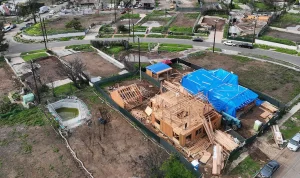
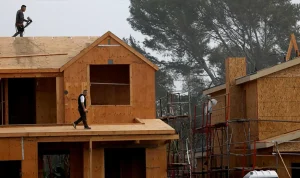
Vigliotti bore witness to one of the costliest natural disasters in U.S. history and a recovery process that sustainability experts describe as deeply flawed and alarmingly rushed.
In the aftermath of the Palisades Fire, political rivals tasked with the rebuilding effort formed an unusual alliance, bound by the shared experience of the disaster. This appeared to be bipartisanship, but it was not. The unity stemmed not from a commitment to public safety, but from its compromise, prioritizing personal legacy over collective well-being.
This book exists because the Palisades could have been saved, and there are immediate actions that communities can take to avert similar fates. If there is any hope of preventing future catastrophes, lessons must be learned from this one.
The events in Pacific Palisades are not merely a local California disaster; they represent a global warning. It is a parable illustrating the consequences of failing to adapt to a changing world and the actions of leaders who either rewrite history or, worse, attempt to conceal it.
“The short memories of American voters is what keeps our politicians in office,” once observed Will Rogers, a renowned actor, social critic, and long-time resident of Pacific Palisades. One can only speculate what he would have commented on the political spectacle that unfolded in the ashes where his historic home once stood for over a century, before its destruction by the flames.
Copyright © 2026 by Jonathan Vigliotti. From “Torched” by Jonathan Vigliotti, published by One Signal/Atria Books, an imprint of Simon & Schuster, Inc. Reprinted by permission.
Get the book here:
“Torched” by Jonathan Vigliotti
$30
at
Amazon
Try Audible for free
Buy locally from Bookshop.org
Read more: Officials Target Sheriff in Guthrie Investigation
For more info:
- “Torched: How a City Was Left to Burn, and the Olympic Rush to Rebuild L.A.” by Jonathan Vigliotti (Atria/One Signal), in Hardcover, Large Print Trade Paperback, eBook and Audio formats, available May 12