SouthernWorldwide.com – President Donald Trump expressed significant frustration with Iranian negotiators on Wednesday, accusing them of deception and dishonesty. This latest development highlights a deeper issue for Washington: the uncertainty surrounding the authority of Iranian officials at the negotiating table to finalize and implement an agreement.
“I don’t know if we’re going to have a deal. We may just do it without a deal,” Trump stated during the NATO summit in Ankara. He added, “These people, they lie and they cheat.”
However, Trump’s discontent with Iran’s negotiators is only one facet of the challenge. Since the passing of Ayatollah Ali Khamenei, it has become increasingly ambiguous who in Tehran possesses the power to both make and enforce an agreement.
Mojtaba Khamenei reportedly succeeded his father as supreme leader following the elder Khamenei’s death on February 28th, attributed to initial U.S.-Israeli attacks. Despite this, Mojtaba has not been seen publicly since the incident. U.S. intelligence, as reported by Reuters, suggests that authority has become decentralized, shared among senior commanders of the Revolutionary Guard and influential civilian officials.
Mohammad Bagher Ghalibaf, the Speaker of Parliament and a former IRGC commander, who led Iran’s delegation in negotiations, has emerged as one of the nation’s most prominent surviving political figures.
Banafsheh Zand, an Iranian-American journalist and editor of the Iran So Far Away Substack, explained that power within the Islamic Republic has become fragmented since Ayatollah Ali Khamenei’s death. She identified the Islamic Revolutionary Guard Corps (IRGC) as the country’s dominant entity.
Zand described Ghalibaf as representing one power center, in competition with figures such as IRGC commander-in-chief Ahmad Vahidi, Quds Force commander Esmail Qaani, and former Foreign Minister Mohammad Javad Zarif.
Vahidi oversees the IRGC’s comprehensive military structure, while Qaani is responsible for its external operations and its relationships with allied armed groups throughout the region. In contrast, Zarif remains closely associated with the more conciliatory political faction that previously advocated for negotiations and sanctions relief.
“The hardliners, in terms of their political presence, have also been pushed aside,” Zand commented. “So really, it’s the IRGC. And within the IRGC, whoever signs the deal is not necessarily signing on behalf of everybody else. They’re signing on behalf of themselves.”
Her analysis points to a core dilemma for the United States: Iran’s negotiators, political bodies, and military leaders may not share a unified understanding of any agreements reached, nor a consistent commitment to their implementation.
Despite Trump’s pronouncements, the diplomatic process may not be entirely abandoned.
Alternatively, he suggested, Trump might continue to operate in a “gray zone” between direct negotiations and open conflict, while keeping his strategic options flexible.
A more perplexing question is why Tehran would risk sanctions relief and confront the potential for overwhelming U.S. military action, especially given its already weakened military capacity.
Ben Taleblu believes that Iran’s leadership views escalation as crucial for the continued existence of the Islamic Republic.
“This is a regime that is weaker, but lethal, and less capable, but more confident,” he stated. Taleblu added that Iran’s leadership perceives its adversaries as having vulnerable economic and military interests across the Gulf, while the regime itself is more prepared to endure destruction.
“Their survival and their military success and their political success runs through more, not less, escalation,” he asserted.
Lisa Daftari, a foreign policy analyst and editor-in-chief of The Foreign Desk, concurs that the escalation is a deliberate strategy, intended to transform regional instability into a bargaining tool.
She suggests that Tehran is gambling on the assumption that Washington and its Arab allies will be reluctant to engage in another war and will eventually concede.
“The regime’s core weapon is time,” Daftari observed. “By escalating in the Persian Gulf and attacking ships and Arab states, they are creating rolling crises that raise the cost of confronting them while they consolidate power at home.”
Daftari argues that this strategy reflects the fundamental character of the Islamic Republic, rather than a temporary response to external pressure.
“This regime was never designed to be reformed or softened,” she remarked. “What they are showing us now is exactly who they intend to remain: a hardline, revolutionary regime determined to stay in power.”
However, understanding how this strategy translates into concrete actions is more complex. The distribution of authority in Tehran appears divided, raising questions about who is directing the escalatory actions and whether the officials engaged in negotiations with Washington can secure the commitment of the broader security establishment.
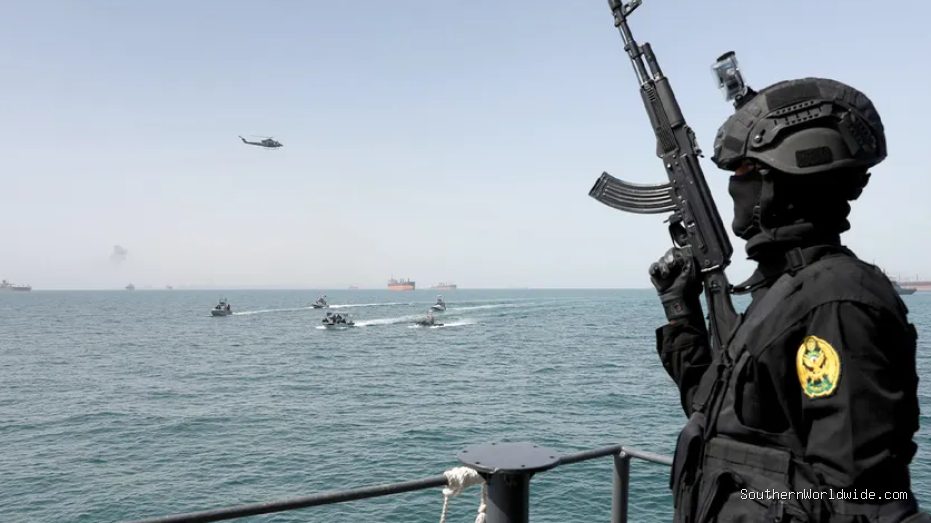
This division is already evident in the disagreement concerning the Strait of Hormuz.
According to the source, Iran interprets this wording as granting it the responsibility—and thus the authority—to manage shipping and dictate vessel routes during the interim period. Washington’s interpretation, conversely, is that Iran has agreed to lift its maritime blockade and fully reopen the international waterway.
If the two sides have differing interpretations of a single document, the source questioned, how can they possibly draft a treaty?
Iran views control over passage through the Strait of Hormuz as one of its last significant sources of leverage over the United States, Gulf governments, and the global economy, the source noted. “That is the heart of the matter.”
Collectively, the experts’ assessments indicate that Tehran is unlikely to face a straightforward choice between succumbing to Trump’s pressure and returning to negotiations. Ben Taleblu suggested that the regime believes its survival hinges on “more, not less, escalation,” while Daftari asserted that it is deliberately “playing out the clock” by orchestrating recurring regional crises. This scenario raises the possibility that, even if Iranian officials re-engage in talks, the IRGC might continue to target commercial shipping, U.S. interests, and American allies to maintain its leverage and bolster its domestic standing.