SouthernWorldwide.com – The Trump administration is taking a strong stance against Medicaid fraud, aiming to close significant loopholes that allow billions of taxpayer dollars to be lost annually. This initiative focuses on strengthening the revalidation process for healthcare providers across the nation.
Medicaid fraud has become a pressing issue, with recent reports highlighting substantial losses. While Minnesota was previously in the spotlight for an estimated $9 billion loss since 2018, the federal government now estimates that medical providers may be fraudulently billing around $100 billion each year.
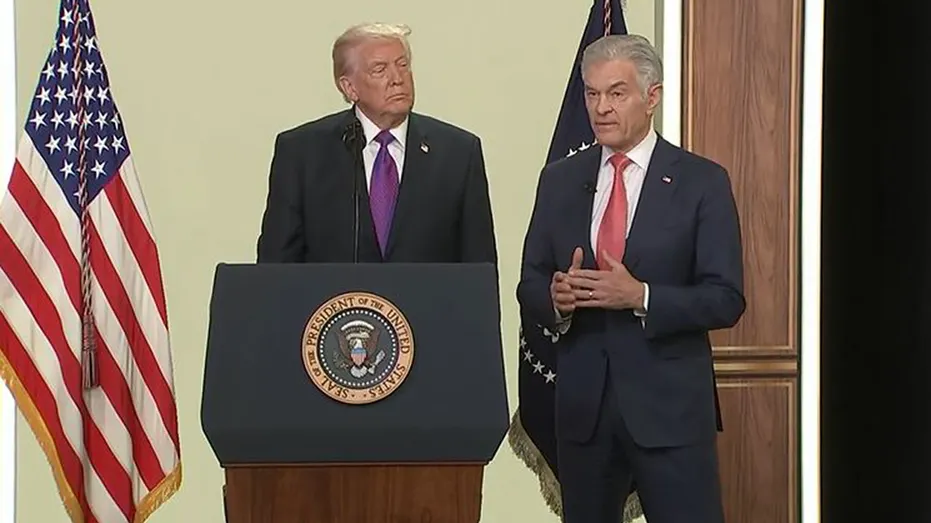
To combat this, the Centers for Medicare & Medicaid Services (CMS) administrator, Dr. Mehmet Oz, announced a new requirement for states to develop more robust plans for reviewing their Medicaid providers. This move is intended to ensure greater accountability and prevent fraudulent activities.
Under current law, states are mandated to revalidate the enrollment of their millions of Medicaid providers at least every five years. This crucial process involves verifying medical licenses and confirming compliance with all state and federal regulations.
The revalidation process is specifically designed to prevent fraudsters from exploiting the system and defrauding taxpayers. However, many states have been falling short in their execution of this essential duty.
Investigations by an organization that submitted Freedom of Information Act requests to 48 states and the District of Columbia revealed a concerning trend. Approximately two-thirds of states failed to respond, while others provided incomplete or inadequate data regarding provider revalidation.
Among the few states that did provide comprehensive data, the findings pointed to a widespread issue of neglect in the revalidation process. This suggests a systemic problem that requires urgent attention.
For instance, in Georgia, out of 374,774 Medicaid providers, around 21,000 longstanding providers had not undergone revalidation in the past five years. The situation is even more dire in Illinois, where over 25% of its 222,000 Medicaid providers have exceeded the five-year revalidation period.
Baca juga di sini: GOP Divided on Core of Trump Housing Plan Amidst Internal Strife
One Illinois provider, alarmingly, had not been revalidated in more than nine years. Such prolonged lapses create significant opportunities for fraudulent activities to go unnoticed.
While it’s acknowledged that not all overdue providers are fraudulent, the lack of strict enforcement inevitably leads to an increase in fraud. The revalidation process is critical for verifying provider credentials, cross-referencing with death records, identifying excluded providers, and ensuring providers are legitimate and operating as claimed.
The Trump administration has previously taken action against fraudulent billing, as seen in the crackdown on 447 hospices in Los Angeles for fraudulent practices. These types of schemes can be effectively identified and prevented through a diligent revalidation process.
Revalidation also plays a vital role in identifying providers who may be banned from practicing in one state but continue to bill Medicaid in another. Research on a specific complex in Minneapolis uncovered multiple healthcare providers excluded from Minnesota’s Medicaid program but still active on the federal exclusion list.
One such case involved an adult day care center whose license was revoked due to 35 violations, including staff negligence in patient interaction. This highlights how providers can evade scrutiny by operating across different jurisdictions.
Furthermore, an Inspector General’s report revealed that a significant portion of providers terminated for cause in one state were still participating in another state’s Medicaid program shortly thereafter. This indicates a lack of effective communication and oversight between state programs.
The revalidation process can also detect instances where providers are using the identities of others, such as doctors who have long retired. In California, criminals exploited the identities of deceased doctors to fraudulently bill millions for hospice care, demonstrating the severity of identity theft in healthcare fraud.
Operation Never Say Die, an initiative in April 2026, charged numerous individuals for $60 million in fraudulent billings through phantom hospice clinics. The prevalence of such scams underscores the necessity of vigilant state oversight of Medicaid providers.
Dr. Oz has given states a 30-day deadline to outline their strategies for strengthening their legally mandated review of Medicaid providers. Historical data supports the urgency of this measure.
In the early 2010s, the revalidation of approximately 1.6 million providers in the Medicare program led to the deactivation of over 500,000 statuses and the revocation of another 34,000, resulting in savings of $2.4 billion for taxpayers.
If improved provider revalidation could prevent even a fraction of improper payments in Medicaid, taxpayers could save billions annually. The potential savings are substantial, emphasizing the importance of this initiative.
The response of states to the Trump administration’s demands remains to be seen, but the justification for these measures is clear, particularly for the protection of taxpayer funds.
However, even with renewed focus on revalidation, the current five-year timeline is considered too lengthy. This extended period allows bad actors ample opportunity to engage in fraudulent activities and potentially re-emerge under different identities.
A more frequent review cycle, such as every few years, would be more effective in deterring fraud. The Trump administration could pursue this through regulatory changes or, ideally, through legislative action.
In the interim, it is imperative for all states to follow Dr. Oz’s directive and develop comprehensive plans to ensure the legitimacy of every Medicaid provider. The complacency of states has resulted in the loss of untold billions in taxpayer money.
The Trump administration’s demand for immediate change is crucial to prevent the Medicaid fraud crisis from escalating into an even more staggering problem. Urgent action is needed to safeguard public funds and restore integrity to the healthcare system.