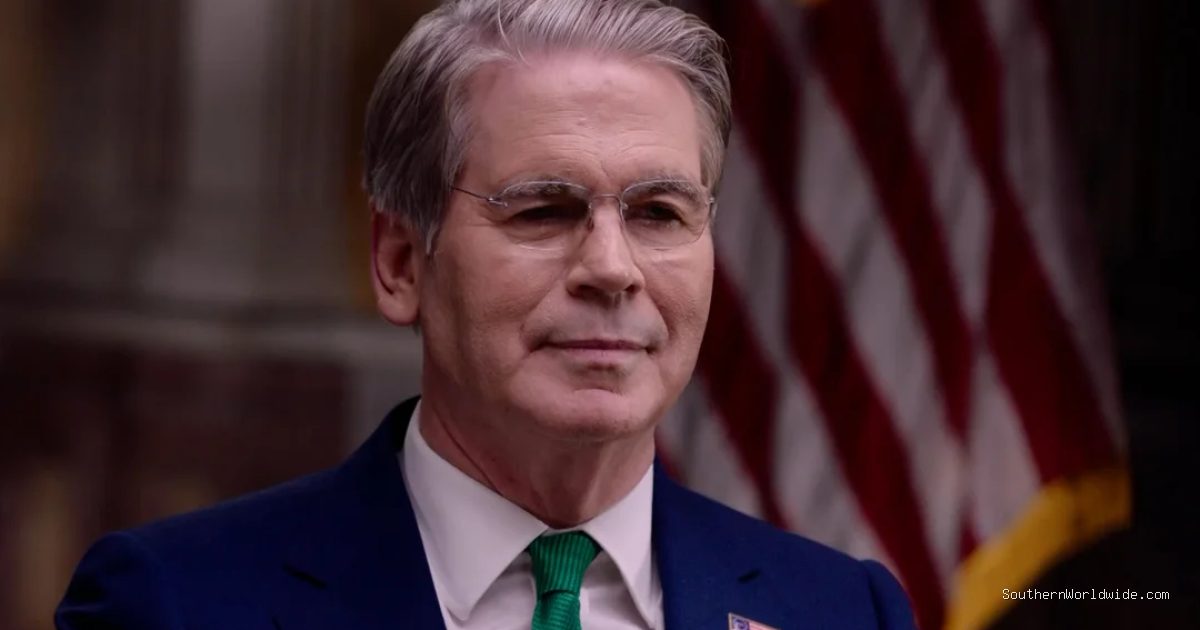
SouthernWorldwide.com – Treasury Secretary Scott Bessent recently addressed significant financial and economic topics in an exclusive interview with CBS News. He discussed President Trump’s substantial cryptocurrency earnings, the innovative Trump Accounts program, and his perspective on the ongoing struggles within the U.S. economy, particularly in light of the Iran war.
Bessent expressed that he does not perceive any “appearance problem” regarding President Trump’s reported cryptocurrency earnings, which a recent financial disclosure indicated amount to approximately $1.4 billion since the start of his second term. These earnings stem from ventures including a “meme coin” and a cryptocurrency company backed by the president and his family.
Congressional Democrats have raised concerns about these earnings, suggesting a potential conflict of interest given the administration’s efforts to ease cryptocurrency regulations. However, Bessent defended the situation, characterizing it as part of an “innovation presidency.” He highlighted advancements in digital access, AI, and the broader tech ecosystem as areas where all Americans are benefiting.
White House spokesperson Anna Kelly echoed this sentiment, stating to CBS News that the disclosure presents “no conflicts of interest.”
Economic Relief on the Horizon
Addressing the economic strain faced by American families, particularly concerning costs at the grocery store and gas pump due to the Iran war, Bessent assured that “we’re going to get to the other side of this.” The conflict, which began in late February, has disrupted shipping in the Strait of Hormuz, a critical oil transit route. This has led to increased gas prices and accelerated inflation, impacting overall costs.
The Labor Department reported that the annual inflation rate rose to 4.2% in May, the highest since April 2023. While the average price of a gallon of regular gasoline was $3.83 on Thursday, it had previously peaked above $4.50 during the war. Prices have been declining as oil costs approach pre-war levels and negotiations continue for a more permanent end to the conflict.
Bessent expressed optimism that gasoline prices could drop to $3 a gallon by Labor Day. He acknowledged that gasoline prices can be “stickier on the way down” and mentioned efforts to encourage retailers to pass on savings to consumers, noting positive responses from larger retailers.
The June jobs report from the Bureau of Labor Statistics indicated that U.S. employers added 57,000 jobs, falling short of economists’ expectations. However, the unemployment rate remained steady at 4.2%, and annual wage growth was reported at 3.5%, which is below the current inflation rate.
Bessent described the gap between wage gains and inflation as a “short-term spike,” anticipating a continued drop in oil and energy prices. He projected that “real wage gains” could be seen as soon as the current month.
When asked to compare the stock market’s recent performance with the real-world economic pressures on Americans, Bessent stated his belief that the market’s strength is a predictor of future economic direction. He explained that the stock market “lives in the future” and its current performance suggests a positive outlook, with expectations of falling interest rates and subsequent real wage growth.
Trump Accounts Aim to Foster Financial Literacy
The White House announced that starting July 4, Americans can begin contributing to Trump Accounts. This federal program, launched earlier this year, is designed to help individuals under 18 invest in the stock market and build savings for their future, mirroring retirement savings for adults.
Bessent highlighted that 38% of American households currently have no investments in equity markets, and the program aims to encourage broader participation in the nation’s economic prosperity. He expressed a goal for this percentage to decrease significantly over time, alongside an increase in financial literacy.
To date, over 6 million Trump Accounts have been opened, with approximately 70 million children in the U.S. eligible for the program. The federal government will contribute $1,000 to accounts for eligible children born between January 1, 2025, and December 31, 2028. These accounts were part of the “big, beautiful bill” legislation passed last year.
Bessent also noted that wealthy philanthropists, organizations, and states can contribute to these accounts, including through public stock. He mentioned a significant contribution from Michael and Susan Dell, who pledged $6.25 billion, or $250 per person.
He anticipates further contributions from philanthropic families and institutions, which could lead to accounts for lower-income families being more substantially supplemented. Bessent also pointed out that these accounts can be carried into adulthood and rolled over into individual retirement accounts.
The program aims to educate families about the benefits of long-term compounding and the experience of owning a share of a company, contrasting it with traditional bank deposits and interest. Bessent emphasized the goal of helping participants “understand, what does a piece of the action feel like?”