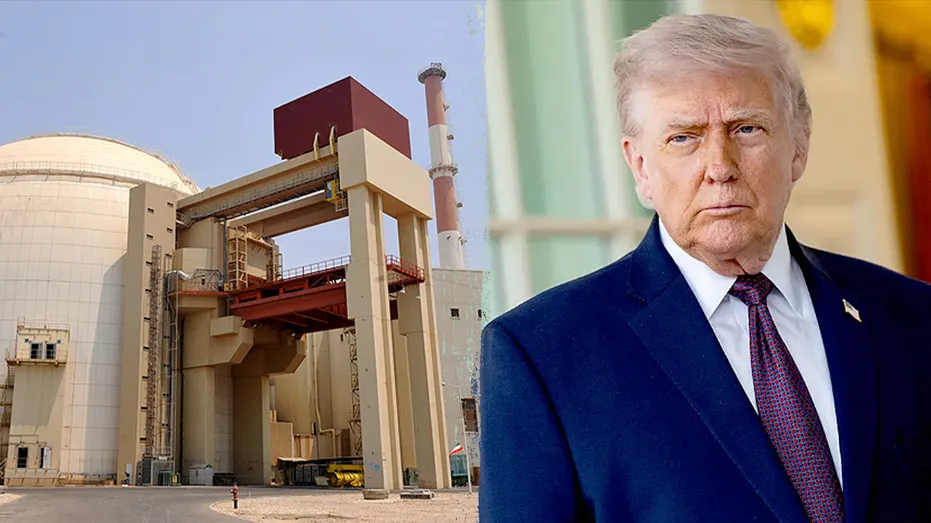
SouthernWorldwide.com – As United States and Iranian negotiators reportedly inch closer to a temporary framework agreement, a critical and consequential question remains unresolved: the fate of Iran’s enriched uranium stockpile.
Iranian officials have consistently stated that retaining enriched uranium is a non-negotiable point, even as President Donald Trump has firmly declared that Iran “will not have a nuclear weapon” and has hinted at the possibility of the U.S. “taking” the material if necessary.
Experts in nonproliferation believe this issue is central to whether any future agreement can effectively prevent Iran from quickly advancing towards weapons-grade enrichment. This concern is particularly acute following U.S. strikes that, while damaging key nuclear facilities, may not have eliminated the nuclear material itself.
AFTER THE STRIKES, HOW WOULD THE US SECURE IRAN’S ENRICHED URANIUM?
The urgency surrounding this issue has intensified following the 2026 Operation Epic Fury against Iran and subsequent U.S. strikes in 2025 targeting critical Iranian nuclear facilities, including Fordow, Natanz, and Isfahan.
While airstrikes are capable of damaging centrifuges, underground tunnel systems, and enrichment infrastructure, experts highlight that physically locating, securing, and neutralizing enriched uranium presents a distinct and separate challenge. Destroying infrastructure can undoubtedly slow or disrupt a nuclear program, but accounting for the nuclear material itself necessitates sustained access, reliable intelligence, and robust international oversight.
“The stockpile is going to be the focus for the administration because that is the material, in particular the 60%,” stated Stricker.
It is believed that Iran possesses thousands of kilograms of enriched uranium, ranging from low-enriched material to uranium enriched to 60%. This 60% enriched uranium is considered near weapons-grade and can be rapidly refined to the 90% level, which is typically associated with nuclear weapons.
Stricker anticipates that the Trump administration will likely insist on either the destruction of these stockpiles within Iran or their removal from the country under international supervision.
“The best option would be to destroy the stockpile in Iran, and then you’re not having to deal with who takes possession and what can Iran do with the stockpile as far as having it sent back under certain terms,” she explained.
EX-CENTCOM COMMANDER WARNS AGAINST ‘RISKY’ US GROUND OPERATION TO SEIZE IRAN’S ENRICHED URANIUM
Read more : Three injured in Swiss train station knife attack, 'Allahu Akbar' allegedly heard
However, even if Iran were to agree to surrender or neutralize the uranium, the execution of such an operation would likely require excavation teams, international nuclear inspectors, and hazardous materials specialists to work within heavily damaged underground facilities.
Any operation aimed at physically securing or removing the uranium could also bring to the forefront broader questions regarding the extent of direct U.S. or international involvement required on the ground. This is especially pertinent as the administration faces political pressure to avoid a prolonged military commitment in Iran.
“You’re talking about having to go down into heavily damaged sites and you’re not sure what the state of the material even is,” Stricker commented.
Strickler elaborated that the underground Isfahan tunnel facility was targeted with Tomahawk missiles, while the Natanz and Fordow sites were struck with massive ordnance penetrators, specifically designed to penetrate buried nuclear infrastructure.
“So you will need hazard material teams to handle it, to safely package it and either to have it destroyed or to remove it from the country safely,” she added.
Stricker pointed out that enriched uranium in this form is chemically toxic and corrosive. However, she clarified that it would not pose the same kind of large-scale radiological danger associated with a nuclear detonation.
“People don’t want to be breathing that material or coming into contact with it with their skin,” she warned.
Another potential avenue for resolution involves transferring the material to international custody.
Stricker suggested that the International Atomic Energy Agency (IAEA), in conjunction with an international recovery team, could potentially oversee the removal of the uranium and its transfer to the agency’s low-enriched uranium fuel bank located in Kazakhstan.
She also noted that limited quantities could eventually be converted into fuel rods for civilian nuclear reactors. However, she strongly argued that Iran should not retain direct access to the material itself.
“The IAEA remains the best place to go back into Iran to monitor the sites, to try to track down and account for the enriched uranium,” Davenport stated.
Despite these considerations, Iranian officials have maintained that the country possesses the right to maintain uranium enrichment and stockpiles as part of its civilian nuclear program.
Ebrahim Azizi, the head of the Iranian parliament’s national security committee, reiterated on Wednesday that maintaining enriched uranium stockpiles remains one of Iran’s “red lines” in negotiations with the United States.
This stance could potentially conflict with what many nonproliferation advocates consider the fundamental objective of any agreement: preventing Iran from retaining the capability for a rapid nuclear breakout.
Stricker emphasized that international inspectors had a relatively comprehensive understanding of the quantities and locations of the material before access became more restricted. However, she argued that any future agreement would necessitate continuous international monitoring of how the uranium is handled and removed.
Stricker contended that any long-term deal would likely require not only the removal of the existing stockpile but also strict limitations on Iran’s future enrichment capabilities and expanded access for international inspectors.
“Ideally it would be a permanent ban,” she said, referring to uranium enrichment. “But it appears that they’re leaning more towards a long moratorium.”
She further added that any agreement would also require the IAEA to regain deep access to Iranian facilities, including military sites, to verify compliance and account for nuclear materials.
“They need full access to go wherever they would like, including to military sites to rule out any Iranian cheating,” Stricker asserted.
For the present moment, negotiators appear to be progressing towards a temporary framework agreement while broader nuclear discussions continue. Nevertheless, experts suggest that the question of what will become of Iran’s enriched uranium stockpile may ultimately emerge as the defining issue of any potential deal.
Even if diplomatic progress is made, the physical task of locating, securing, and permanently neutralizing the material could present a significant challenge that extends far beyond the signing of any agreement.