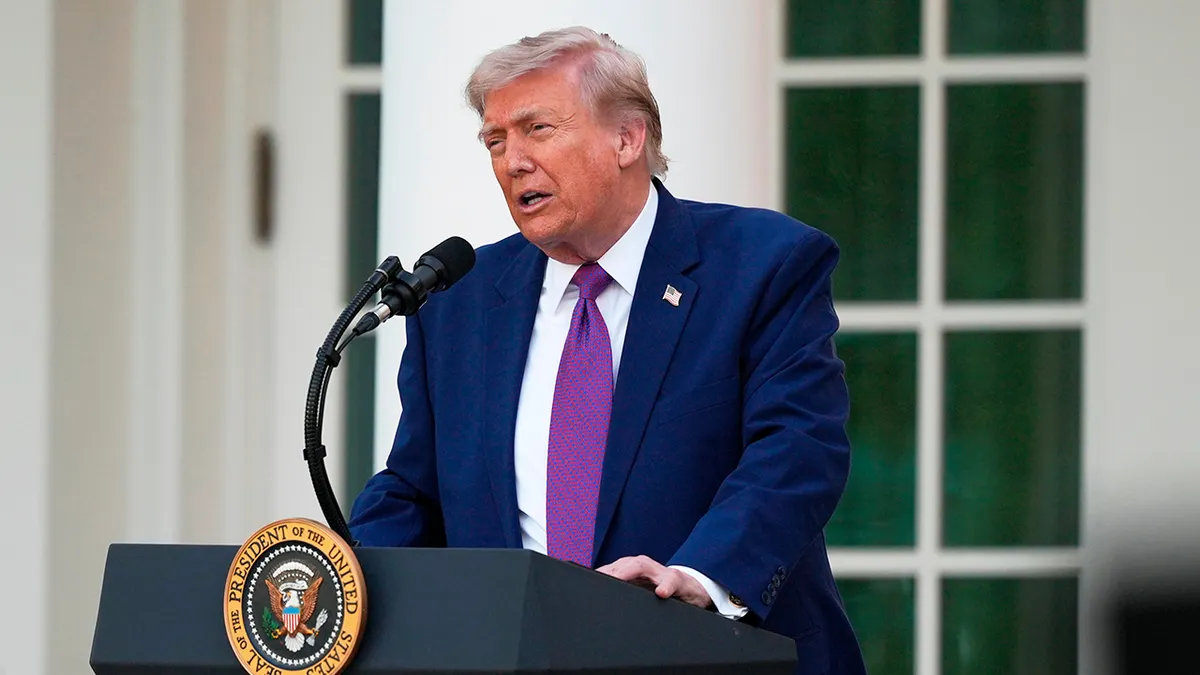
SouthernWorldwide.com – When President Trump visited China in 2017, he presented Xi Jinping with a list of individuals he wished to see freed. My parents were among those names.
That moment was significant. As China’s internment campaign in the Xinjiang Uyghur Autonomous Region was commencing, my parents became vulnerable due to my public criticism in the United States of the Chinese Communist Party’s abuses. Having their names directly presented to Xi by the President of the United States signaled that they were not forgotten.
However, a name on a list holds weight only if the president persistently advocates for it. My mother remained detained by Beijing for nearly two decades, used as leverage against my human rights advocacy and held hostage by the assumption that I would eventually cease my activism. Cabinet secretaries raised her case, and diplomats repeatedly pressed the issue. None of these efforts swayed Beijing. She was only permitted to return home on Thanksgiving Eve 2024, after President Biden directly discussed her case with Xi.
My father did not survive to see his freedom. He passed away in April 2022 at the age of eighty-three, following years of enforced isolation. Because Beijing had personally sanctioned me for my advocacy, I was unable to attend his funeral. He never had the chance to meet his American grandchildren. This is the consequence of inaction—not a single dramatic event, but a slow, quiet erosion of years.
Now, President Trump is preparing to meet Xi again in Beijing on May 14 and 15. He should bring another list.
This issue is not a secondary concern to trade, tariffs, critical minerals, or sanctions. American citizens, lawful permanent residents, and the relatives of Americans are being detained, imprisoned, or subjected to exit bans by the CCP. This is done to coerce silence, extract concessions, and censor individuals within the United States. This constitutes hostage-taking, an unacceptable tool of state coercion directed at the United States, and a direct challenge to American sovereignty. When a foreign government coerces Americans on American soil, it transcends a human rights issue and becomes a test of American resolve.
Cases like these are not resolved through conventional diplomatic channels. Within China’s political structure, such matters can only be addressed at the highest level: Xi Jinping. Prosecutors, security agencies, ministries, and provincial officials all await directives from above. Lawyers working on detention cases involving foreign leverage have explicitly informed me that permission to release a hostage can only originate from Xi. Ambassadors can present names, cabinet officials can engage their counterparts, and diplomats can make inquiries. However, only a president possesses the authority to secure release.
President Trump has prioritized the return of unjustly detained Americans as a central tenet of his foreign policy. His message to Xi should be unequivocal: American families are not bargaining chips, and the United States will not tolerate hostage-taking or exit bans as a routine aspect of bilateral relations. He must demand releases, humanitarian transfers, the lifting of exit bans, and consistent access for U.S. officials and families.
Furthermore, he should instruct his administration to maintain a standing, confidential list of Americans, lawful permanent residents, and U.S.-linked relatives detained or trapped in China. This list should be raised in every future engagement with Chinese officials. This responsibility should be assigned to Secretary of State Marco Rubio.
Rubio possesses a profound understanding of the situation in China, surpassing that of most. As a senator, he was instrumental in establishing the legislative framework that now provides this administration with leverage. This includes the Uyghur Human Rights Policy Act, signed into law by President Trump in 2020, and the Uyghur Forced Labor Prevention Act, signed by President Biden in 2021. Leaders from both parties have contributed to this framework across different administrations. Speaker Nancy Pelosi facilitated the passage of key protections through the House, and Secretary Mike Pompeo determined that China is committing genocide against the Uyghur people, a finding subsequently affirmed by Secretary Antony Blinken. Beijing recognized the implications of these actions before Washington fully did. In retaliation, it sanctioned Rubio and myself. A foreign government does not typically sanction its ineffective critics; it sanctions those who are effective.
Many who have admired Rubio’s record in the Senate have expressed genuine concern regarding his initial months as secretary of state, noting silences where statements were expected and accommodation where pressure was anticipated. I understand these sentiments, as I have experienced similar moments myself. However, I am not yet prepared to conclude that the individual who built this framework has abandoned it. He is in a position of significant authority, wielding more institutional power than ever before, and confronting an adversary he has thoroughly studied for a considerable period.
Rubio’s opposition to the Chinese Communist Party stems from a conviction that runs deeper than mere policy calculations, much like my own. His family fled Cuba, while my mother gave birth to me in a reeducation camp in Kashgar. We have arrived at this struggle through different paths but have reached the same conclusion: authoritarian governments exploit families as instruments of coercion. The appropriate response is not accommodation but sustained pressure.
The list President Trump should carry to Beijing must include Gulshan Abbas, imprisoned in reprisal for her sister’s advocacy in the United States; the artist Gao Shen, a U.S. resident detained without a transparent legal process; Pastor Ezra Jin, held on unspecified charges; and the relatives of Uyghur-American journalists at Radio Free Asia, namely Kurban Mamut, Abdukadir and Ahamatjan Juma, and Hasanjan Niyaz. These individuals have been detained as leverage against American reporters working for a U.S.-funded media organization. For these families, freedom frequently begins with a name being spoken in the appropriate forum.
And under Xi Jinping, there is only one forum that truly matters.
My mother’s journey to America began when President Trump carried a list to China in 2017. She endured years of waiting for her name to reach the right room. My father passed away before she could achieve freedom.
Baca juga di sini: Platner's 2020 'Bullshit' Remark on PTSD, Now Explained by Personal Struggle Amidst Online Fallout
Tonight, other families are still waiting.