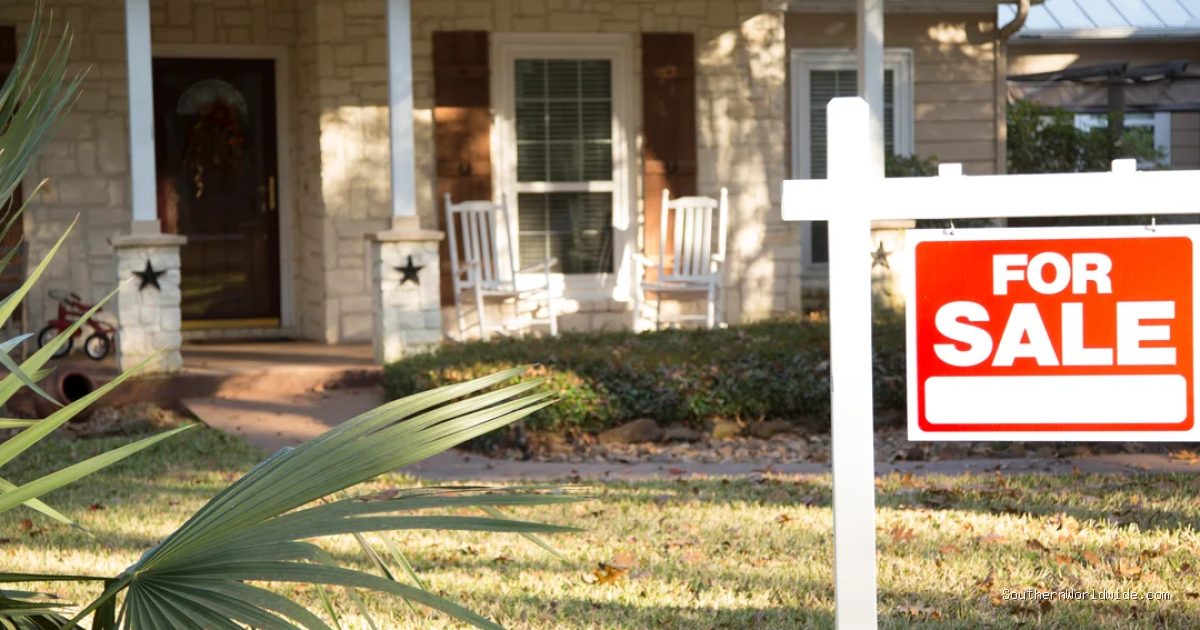
SouthernWorldwide.com – A recent study by LendingTree reveals a concerning trend in the U.S. housing market: fewer than 40% of households that do not currently own a home can afford a starter home.
The analysis defines a typical starter home as one valued at the 25th percentile of the housing market, which equates to approximately $200,000. The findings indicate that only 38% of non-homeowner households meet the criteria to purchase such a property.
Starter homes, while generally smaller and potentially requiring more upkeep than higher-priced residences, serve as a crucial entry point for many Americans to begin building equity. The lack of access to these foundational homes could mean missing out on a significant avenue for wealth accumulation.
This situation is exacerbated by the rising costs of entry-level properties. A separate report highlighted that 242 cities across the U.S. now feature starter homes priced at a minimum of $1 million. This marks a threefold increase since 2020 in the number of cities where even basic homes are valued at seven figures.
Incomes Falling Short
To afford a starter home, non-homeowners would need an annual income of just over $62,000. However, the median salary for this demographic stands at $55,000, creating an income deficit of more than $7,000, or approximately 13%, according to LendingTree’s research.
Closing this financial gap presents a substantial challenge, as noted by Matt Schulz, LendingTree’s chief consumer finance analyst. He expressed that it’s unlikely most individuals receive annual raises of $7,099 to cover this shortfall.
Schulz further elaborated that bridging this gap often necessitates additional efforts such as a side hustle, a second job, or other significant sacrifices. This is particularly difficult given the existing demands on people’s time and resources.
The income disparity is even more pronounced in certain states. For instance, in California, the median income for a non-homeowner household is $72,900. This falls significantly short of the $140,676 required to afford the average starter home price of $482,000 in the state.
“For so many, it feels completely out of reach,” Schulz stated. He lamented that homeownership, a potential tool for wealth building and family stability, seems unattainable due to the daunting financial figures involved, leaving many without a realistic path to market entry.
Where Starter Homes Are More Affordable
Rhode Island emerges as the least affordable state for prospective starter-home buyers, with only 16.5% of households capable of affording an entry-level home. Utah and Hawaii follow closely behind as the second and third least affordable states.
In contrast, southern states present a more accessible route to homeownership for households prioritizing this goal.
Mississippi leads the nation in affordability, where nearly 62% of households can afford a starter home. West Virginia follows with 58% affordability, succeeded by Arkansas and Alabama, both at 54%.