SouthernWorldwide.com – The escalating cost of gasoline is significantly impacting the financial well-being and daily routines of American drivers, forcing some to make difficult choices between essential needs and transportation.
Melissa Miles, a social work student at Eastern Michigan University, faces a daily dilemma. She commutes 80 miles each way from her home in Hillsdale, Michigan, to attend classes. With the state’s average gas price soaring to $4.80 per gallon, the 42-year-old single mother has begun to skip classes to curb the expense of her 2015 Chevrolet Sonic.
“Literally every day, I have to figure out, do I have the groceries for the week, or do I have the necessities for today? And then compare it to, can I miss this class?” Miles shared, highlighting the financial strain of also supporting her five-year-old son.
Miles is among millions of U.S. motorists struggling with the surge in fuel prices. The ongoing Iran war has been cited as a primary driver for this increase. According to AAA, the national average gas price reached $4.54 per gallon on Wednesday, marking an increase of over $1.50 since the conflict began in late February.
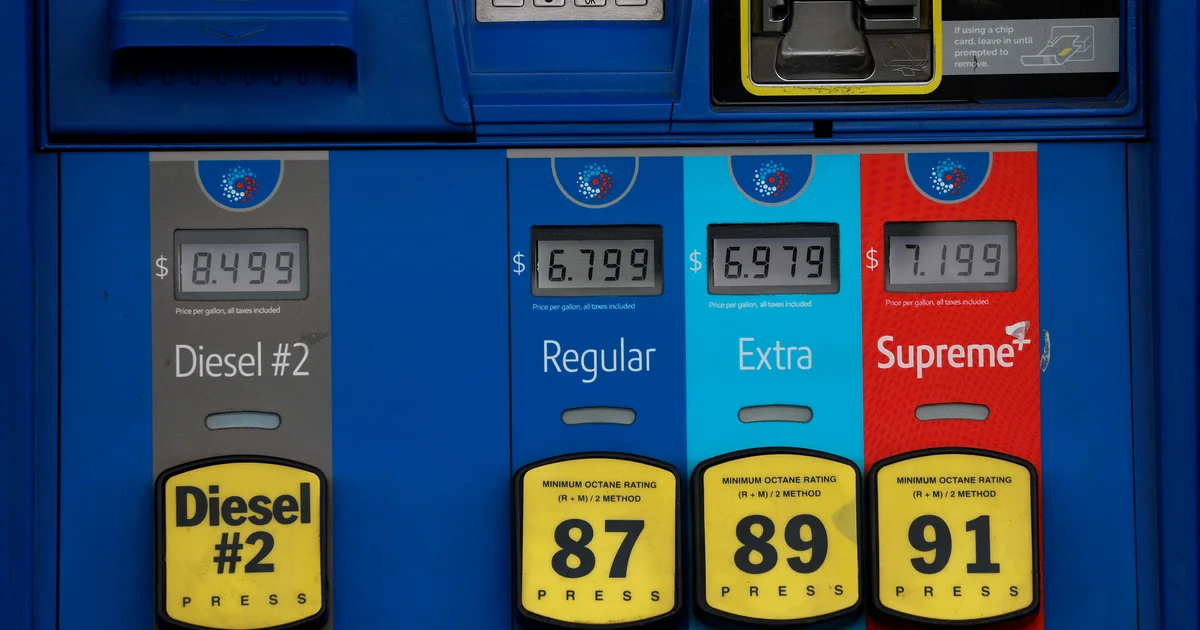
The price of diesel fuel has also seen a dramatic rise, now standing at $5.67 per gallon, a substantial jump from $3.54 a year ago. This trend poses a significant threat to the affordability of numerous goods transported by truck and rail.
Despite President Trump’s recent statement about “great progress” in negotiations with Iran, economists and energy experts anticipate that elevated fuel costs will persist for several months. Mark Zandi, chief economist at Moody’s Analytics, forecasts that gas prices will stabilize around $3.50 per gallon by the end of 2026. This projection is approximately 50 cents higher than the pre-war costs.
Read more: U.S. Allies Urged to Boost Counterterrorism Under New Strategy
White House spokeswoman Taylor Rogers affirmed President Trump’s commitment to alleviating fuel costs for Americans. “As the president continues to exert maximum leverage over Iran with the ongoing successful blockade to bring this conflict to an end, we will see global energy markets stabilize and gas prices plummet back to the multi-year lows Americans enjoyed prior to the start of Operation Epic Fury,” Rogers stated in an email.
Daniel Hock, a resident of Sacramento, California, expressed his dismay over the state’s exceptionally high gas prices, which at $6.16 per gallon, are the highest nationwide. “I ultimately am the one footing the bill under a presidency that said that my gas prices would go down,” he told CBS News.
Hock, a 33-year-old university admissions adviser, now allocates about $100 weekly for gasoline, representing roughly 9% of his pre-tax income. This expenditure diverts funds he would prefer to use for repaying debt incurred during a recent four-month period of unemployment.
The impact of higher fuel costs disproportionately affects low-income Americans, who dedicate a larger percentage of their earnings to gasoline compared to higher-income households. Bank of America data from March revealed that low-income families spent 4.2% of their income on gas, in contrast to 2.7% for more affluent households.
Steph Thornton, a 42-year-old single mother of two and a community health worker in Macomb, Michigan, also feels the pinch. She relies on her 2017 Ford Escape for home visits with clients. Thornton estimates her monthly gas expenses have risen to approximately $400, up from $320 earlier this year when prices were around $3 per gallon.
“Many of us haven’t even regrouped from the pandemic,” Thornton said. “Things are just hitting us back-to-back.”