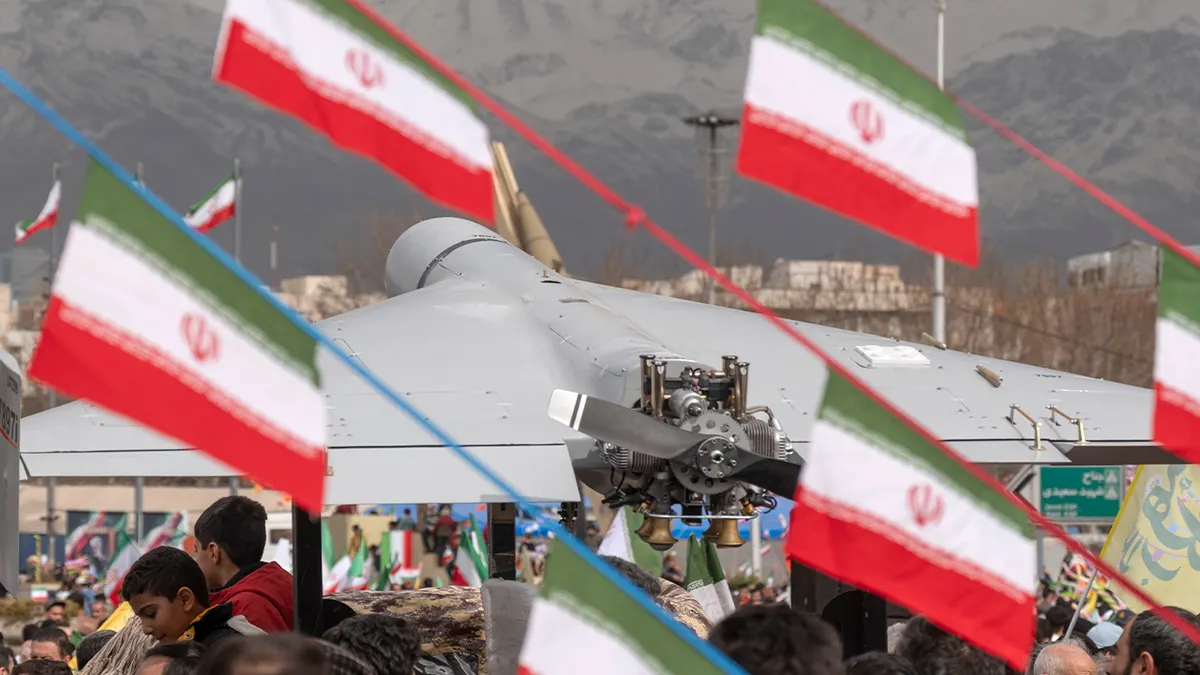
SouthernWorldwide.com – The United States military possesses immense power, capable of overwhelming adversaries. However, the true challenge lies in achieving the final stages of degradation against determined foes, a complex problem shaping modern military strategy.
Recent conflicts in Ukraine and Iran, while seemingly representing past warfare, offer crucial insights into the future. The widespread use of unmanned systems, advanced data science for targeting, decentralized command, and affordable precision strikes are dramatically altering battlefields.
This evolution points towards a future where organized violence becomes more accessible, forcing nation-states to re-evaluate the risks associated with initiating war.
The war in Ukraine, now in its fifth year, stands as Europe’s deadliest interstate conflict since 1945. Russia has suffered over a million casualties, while Ukraine’s losses are estimated between 250,000 and 300,000. Despite this immense human cost, the front lines have remained relatively stable.
Russia currently controls approximately 20% of Ukraine, a territory comparable to Pennsylvania. Over the last year, their territorial gains have been minimal, amounting to about 0.7% of Ukraine’s landmass. The conflict’s intensity remains apocalyptic, with no clear end in sight.
IRAN’S DRONE SWARMS CHALLENGE US AIR DEFENSES AS TROOPS IN MIDDLE EAST FACE RISING THREATS
The conflicts involving Iran have mirrored these dynamics, albeit on a compressed timeline. In June 2025, Operation Midnight Hammer saw swift US strikes against Iranian nuclear facilities, leading to the end of a twelve-day war.
Just eight months later, Operation Epic Fury, a joint US-Israeli endeavor, launched nearly 900 strikes in twelve hours. This operation resulted in the death of Iran’s Supreme Leader Ali Khamenei and the decapitation of its military leadership.
Iran retaliated with a massive barrage of ballistic missiles and drones across the region. By April 1, the UAE alone had intercepted hundreds of missiles and thousands of drones. American forces sustained casualties, with 13 service members killed and 381 wounded before an April 8 ceasefire.
While US operations have significantly degraded Iran’s military infrastructure, further escalation would necessitate confronting a new phase of Iranian response. The Trump administration’s cautious approach acknowledges that achieving the final 10% of degradation would come at a significantly higher cost than the initial 90%.
A new paradigm in the Middle East has emerged, characterized by a peculiar stalemate. This is despite clear indicators of American military superiority based on traditional battle damage assessments.
This phenomenon is termed the “Final Ten Percent.” It describes the current operational environment where conventionally superior militaries can effectively degrade fixed infrastructure. However, coercing a determined adversary towards a specific political outcome becomes increasingly difficult, leading to an inversion of cost-effectiveness.
The economics of modern air warfare highlight this inversion. Iran’s Shahed-136 drones cost between $20,000 and $50,000 each. In contrast, intercepting a single drone with a Patriot PAC-3 missile costs over $4 million, a THAAD interceptor around $15 million, and a Patriot battery approximately $1.5 billion.
During the initial six months of the Iran conflict, US interceptor expenditures against Shaheds alone surpassed $3 billion. Despite a nearly 90% interception rate, the overall cost ratio heavily favors the attacker. Each destroyed drone fulfills its strategic purpose if it forces the expenditure of expensive interceptors, even if it doesn’t reach its target.
RUSSIA’S WAR AGAINST UKRAINE ENTERS FIFTH YEAR AS EXPERTS OUTLINE 3 POSSIBLE OUTCOMES
Ukraine offers a contrasting perspective. Its Magura V5 maritime drones, costing approximately $250,000 to $300,000 each, have forced the Russian Black Sea Fleet to withdraw from Sevastopol. These drones have damaged or sunk about a third of the fleet.
This success demonstrates how a military with limited naval assets can achieve sea denial against a much larger, established fleet, at a fraction of the capital cost. This capability challenges traditional notions of naval power projection.
If the world’s leading military power, even in coalition, faces such uncertain outcomes in pursuing political objectives through war, it raises questions about the future of warfare as a political tool. Inferior militaries can now achieve significant military effects that were previously unimaginable in the pre-digital age.
The central question for powerful militaries is whether traditional definitions of victory remain attainable at their dramatically increased costs. The National Security Strategy of November 2025 acknowledges this challenge.
It highlights the “huge gap” between low-cost drones and missiles and the expensive systems needed for defense. The strategy calls for a national mobilization to develop affordable defensive innovations. It also emphasizes a predisposition to non-interventionism and a shift in burdens in the Middle East.
The diagnosis of the problem and the proposed doctrine are sound. However, the political execution has twice failed to align with these principles, with military actions preceding and following the articulation of these strategic guidelines.
BILLIONS SPENT, WARFIGHTERS WAIT: INSIDE THE PENTAGON’S BROKEN BUYING SYSTEM AND THE PLAN TO FIX IT
The implications for the United States are a call for restraint coupled with strategic reinvestment. Restraint is crucial because further entanglement in the Middle East is strategically unsound given the “Final Ten Percent” dynamic.
Instead, the US should consolidate operational gains and adhere to the National Security Strategy’s core tenets: homeland defense, asserting the Monroe Doctrine in the Western Hemisphere, and deterring China in the Indo-Pacific.
Reinvestment is essential because while the cost curve has inverted, the US procurement portfolio has not kept pace. Although some argue that drones cannot hold territory and that American AI capabilities extend beyond targeting, these points reinforce the need for procurement reform.
The Department of War continues to procure expensive, high-end platforms, which remain necessary. However, it lacks sufficient attritable mass, cost-effective defensive systems like gun-based and directed-energy weapons, and affordable interceptor drones.
The National Security Strategy advocates for a national mobilization to bridge this gap. The success of this initiative remains to be seen, especially against the entrenched defense-industrial complex. The US posture in the Indo-Pacific, facing an adversary with the world’s largest navy and extensive missile inventory, hinges on this adaptation.
Baca juga di sini: Unearthed posts reveal Dem Senate hopeful praised vulgar graffiti, made crude porta-potty admission
A world shaped by this evolving military landscape would not be one of utopian peace. Instability could increase, and casualties might rise, as the future of warfare increasingly involves autonomous systems and robotic combatants.