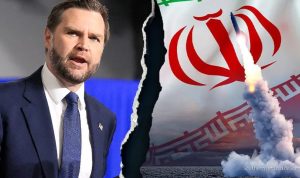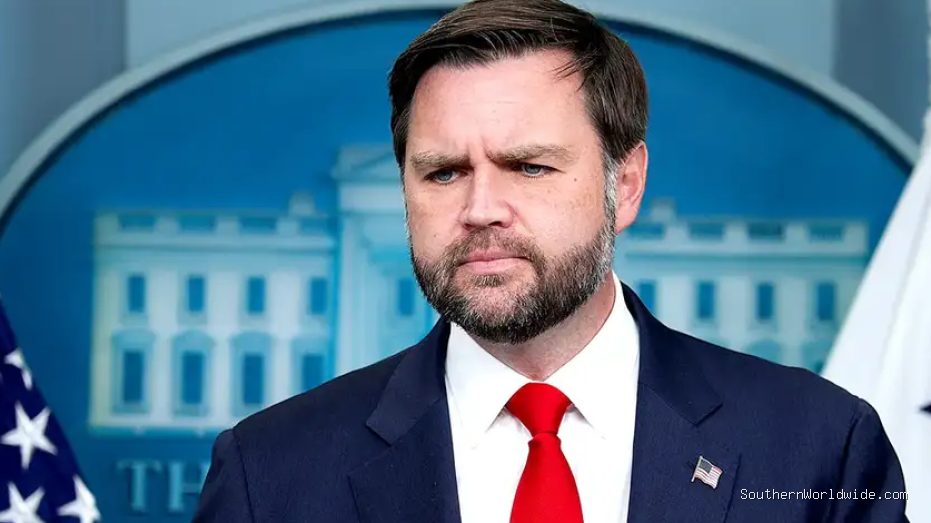
SouthernWorldwide.com – Vice President JD Vance has taken a leading role in defending the Trump administration’s controversial Iran agreement, stepping into the spotlight as a primary advocate for a fragile memorandum of understanding. This shift comes as other key figures, including Secretary of State Marco Rubio, Secretary of War Pete Hegseth, and CIA Director John Ratcliffe, appear to have ceded their prominent positions on the deal.
The memorandum of understanding (MOU), recently signed, does not fully resolve the long-standing dispute over Iran’s nuclear program. Instead, it establishes a 60-day negotiation period intended to transform broad commitments into concrete, enforceable terms. Vance is now tasked with defending this framework, which proponents hail as a diplomatic opening for regional stability, while critics express concerns that it may grant Tehran opportunities to delay progress.
President Donald Trump himself has acknowledged Vance’s central role, humorously stating, “If it doesn’t happen, I’m blaming JD Vance. If it does happen, I’m taking full credit.” This statement underscores the high stakes and the administration’s reliance on Vance to champion the deal.
While Rubio, Hegseth, and Ratcliffe have previously been at the forefront of significant foreign policy initiatives, Vance has spent the past week as the administration’s chief public spokesperson for the Iran deal. He has been actively engaged in media appearances, fielding questions about the negotiations amidst a promotional tour for his new book.
Reports suggest that CIA Director John Ratcliffe was among the intelligence leaders who voiced doubts to President Trump and senior officials regarding the intelligence underpinning the Iran deal. Axios reported that Rubio and Hegseth also held reservations, while Vance and other officials actively supported the MOU. A White House official clarified that Vance was appointed as a lead negotiator from the outset by President Trump, citing his stature as vice president as crucial for engaging key international players from countries like Qatar and Pakistan.
When questioned about alleged internal disagreements, the White House asserted that the MOU fulfills all prior administration requirements and that the president would only endorse a favorable agreement. This response aims to present a united front regarding the deal’s merits.
In contrast to Ratcliffe’s typically more reserved role as CIA chief, Rubio and Hegseth have previously embraced public visibility during high-level diplomatic missions. They have actively participated in press briefings and engaged on social media, sometimes sharing content related to policy achievements. However, their current engagement with the Iran deal appears more subdued.
Rubio has publicly endorsed the MOU, but his support has been notably less emphatic compared to his advocacy for earlier foreign policy endeavors. While he has shared clips of the deal signing and Vance’s media appearances discussing Iran, he has not issued a direct personal statement. His recent activity on X (formerly Twitter) included congratulations to Colombia’s President-Elect Abelardo De La Espriella.
Rubio was also part of President Trump’s delegation in France during the G7 summit, observed standing behind the president during a press conference on the Iran deal. He did not make any public comments during that event.
Similarly, Hegseth has maintained a visible presence on social media during the NATO summit, providing updates on alliance-related meetings and highlighting various War Department initiatives. However, he has conspicuously avoided direct commentary on the Iran agreement.
Hegseth’s last public remarks directly addressing U.S.-Iran relations were made over a month ago, on May 5, during a Pentagon briefing. At that time, he discussed “Project Freedom,” an operation targeting Iran’s nuclear infrastructure, which was distinct from “Operation Epic Fury.” Since then, his public engagements have primarily focused on NATO and defense diplomacy, including bilateral meetings with international counterparts and engagements with leaders from Italy, Singapore, South Korea, and Ecuador.
The framework of the Iran MOU has drawn criticism from both conservative and liberal factions. Comparisons have been made to former President Barack Obama’s Joint Comprehensive Plan of Action (JCPOA), a deal that remains politically contentious for many Republicans. Both President Trump and Vance have publicly rejected any parallels to the JCPOA.
A White House spokesperson, Pigott, stated, “Secretary Rubio and the entire administration is 100% in lockstep behind President Trump. The President has taken unprecedented action to prevent the Iranian regime from obtaining a nuclear weapon, making the U.S. and the entire world safer.” This statement aims to reinforce the administration’s unified stance on the president’s actions regarding Iran.
Rubio is scheduled to travel to Geneva on Monday, following Vance’s engagement in discussions with Iranian representatives, alongside Jared Kushner and Steve Witkoff, which began on Sunday.
Rubio, Hegseth, and Ratcliffe have previously been central figures in some of the Trump administration’s most significant foreign policy engagements and achievements. These have included high-stakes negotiations with Vladimir Putin in Alaska, G7 summits, and NATO conferences, where they often shared the spotlight with the president.
Vance’s absence from a notable announcement by President Trump at Mar-a-Lago in January, following the capture of former Venezuelan President Nicolás Maduro, had drawn attention at the time. Prominent figures such as Rubio, Hegseth, Ratcliffe, Joint Chiefs Chairman Gen. Dan Caine, and senior adviser Stephen Miller were present alongside the president during that administration “victory lap.”
Vance reportedly stayed late into Sunday night to finalize the deal, with the objective of initiating nuclear inspections as soon as possible. He shared his experience attempting to contact inspectors in the early hours of Monday morning, noting the difficulty in reaching them at such an unconventional hour.
“I expect that will happen at the minimum this week, but we think even some of those conversations with the inspectors and with the IAEA [International Atomic Energy Agency] could happen as soon as today,” Vance stated on Monday, indicating an optimistic outlook for the commencement of inspection activities.