SouthernWorldwide.com – Within the next decade, it’s highly probable that a humanoid robot will be a common presence in nearly every American home and workplace. These robots will possess the ability to perceive and process everything around them, shaping our future. However, a crucial question remains: will these ubiquitous robots be manufactured in the United States or China? Securing American dominance in the robotics race is a matter of both national security and economic importance. Both the current administration and Congress are actively engaged in addressing this challenge, and these efforts require widespread bipartisan support and prompt implementation.
Robots are increasingly becoming the physical manifestation of artificial intelligence. The era of large, stationary, single-purpose robots is giving way to versatile humanoid robots capable of learning and performing a wide array of tasks. The potential benefits in terms of productivity, efficiency, and safety are truly remarkable.
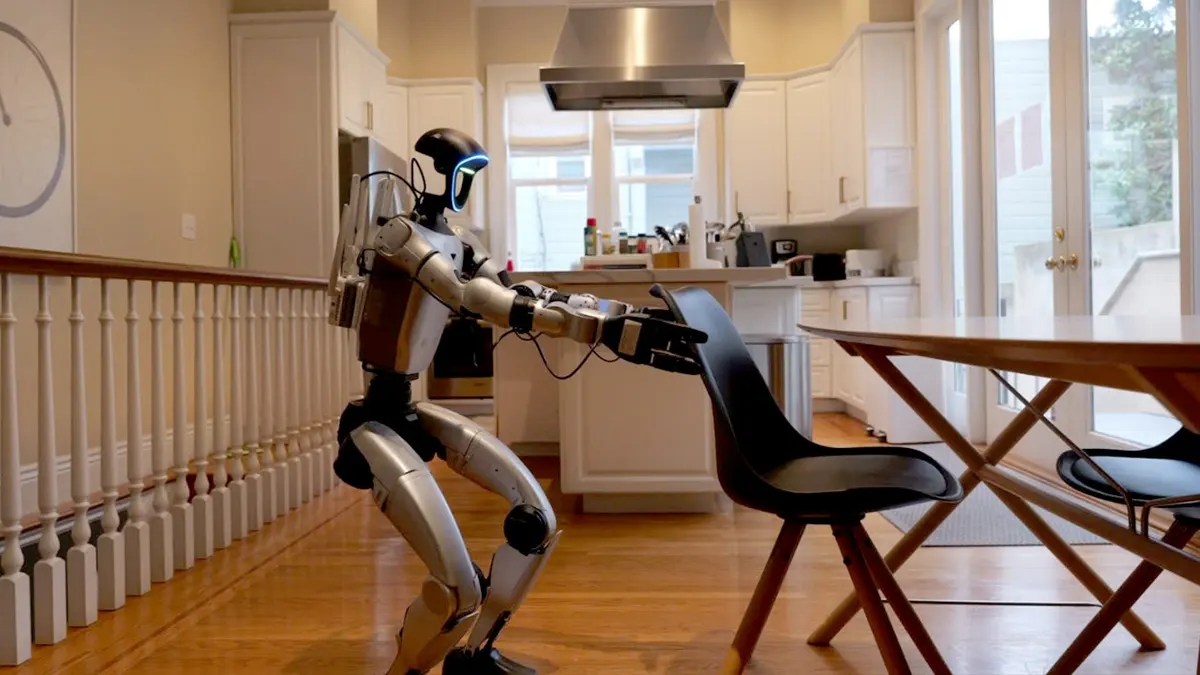
Picture a humanoid robot capable of assisting an elderly parent, preparing meals as a personal chef, or aiding a surgeon during intricate operations. These machines are poised to enter hazardous environments like burning buildings, manage the cleanup of nuclear waste, maintain deep-sea pipelines, and fill dangerous, repetitive roles in American manufacturing that currently pose significant health risks and even endanger the lives of human workers. Goldman Sachs forecasts that the market for humanoid robots could reach an impressive $38 billion by 2035. The nations and companies that lead in this technological frontier will gain a substantial economic advantage for generations to come, along with the geopolitical influence that accompanies such leadership.
This brings us to the emerging threat.
HUMANOID ROBOTS HIT MASS PRODUCTION IN CHINA
During the recent Lunar New Year, Chinese robots captured global attention with a synchronized performance of humanoid robots dancing and executing martial arts with remarkable precision. This spectacle was both awe-inspiring and a cause for concern, and it was not a random occurrence. It was a deliberate message, a warning.
China’s Ministry of Industry and Information Technology has designated humanoids as a strategic emerging industry. The country has committed billions of dollars in state resources to ensure its supremacy in this burgeoning technological field, and their strategy is proving effective. Some market analyses suggest that as much as 90% of all humanoid robots are currently manufactured in China.
This situation extends beyond mere commercial competition for America; it represents a national security crisis unfolding gradually.
Consider the implications of a networked fleet of Chinese-manufactured robots operating within American homes, hospitals, factories, and government facilities. These machines are equipped to observe, listen, and map their surroundings. They connect to the cloud and receive software updates from their manufacturers. These updates could potentially alter their behavior or, upon command, extract sensitive data.
While we are aware of the risks associated with modern technology, humanoid robots present a far more intimate and consequential tool for surveillance and sabotage. A smartphone might reveal your location, but a humanoid robot would possess knowledge of your home, your family, your daily routines, and your personal secrets.
NEW REPORT WARNS OF GROWING NATIONAL SECURITY THREAT TO U.S. AS CHINA BUILDS AI: ‘SIGNIFICANT AND CONCERNING’
China’s doctrine of civil-military fusion, combined with the dual-use potential of humanoid robots, amplifies these concerns. The very same robot that performs domestic chores like folding laundry in a suburban home could, with a simple software update, be repurposed for logistical support, reconnaissance, or other military-related physical tasks.
An army of commercially deployed Chinese robots effectively constitutes a latent instrument of the Chinese state, a potential threat waiting to be activated.
America has encountered similar strategic technological competition in the past and has emerged victorious. However, this success was not a matter of chance. It was the result of deliberate national strategy, coordinated investments from both public and private sectors, and well-defined policy frameworks. The same approach is urgently needed today.
The case of commercial drones serves as a cautionary tale. Approximately a decade ago, the United States allowed China to dominate the drone market without a comparable industrial policy response. Today, Chinese manufacturers hold the vast majority of the global drone market.
American companies, law enforcement agencies, and even segments of the military found themselves reliant on Chinese hardware before policymakers fully grasped the extent of the problem. We are now struggling to dismantle a dependency that should never have been allowed to develop in the first place. To its credit, the current administration has taken steps to address this issue, such as placing foreign-made drones on the FCC’s covered list. However, we are in a reactive position, playing catch-up, and still significantly behind.
We cannot afford to repeat these mistakes with the development and deployment of humanoid robots.
The Trump administration has demonstrated an understanding of the critical stakes involved in artificial intelligence and cybersecurity, implementing ambitious strategies that mobilize federal resources and align both the public and private sectors around national priorities. The administration is currently in the process of developing a national robotics strategy. It is imperative that this initiative be both ambitious and comprehensive.
Among other key elements, a National Robotics Strategy should aim to: (1) establish clear objectives for global leadership; (2) aggressively fund federal procurement, investment, and research; (3) secure the supply chain for essential robotic components; (4) position the United States as the global leader in setting robotics standards; and (5) create a framework that enforces stringent data security requirements and prevents infiltration by hostile entities.
Congress should act in tandem with these efforts. Senators Schumer and Cotton recently introduced the American Security Robotics Act, which effectively prohibits the U.S. government from purchasing and operating most humanoid robots manufactured by Chinese firms. This rare display of bipartisan consensus highlights the gravity of the situation.
The pending bill represents a meaningful initial step, and Congress should be encouraged to build upon it with a well-considered and nuanced approach to this rapidly developing industry. Congress must implement safeguards to protect the nation from the risks posed by fully integrated Chinese robotic systems.
Simultaneously, the government must carefully acknowledge the reality that critical robotics components, such as motors and magnets, are not yet competitively manufactured domestically. We need to reduce our reliance on Chinese components and begin producing these parts within the United States. Broad, restrictive bans could hinder the growth and innovation of American industries.
The window of opportunity to act is open, but it will not remain so for long. The Lunar New Year video was merely a glimpse of what is to come. The nation that successfully deploys the most advanced humanoid robots will fundamentally shape the physical world, much like the nation that led in semiconductor technology shaped the digital realm.
That nation should be the United States.
The machines are indeed coming. The only question that remains is whose machines they will ultimately be.