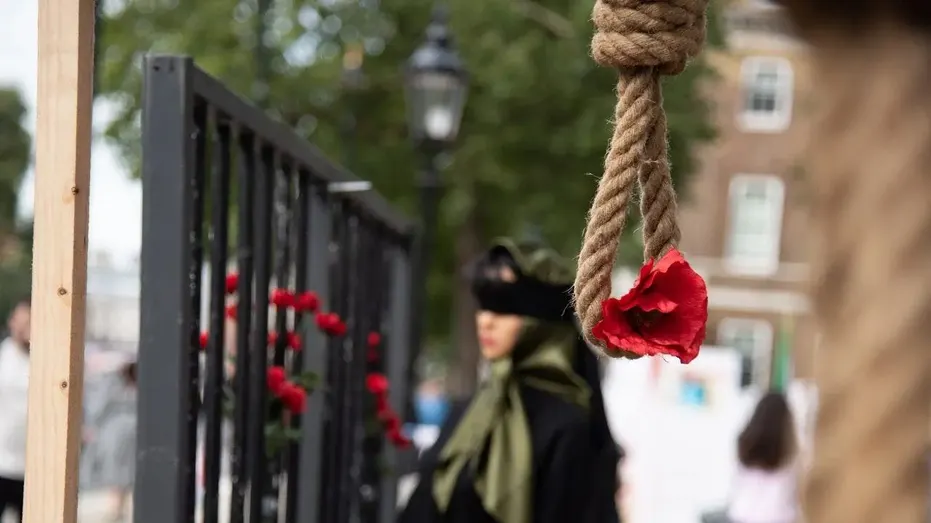
SouthernWorldwide.com – The Islamic Republic of Iran has intensified its campaign of executions targeting anti-regime activists, with the full extent of the casualties likely concealed by the regime’s pervasive internet censorship and blackout measures.
Since the anti-regime demonstrations that began in January, Tehran has implemented a severe crackdown against its opposition. This has included widespread arrests and a surge in executions.
Reports indicate a pattern of torture and sham trials, often relying on coerced confessions as the sole evidence for severe punishments and executions.
The National Council of Resistance of Iran (NCRI) has documented at least 32 executions between March 19 and June 1. This figure includes eight members of the People’s Mojahedin Organization of Iran (PMOE/MEK) and 24 individuals who participated in the January 2026 protests.
Maryam Rajavi, the NCRI’s President-elect, has publicly called for urgent United Nations intervention to prevent further executions.
Prior to this, on June 2, following two other executions of January protesters, Rajavi stated on X that the “clerical regime has committed another horrific crime in Iran.” She urged the UN Security Council and the European Union to condemn these executions and take effective measures to halt the killing of political prisoners and protesters.
The Iran Human Rights Society corroborated the NCRI’s findings, reporting 18 recent executions between May 31 and June 1. A representative from the organization explained that despite internet restrictions, they gather information from a network of sources, including prison informants, families of prisoners, lawyers, and local contacts.
All reports are meticulously reviewed and cross-checked through multiple independent sources before publication. While acknowledging that internet restrictions complicate documentation, they affirmed their continued commitment to receiving, verifying, and documenting information.
The representative noted that the actual number of executions is almost certainly higher than the documented figures. The Iranian authorities frequently conduct executions in secret, often without public announcement.
Furthermore, a significant number of executions, particularly in remote areas or locations with limited access to information, may go undocumented or reach the Iran Human Rights Society with considerable delay.
The organization also stated that the quantity of executions they document has consistently been lower than the actual number carried out by the regime.