
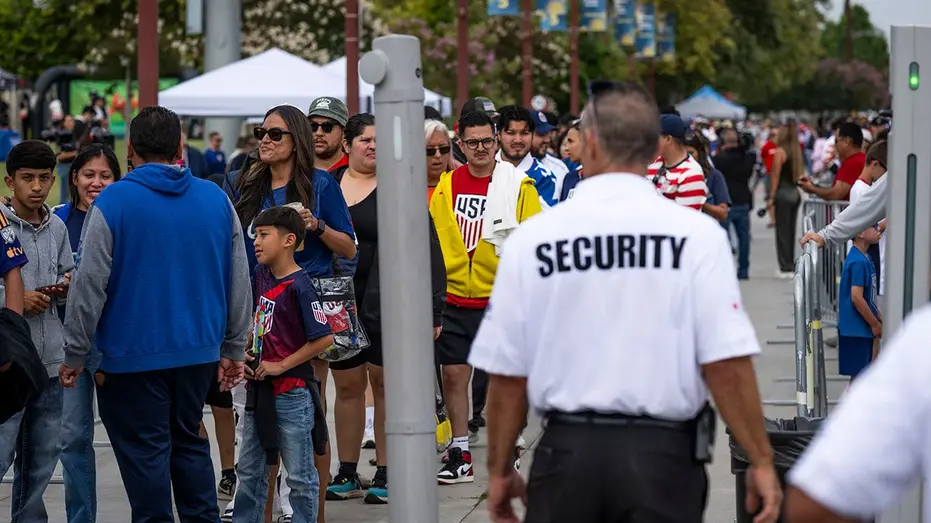
SouthernWorldwide.com – The upcoming 2026 World Cup, set to be held across 16 diverse venues in North America, presents a security challenge far exceeding that of a typical Super Bowl. This is according to a leading security expert, who highlights the unprecedented scale and complexity of the event.
While 11 of these venues are familiar to NFL fans, hosting games every fall and winter, the security measures for the World Cup will be significantly amplified. What fans perceive as an enhanced security presence at an NFL game will be “on steroids” for the World Cup, and for very substantial reasons.
The tournament will feature an expanded format with 48 teams competing in 104 matches. This means that many of the security protocols and procedures that attendees are accustomed to at sporting events will be entirely re-evaluated and revamped.
Consider MetLife Stadium, the venue chosen to host the final match. To attend, fans will face significant logistical and financial hurdles. For instance, NJ Transit train tickets are priced at $98. Furthermore, Penn Station will be closed to non-World Cup attendees for four hours leading up to matches. Parking availability is extremely limited, with “premium parking” at the nearby American Dream mall costing nearly $300.
However, the most substantial changes are on the security front. This is because, for the vast majority of attendees, the World Cup experience will be entirely new and unfamiliar.
The expert, Evans, pointed out that in the current heightened political climate, surrounding tensions could escalate rapidly. He elaborated on the specific risks associated with global events.
“You have people who have flown in just for that game and spent a lot of money. They might be bringing their political opinions or issues they want to make a statement about at an event like MetLife Stadium, which has global attention and scrutiny. The security risks are different than a Super Bowl,” Evans stated.
Security teams, including those from Evans’ company Xtract One, will collaborate closely with FIFA’s security personnel, local law enforcement agencies, and even other government bodies like Immigration and Customs Enforcement (ICE). While ICE will be present for safety, their role will not involve customs enforcement. This multi-agency approach aims to ensure the smoothest possible execution of the event.
Evans emphasized the long lead time required for planning such a massive undertaking. “People start planning for these activities years in advance because there is so much complexity involving local law enforcement, the DHS, FBI, CIA and Interpol. It takes a lot of coordination regarding technology, scanning social media and even counter-drone activities. It’s particularly complex now because of AI software, smartphones, and drones,” he explained.
The collaborative spirit among security organizations is paramount. Evans noted, “Security people do not see each other as competition. They share a common interest in protecting people. You will see organizations like ours partnering with competitors to deliver the right solution.”
The potential attendance of high-profile figures, such as former President Donald Trump, adds another layer of complexity. His past attendance at major sporting events, including the Club World Cup final at MetLife, suggests his presence is possible. If such an attendance is confirmed, Evans advised that it should be announced well in advance to allow for adequate preparation.
“You’ve got multiple more layers because these activities are a potential target for someone wanting notoriety and impact. When you add a president to the welcoming ceremony, it just heightens the security levels that much more and requires coordination,” he added.
Given the sheer volume of matches scheduled over a relatively short period, Evans anticipates that security teams will need to adapt their protocols dynamically. They will learn from the security measures implemented at previous matches across the continent. While completely eliminating all potential conflict is an impossible goal, Evans believes that minimizing the risk to the greatest extent possible is achievable.
He highlighted the extensive information sharing that occurs among security professionals. “I think individuals would be very surprised by how much sharing and coordination goes on. We see this with arenas and stadiums; for example, during a Harry Styles tour, all the venues would get together to share what they learned — like people concealing items in Big Bird or banana outfits. There is an unbelievable amount of sharing in a coordinated fashion and debriefing calls after each event to allow time to adjust before the next match,” Evans shared.
The ultimate objective for security is clear: minimize risk and impact. “The primary focus is to minimize the risk and minimize the impact. You have millions of people attending with their children and families. Ultimately, you want to make sure no one in that fan group is impacted negatively. Is someone going to get drunk and disorderly? Probably. How quickly can you contain that risk so the general population has the experience they should have?
The success of the security operation will be measured by a simple yet profound metric: “The win: nobody gets hurt.”


