SouthernWorldwide.com – Oil prices experienced a significant drop following President Trump’s announcement of a deal with Iran, which is set to reopen the Strait of Hormuz. This development is also expected to trigger a surge in U.S. stock markets.
The Strait of Hormuz is a critical waterway in the Middle East, responsible for approximately 20% of global crude oil transportation. Its closure had a substantial impact on oil prices and global trade.
The reopening of the Strait is anticipated to bring relief to both businesses and consumers. This comes at a time when May’s inflation figures reached their highest point in over three years, with energy prices being a major contributor.
Brent crude, the international oil benchmark, saw a decline of $4.22, or 4.8%, settling at $83.11 per barrel. Similarly, West Texas Intermediate, the U.S. standard, fell by $4.41, or 5.2%, to $80.47 per barrel.
Wall Street is bracing for a strong opening when trading commences at 9:30 a.m. ET. Futures for the S&P 500 indicated a potential increase of 1.2%, while the Dow Jones Industrial Average futures showed a gain of 0.9%.
President Trump stated that the Strait of Hormuz would be reopened on Friday, the same day the deal is scheduled to be signed. He also confirmed that the U.S. naval blockade on Iran would be lifted.
Despite the de-escalation of hostilities, analysts from the political risk consultancy Eurasia Group suggest that it could take several weeks for oil tanker traffic through the Strait of Hormuz to return to even 50% of its pre-war levels. Energy experts emphasized the need for shipping and insurance companies to be assured of the pact’s stability to resume oil and gas flows from the region.
While gas prices may decrease in the coming weeks, experts believe they are unlikely to revert to pre-war levels in the immediate future. This sustained higher cost could continue to place financial strain on American households and businesses.
Neil Shearing, group chief economist at Capital Economics, informed investors in a report on Monday that even with the immediate reopening of the Strait, inflation might see a slight further increase in the short term. He also noted that some economic damage during the third quarter might be unavoidable.
The agreement follows a period where the Consumer Price Index in May surged to its highest point in over three years. Energy prices were a significant factor, accounting for more than 60% of the monthly inflation increase. Although fuel prices have seen a modest decrease in June, this trend was not reflected in the May data.
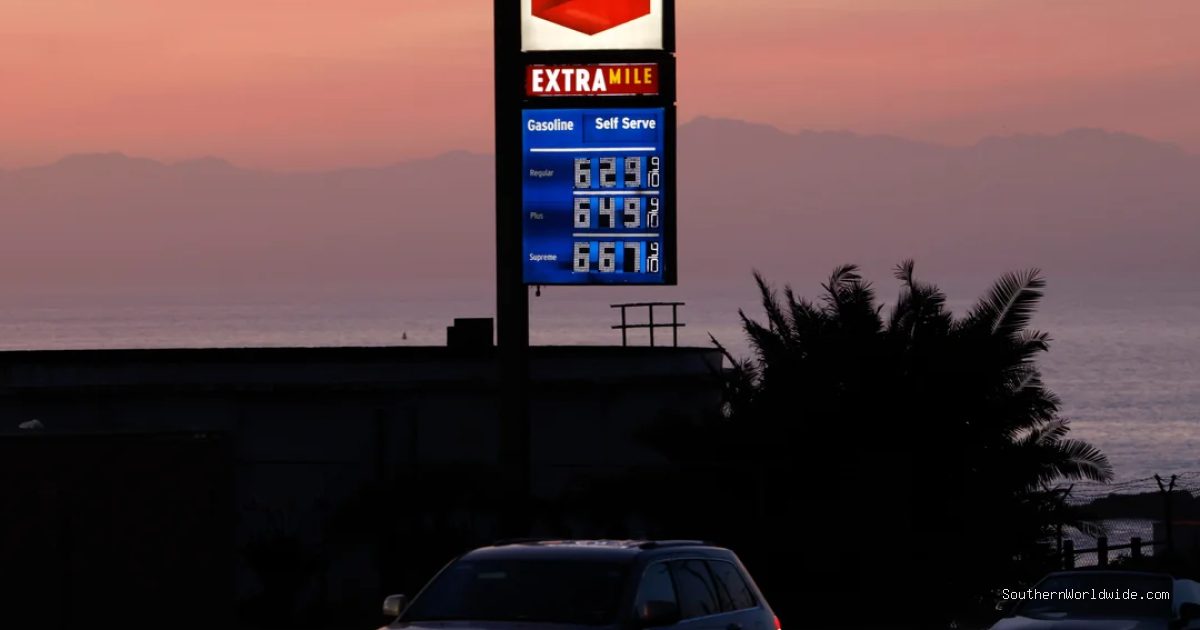
Even with the recent dip in gas prices, Americans are still paying 37% more at the pump compared to the period before the war began. According to AAA, the average national price for a gallon of gasoline on Monday was $4.07, a decrease from $4.53 recorded a month prior.