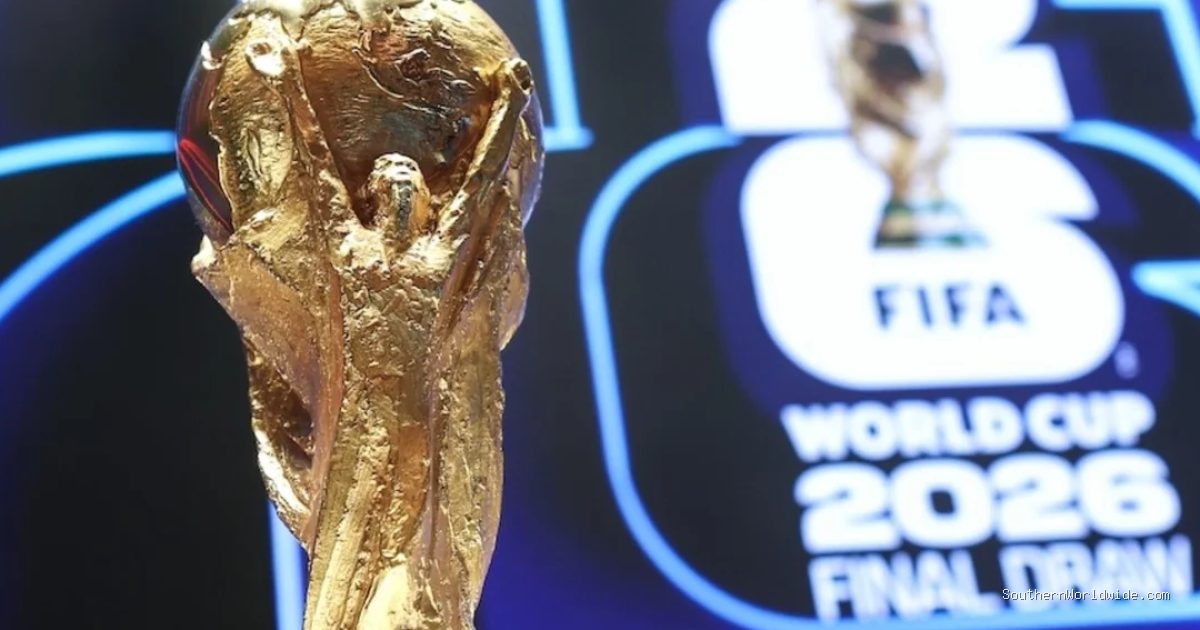
SouthernWorldwide.com – The 2026 World Cup is poised to be the largest sporting event in history, drawing millions of fans and generating substantial revenue. However, the long-term economic impact on host nations is expected to be modest.
The tournament, which kicks off today, will span three countries and 16 cities. It is anticipated to captivate around 6 billion people worldwide and attract 6.5 million spectators to the games.
A joint study by FIFA and the WTO projected that the World Cup would boost the U.S. GDP by $17.2 billion and the global GDP by $40.9 billion. The White House had previously estimated the tournament could generate $30 billion for the U.S. economy.
In comparison, the Super Bowl typically generates between a few hundred million and approximately $1 billion. The World Cup’s economic impact is therefore significantly larger.
Job creation is a notable aspect of this economic boost. Hiring figures in May showed a substantial increase in U.S. leisure and hospitality jobs, partly attributed by economists to anticipated tourism from the World Cup.
Host cities across the U.S., including Atlanta, Boston, Dallas, Houston, Kansas City, Los Angeles, New York/New Jersey, Philadelphia, Seattle, and the San Francisco Bay Area, are set to benefit from increased economic activity.
A recent study by SoFi indicated that each host city could experience between $160 million and $620 million in incremental economic activity.
International visitors are expected to spend over $5,000 per person during their stay in the U.S., according to the U.S. Travel Association.
Beyond its status as the world’s largest sporting event, the World Cup is also shaping up to be one of the biggest gambling events ever. H2 Gambling Capital forecasts that approximately $60 billion will be wagered on the tournament through legal sportsbooks.
This includes an estimated $2.9 billion from the U.S. alone.
Disappointing Hotel Sales
Despite high hopes for the U.S. tourism industry, hotel bookings for the World Cup have been slower than anticipated.
A report from the American Hotel & Lodging Association (AHLA) revealed that 80% of hoteliers in host cities reported bookings below their initial forecasts. The AHLA cited international travel barriers and rising costs as contributing factors to this weaker demand.
However, AHLA CEO Rosanna Maietta noted that hotels are observing an increase in demand and expect a surge in last-minute bookings as some games approach.
One significant challenge for fans has been the exceptionally high price of World Cup tickets. Dynamic pricing and venues catering to wealthier attendees have driven these costs up, as previously reported.
When factoring in the cost of tickets, flights, accommodation, and other expenses, fans are estimated to spend more than $2,100 on average to attend the World Cup, according to LendingTree.
While many games are expected to draw large crowds, some seats might remain unoccupied. As of Wednesday, 29 games were sold out, but 75 still had tickets available, according to the Associated Press.
The remaining tickets are likely to be expensive, as much of the available inventory is at the higher end of the price spectrum.
“Zero” Long-Term Gains?
Goldman Sachs suggests that while the World Cup will provide a temporary economic boost to the U.S., the growth will be short-lived.
Analyzing data from previous World Cups dating back to 1982, the investment bank found that the event leads to a modest increase in the host nation’s real GDP during the tournament year.
However, the long-term effects on economic growth are considered to be “effectively zero” by their analysts.
Host countries, including the U.S., Canada, and Mexico, will only experience a partial benefit. Much of the spending associated with the event will occur outside their borders, the investment bank’s report indicated.
“While more beer will be bought and more football-related merchandise will be purchased as a consequence of the World Cup, most of that beer and most of the merchandise will not be purchased in the host countries,” Goldman analysts stated.
Edited by Alain Sherter.