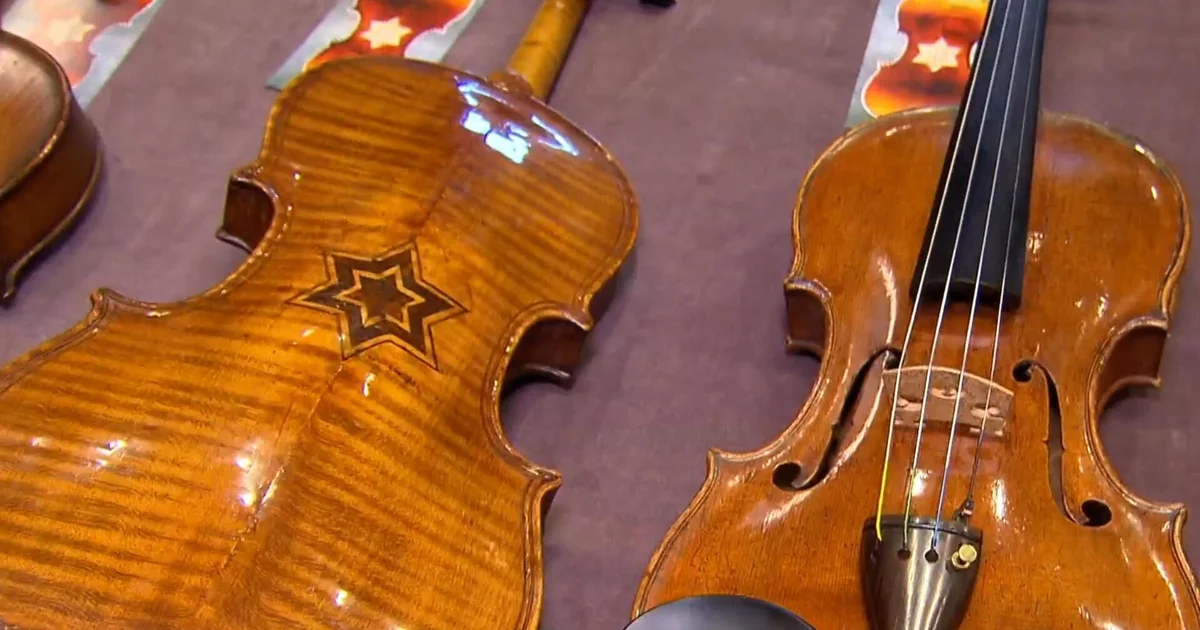
SouthernWorldwide.com – An exhibition featuring violins from the Holocaust era is offering a unique opportunity for the public to connect with instruments that carry profound historical significance and the stories of those who played them during one of history’s darkest periods.
The “Violins of Hope” project is a traveling collection that showcases violins and other string instruments rescued and restored since the end of World War II.
These instruments were often played by Jewish musicians in concentration camps, ghettos, and during other harrowing experiences of the Holocaust.
The project aims to preserve the memory of the Holocaust and highlight the resilience of the human spirit through music.
Israeli-American violinist Itzhak Perlman, a world-renowned musician, recently shared his thoughts on participating in the “Violins of Hope” program.
Perlman spoke with “CBS Saturday Morning” about the deeply moving experience of playing a violin that was present at Auschwitz.
He described the profound emotional weight carried by these instruments, which served as a source of solace and a testament to life even amidst unimaginable suffering.
Perlman emphasized that the program is more than just a display of historical artifacts; it’s a living connection to the past.
He highlighted the importance of these violins as witnesses to history, carrying the echoes of melodies and the memories of those who perished.
The “Violins of Hope” initiative was founded by Israeli luthier Amnon Weinstein.
Weinstein began collecting these instruments decades ago, driven by a desire to ensure that the voices of the Holocaust victims would not be silenced.
His collection has grown to include over 100 violins, each with a unique story of survival, loss, or defiance.
The exhibition aims to educate audiences about the Holocaust, the persecution of Jewish people, and the role of music in preserving culture and identity.
It serves as a powerful reminder of the atrocities of the past and the importance of remembrance.
The instruments are not merely relics; they are brought to life through performances by musicians who understand and honor their history.
By playing these violins, musicians connect with the past, allowing the instruments to “speak” their stories to contemporary audiences.
The project has toured internationally, reaching diverse communities and fostering dialogue about the Holocaust and its enduring lessons.
Each violin in the collection represents a life, a family, and a culture that was targeted during the Holocaust.
The meticulous restoration process ensures that these instruments are not only preserved but also capable of producing music once more.
This act of restoration is symbolic of the project’s broader mission to bring hope and remembrance to the forefront.
The “Violins of Hope” exhibition is designed to be an immersive and educational experience.
It often includes historical context, photographs, and personal testimonies related to the instruments and their former owners.
This approach helps visitors understand the human stories behind the violins, making the historical impact more tangible.
Perlman’s involvement underscores the artistic and emotional depth of the project.
His willingness to play an instrument that experienced such profound trauma reflects a deep respect for the victims and a commitment to the cause.
He expressed that playing such an instrument carries a significant responsibility and a unique connection to the past.
The initiative also serves to combat Holocaust denial and distortion by providing concrete evidence and personal narratives.
It emphasizes the importance of historical accuracy and the need to confront the past directly.
The “Violins of Hope” project has been praised for its innovative approach to Holocaust education and remembrance.
It uses the universal language of music to convey powerful messages of resilience, loss, and the enduring importance of human dignity.
The project encourages reflection on how art and culture can serve as vehicles for understanding and empathy.
By experiencing the “Violins of Hope,” audiences gain a deeper appreciation for the cultural richness that was tragically impacted by the Holocaust.
It’s a call to action for continued vigilance against hatred and intolerance in all its forms.
The exhibition serves as a poignant reminder that history is not abstract but is embodied in the objects and stories that have survived.
Read more: Spain Prepares Cruise Ship Docking for Hantavirus Evacuation in Canary Islands
The “Violins of Hope” continues its mission to share these powerful instruments and their stories, ensuring that the lessons of the Holocaust are never forgotten.