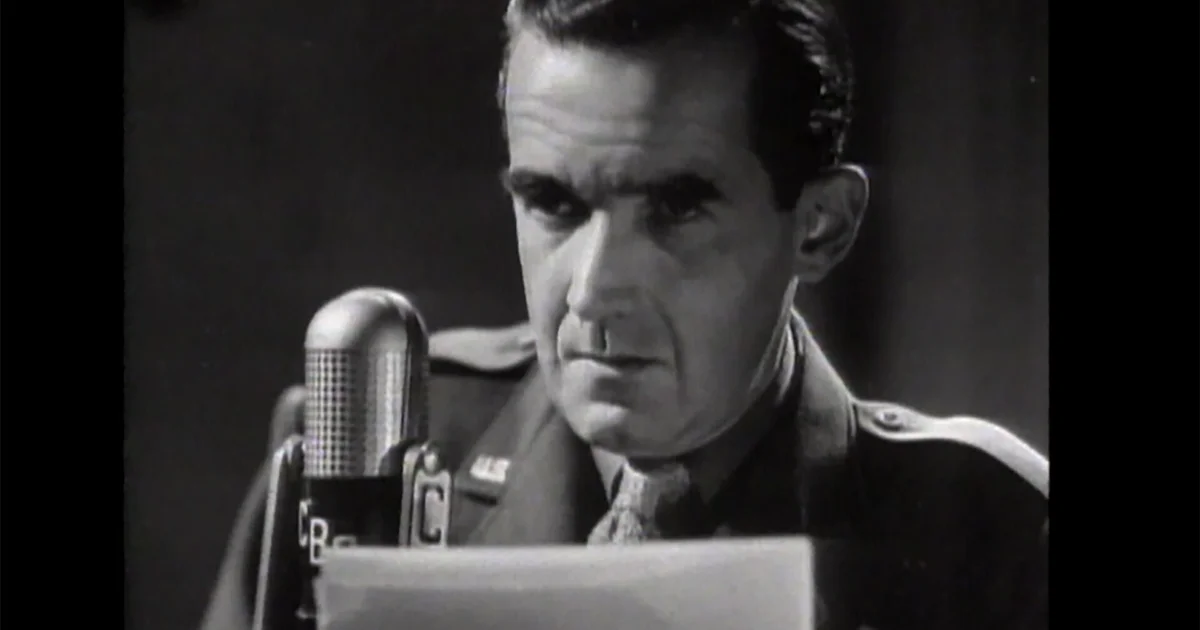
SouthernWorldwide.com – In the annals of broadcast journalism, Edward R. Murrow stands as a towering figure, particularly for his impactful World War II broadcasts. These dispatches, delivered with a unique blend of immediacy and empathy, brought the realities of the war directly into American homes.
Originally aired on May 7, 1995, a “Sunday Morning” report revisited the legacy of this remarkable journalist. Charles Osgood’s segment looked back at how Murrow’s words allowed listeners, separated by an ocean, to witness firsthand events like the harrowing London Blitz.
Murrow’s reporting also took audiences to the front lines of the Allied invasion of Europe. His voice conveyed the gravity and sacrifice of that pivotal moment in history.
Furthermore, his broadcasts unflinchingly documented the horrors of the liberation of the Buchenwald concentration camp. Murrow’s commitment to truth and his ability to translate complex and often horrific events into compelling narratives left an indelible mark on journalism and public consciousness.
His reporting from the front lines, often amidst the chaos of war, was characterized by a directness that resonated deeply with the American public. Murrow’s signature sign-off, “Good night, and good luck,” became synonymous with his dedication to bringing unfiltered news to his audience.
The broadcasts were not merely a recitation of facts; they were a testament to Murrow’s deep understanding of human resilience and suffering. He painted vivid pictures with his words, allowing listeners to feel the tension of air raids and the hope of liberation.
His dispatches from London during the Blitz, in particular, are legendary. Murrow described the sounds and sights of the bombings, creating an immersive experience for those listening back in the United States.
This dedication to on-the-ground reporting meant Murrow often found himself in dangerous situations. Yet, his commitment to journalistic integrity never wavered.
The report highlighted how Murrow’s reporting style was revolutionary for its time. He eschewed the more formal, detached tone of earlier news broadcasts, opting for a more personal and engaging approach.
This human element was crucial in fostering a connection between the American public and the soldiers fighting overseas. Murrow served as a vital conduit, bridging the geographical and emotional distance.
His coverage of the Buchenwald liberation was particularly poignant. Murrow, alongside other journalists, bore witness to the atrocities committed by the Nazi regime.
The raw emotion in his voice as he described the scene at Buchenwald underscored the profound human cost of the war and the importance of remembering such events.
Murrow’s work during World War II was not just about reporting news; it was about bearing witness and ensuring that the sacrifices made would not be forgotten.
Read more: Stricken Cruise Ship with Hantavirus Reaches Canary Islands Amid Evacuations
The “Sunday Morning” segment emphasized the lasting impact of Murrow’s broadcasts on subsequent generations of journalists. His commitment to rigorous reporting and ethical standards continues to inspire.
The report concluded by reflecting on Murrow’s enduring influence. His ability to convey the emotional weight of historical events through the power of radio cemented his place as one of the most important figures in broadcast history.
Edward R. Murrow’s World War II broadcasts remain a powerful reminder of the role of journalism in times of crisis. His voice continues to echo, a testament to his courage and his commitment to truth.
The archival footage and audio clips used in the report provided a tangible link to Murrow’s era, allowing viewers to experience the impact of his reporting anew.
This look back served as a valuable educational tool, illustrating the historical context of World War II and the crucial role of media in shaping public understanding and support.
Murrow’s dedication to reporting from the heart of the conflict, often at great personal risk, set a benchmark for journalistic excellence.
His ability to connect with the audience on an emotional level was a key factor in his success and the enduring relevance of his work.
The report underscored that Murrow’s legacy extends beyond his individual broadcasts; it encompasses a philosophy of journalism that prioritizes truth, courage, and human empathy.
The impact of his World War II reporting continues to be felt today, influencing how news is delivered and understood across various media platforms.
Edward R. Murrow’s voice, preserved through these broadcasts, remains a powerful force in understanding one of history’s most significant conflicts.
His work serves as a constant reminder of the responsibility that journalists carry in bringing critical information to the public, especially during times of war and societal upheaval.