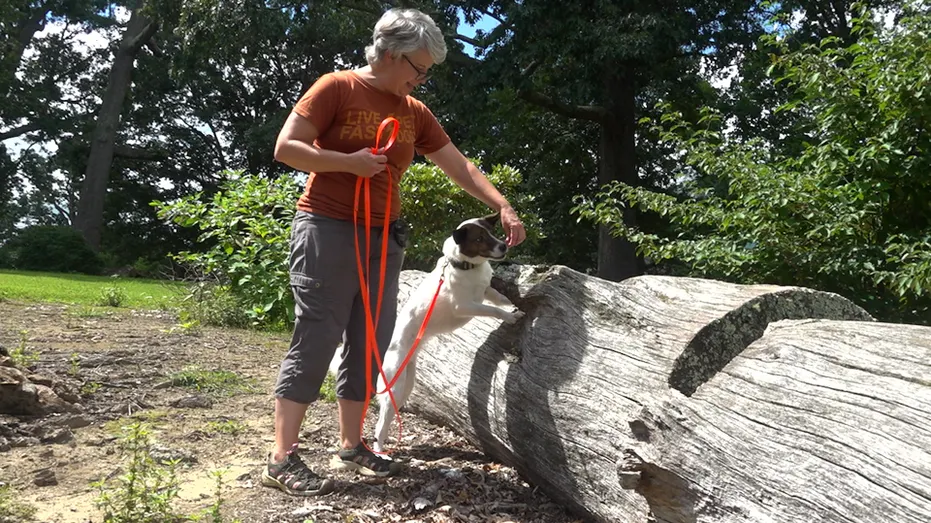
SouthernWorldwide.com – A recent study conducted by researchers at Virginia Tech has revealed a surprising new ally in the fight against an invasive pest: man’s best friend. For the first time, scientific evidence suggests that pet dogs possess the capability to aid in curbing the rapid proliferation of the spotted lanternfly.
The spotted lanternfly is a highly destructive insect that feeds on a variety of plants. In its feeding process, it excretes a sticky, sugary substance known as honeydew, which in turn fosters the growth of mold. Their damaging impact is so significant that several states have implemented public awareness campaigns encouraging residents to actively eliminate them on sight.
While experts emphasize that the most effective long-term solution involves eradicating their egg masses, locating these is a considerable challenge. The egg masses are often camouflaged, resembling dried mud and blending seamlessly with their natural surroundings, making them difficult for humans to spot.
This is precisely where the exceptional olfactory abilities of dogs can provide a crucial advantage. Dogs rely predominantly on their sense of smell, a sense that is as vital to them as sight is to humans. Their noses are their primary tools for navigating and understanding the world around them.
Katie Thomas, a participant in the study, highlighted this point. She explained that dogs utilize their noses in a manner analogous to how humans use their eyes. This keen sense of smell is what researchers are leveraging to detect the elusive lanternfly egg masses.
Thomas, along with her nine-year-old pitbull mix named Finch, was part of the research initiative. They aimed to apply their extensive experience in recreational scent work to a practical, real-world problem. Their participation involved a series of both indoor and outdoor tests, where Finch was tasked with locating the lanternfly egg masses.
The reward for Finch’s successful detections was positive reinforcement, a common practice in dog training. Thomas expressed her satisfaction with the study’s objective, noting the fulfillment derived from applying a hobby that brings her joy and strengthens her bond with Finch to a significant community issue.
Read more : Robots manage luggage at Tokyo airport during trial
The spotted lanternfly, originally from Asia, made its initial appearance in the United States over a decade ago, specifically in Pennsylvania. Since then, its presence has unfortunately expanded, now affecting 19 states across the country, according to data from the U.S. Department of Agriculture (USDA).
Carolyn Shelburne, another study participant, emphasized the widespread nature of the infestation. She stated that the lanternflies are “everywhere,” underscoring the urgent need to locate and destroy their eggs. Shelburne pointed out that by the time the adult lanternflies are visible, it is often too late to effectively manage the infestation.
Carolyn and her nine-year-old border collie, Hermes, were among the initial cohort of five K9 and handler teams to successfully complete their field tests. In total, the study garnered the participation of 182 volunteer teams from across the United States, demonstrating a broad interest in finding innovative solutions to pest control.
The results of the study were encouraging. In controlled indoor environments, the dogs demonstrated a remarkable accuracy rate, correctly identifying the lanternfly scent in over 80% of the trials. Moving to more challenging, real-world outdoor scenarios, their success rate remained impressive, with dogs accurately detecting the scent in more than 60% of cases.
This accuracy rate in outdoor settings is notably superior to that of most human-led searches, highlighting the dogs’ superior ability to locate the camouflaged egg masses. Shelburne expressed optimism about the broader implications of the research, hoping that it will inspire more individuals to recognize the potential of training their own dogs for such tasks.
She suggested that this not only offers a practical application for canine abilities but also provides an enjoyable and engaging activity for dog owners to share with their pets. The study’s success opens doors for future applications of canine scent detection beyond just the spotted lanternfly.
Researchers are hopeful that this groundbreaking study marks the beginning of dogs playing a more significant role in safeguarding local ecosystems. Even in regions where the spotted lanternfly is not currently a problem, dogs could be trained to detect and alert authorities to the presence of other invasive species, thereby contributing to broader environmental protection efforts.