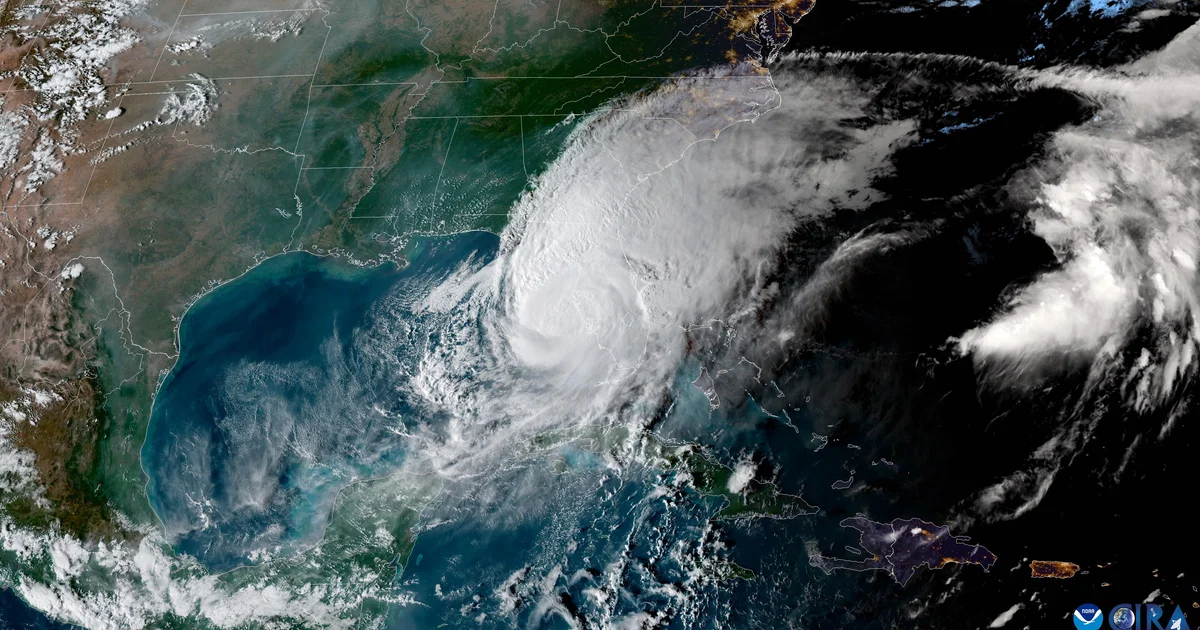
SouthernWorldwide.com – The first major forecast for the 2026 Atlantic hurricane season, released by Colorado State University, predicts a slightly below-average season with fewer storms than usual.
This forecast is among the earliest insights into the upcoming season, with the National Oceanic and Atmospheric Administration set to release its own outlook next month.
The Colorado State University team anticipates 13 named storms, six hurricanes, and two major hurricanes (Category 3 or higher) in the Atlantic basin during 2026. These storms could occur anytime between the season’s official start on June 1 and its end on November 30, with the peak typically falling between August and October.
Lead author Phil Klotzbach noted that while the April forecast provides an early indication, uncertainties remain. He mentioned that “curveballs could come our way,” highlighting the dynamic nature of hurricane season predictions.
Like NOAA’s forecast, this initial prediction will be updated as the season progresses. However, it is closely watched by coastal residents and officials, particularly in Florida and along the Gulf Coast and Eastern Seaboard, to aid in preparedness efforts.
Delián Colón-Burgos, a co-author of the forecast, emphasized the importance of consistent preparation for all residents in hurricane-prone areas. She stated that releasing the forecast in April encourages early planning for the months ahead.
The forecast suggests that hurricane activity in 2026 will be approximately 75% of the long-term seasonal average. This represents a slight decrease from the 2025 season, which saw 13 named storms, five hurricanes, and four major hurricanes, though none made direct landfall in the U.S. An average season, according to federal data, typically features 14 named storms, seven hurricanes, and three major hurricanes.
Colón-Burgos stressed that communities susceptible to hurricanes should always take the threat seriously, regardless of the predicted activity level. She reiterated that encouraging early preparation and maintaining awareness is a crucial message.
A significant atmospheric shift is the primary factor behind the below-average forecast. Researchers anticipate conditions that may suppress, rather than encourage, Atlantic hurricane development.
This shift is largely attributed to the expected arrival of El Niño, the warmer phase of the El Niño-Southern Oscillation (ENSO) cycle. The Climate Prediction Center indicates El Niño is likely to emerge later this spring or summer and persist through at least the end of 2026.
El Niño typically leads to less intense and less frequent hurricanes in the Atlantic. Forecasters project that El Niño could be in full effect, possibly even strong, by the peak of the 2026 hurricane season.
However, there is some uncertainty regarding sea surface temperatures in the Atlantic Ocean. Colón-Burgos described the current temperature trends as sending “a bit of a mixed signal,” which could influence future storm predictions.
Regarding landfalls, the current forecast estimates a 32% chance of a major hurricane making landfall along the U.S. coastline in 2026, and a 35% chance of one hitting the Caribbean. While these percentages may seem low, the researchers caution that they do not account for less powerful storms, which can still cause significant damage.
Michael Bell, another co-author of the forecast, highlighted that “It takes only one storm near you to make this an active season for you.”
Last year marked the first time in a decade without any U.S. hurricane landfalls. However, some Caribbean islands experienced severe impacts, with Jamaica particularly devastated by Hurricane Melissa, which made landfall as a Category 5 storm at the end of the 2025 season.
The World Meteorological Organization maintains the list of names for tropical storms and hurricanes each year. For 2026, the named storms will begin with Arthur, followed by Bertha, Cristobal, Dolly, Edouard, and Fay, continuing alphabetically through Vicky and Wilfred.
Read more : Spirit Airlines to Halt Operations This Weekend Without Rescue
A storm is given a name when its wind speeds reach 39 mph. It becomes a hurricane at 74 mph, and a “major” hurricane when winds reach at least 111 mph, corresponding to Category 3 or higher on the Saffir-Simpson Scale. These powerful hurricanes have the potential to cause catastrophic damage.