SouthernWorldwide.com – Justice Clarence Thomas has voiced strong criticism towards the Supreme Court’s decision to dismiss a lawsuit filed by Florida. The lawsuit targeted California and Washington over their issuance of commercial driver’s licenses to undocumented immigrants, which Florida argued posed a significant public safety risk.
Florida’s central claim was that these two “blue states” had contravened federal regulations. These regulations mandate English proficiency and lawful immigration status for individuals operating certain commercial vehicles. The state contended that by issuing licenses to individuals who did not meet these criteria, California and Washington were jeopardizing the safety of American roadways.
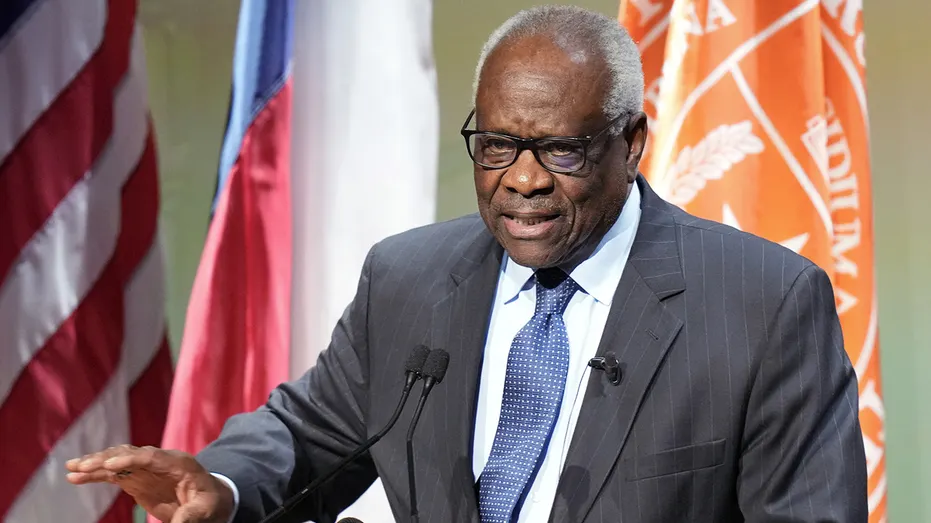
Justice Thomas, in his dissenting opinion joined by Justice Samuel Alito, asserted that the Supreme Court had a constitutional duty to hear the case. He emphasized that lawsuits involving disputes between states are exclusively within the Supreme Court’s original jurisdiction, meaning it’s the only court where such cases can be initially filed.
“If this Court does not exercise jurisdiction over a controversy between two States, then the complaining State has no judicial forum in which to seek relief,” Thomas wrote, highlighting the critical role of the Supreme Court in resolving inter-state conflicts.
Read more : Ousmane Dembele and Achraf Hakimi Absent from PSG Pre-Champions League Final Friendly
Thomas argued that Florida’s allegations were not trivial. He pointed out that failing to adhere to federal commercial licensing laws could directly lead to dangerous driving conditions. He further suggested that such failures had, in fact, contributed to fatal accidents.
A specific incident that fueled Florida’s lawsuit was a deadly highway crash in Florida. The truck driver involved, Harjinder Singh, had reportedly received commercial driver’s licenses from both California and Washington. Thomas noted that Singh “could not read the road signs,” underscoring the potential consequences of issuing licenses to individuals with insufficient English language skills for operating large commercial vehicles.
“An illegal alien who cannot read English road signs cannot drive an 80,000-pound tractor-trailer,” Thomas stated emphatically. He reiterated that federal law and regulations clearly prohibit states from issuing commercial driver’s licenses to applicants who do not pass a driver’s test, demonstrate adequate English comprehension, and possess the correct immigration status.
Florida had initiated its legal action directly with the Supreme Court, leveraging the Court’s original jurisdiction. This provision grants the justices the sole authority to hear and decide cases that involve disputes between two or more states.
Thomas explained that while the Supreme Court may have discretion in choosing which ordinary appeals to hear, cases between states are fundamentally different. He stressed that the U.S. Constitution specifically grants the Supreme Court exclusive jurisdiction over such matters.
“We have no more right to decline the exercise of jurisdiction which is given, than to usurp that which is not given,” Thomas declared, asserting that the Court cannot arbitrarily refuse to hear cases that fall under its constitutionally mandated purview.
He accused the Supreme Court of not upholding the Constitution when it chooses to avoid hearing disputes between states. Thomas believes this discretionary approach to original jurisdiction is based on policy considerations that contradict the legislative intent of Congress as expressed in federal statutes.
Thomas drew an analogy, suggesting that if Florida, California, and Washington were independent nations rather than U.S. states, a situation where one government allegedly permitted dangerous drivers to enter another’s territory would likely create significant diplomatic tensions. Such disputes, he posited, would typically be resolved through international courts or other governmental channels.
“By entering the Union, States agree to instead have such disputes resolved by this Court,” Thomas concluded, emphasizing that statehood implies a commitment to resolving inter-state conflicts through the designated judicial body, the Supreme Court.