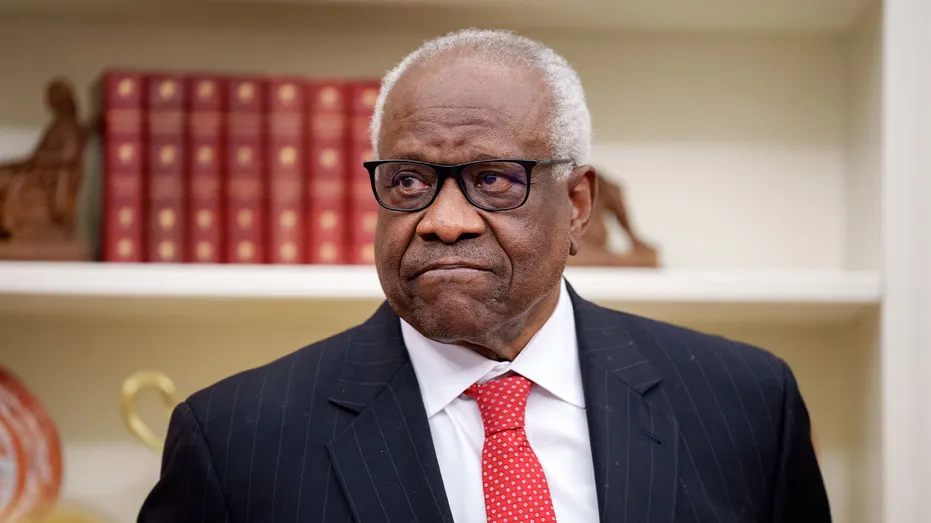
SouthernWorldwide.com – Justice Clarence Thomas has placed Alabama Republicans on a tight deadline regarding their efforts to reinstate a contested congressional map, declining to grant immediate victory but demanding a swift defense from voting rights challengers.
Alabama’s Republican Attorney General had sought emergency intervention from the Supreme Court. The request aimed to immediately revive the state’s 2023 legislature-drawn congressional map, which had been blocked by a lower court. This blockage forced the state to continue using a special-master map approved by the courts. This court-approved map notably created a second Black-opportunity district, which subsequently helped Democratic Rep. Shomari Figures secure a House seat in 2024.
Justice Thomas, assigned to the 11th circuit, did not immediately restore the 2023 congressional map on Wednesday. However, he did issue an order directing the voting rights plaintiffs in the case to present their arguments by Monday. These arguments must explain why the legislature-drawn map should not be implemented.
This ruling by Justice Thomas marks the latest development in a prolonged redistricting dispute. The controversy gained renewed momentum following a Supreme Court decision in April that narrowed the interpretation of a critical provision within the Voting Rights Act. This section had been frequently utilized by Democrats in their redistricting battles.
Prior to the April ruling, the Supreme Court had upheld a challenge to the state’s 2020 census-drawn map. Subsequently, a special-master map, favored by Democrats and approved by the courts, was put into effect. This map led to a significant reshaping of Alabama’s 2nd Congressional District, resulting in the flip of a previously solid Republican-held seat, thereby giving Democrats an additional seat in the House of Representatives.
In their emergency application, Alabama officials argued that an immediate stay was imperative. They contended that the lower court’s ruling “defies Callais, manipulates the Purcell principle, and offends the Constitution’s promise of equal protection for all.”
Read more : Browns QB Deshaun Watson's Potential 2026 Comeback
Alabama’s legal strategy heavily relies on the Supreme Court’s recent April ruling in the case of Louisiana v. Callais. This decision provided Republicans with a new legal avenue to challenge maps drawn by left-wing voting rights activists. The ruling made it more difficult for these activists to compel the creation of additional, predominantly minority districts under Section 2 of the Voting Rights Act.
The Supreme Court’s decision in Louisiana v. Callais subsequently spurred a wave of new redistricting efforts in Republican-led states, including Alabama. The state leveraged this new ruling to urge the Supreme Court justices to reconsider the lower court’s orders that had blocked the 2023 legislature-drawn map.
In response to the Louisiana case ruling, the Supreme Court issued a decision earlier this month, specifically on May 11. The Court ruled that the lower court’s judgment blocking Alabama’s 2023 map should be vacated and sent back for further review. However, on Tuesday, a three-judge federal district court again blocked the 2023 map. The court instead ordered the continuation of the court-approved special master map. This action directly led to Alabama’s request for emergency relief on Wednesday, which Justice Thomas addressed.
The timing of Justice Thomas’s order is significant, as Alabama officials had already begun preparations for a swift transition back to the 2023 congressional map. Following the Supreme Court’s May 11 order that remanded the case to the lower court, Governor Kay Ivey had announced special primary elections for August 11.
These special primaries were scheduled for the affected districts: the 1st, 2nd, 6th, and 7th Congressional Districts. Governor Ivey’s announcement signaled the state’s readiness to proceed with the congressional map that had been drawn by the Alabama legislature.