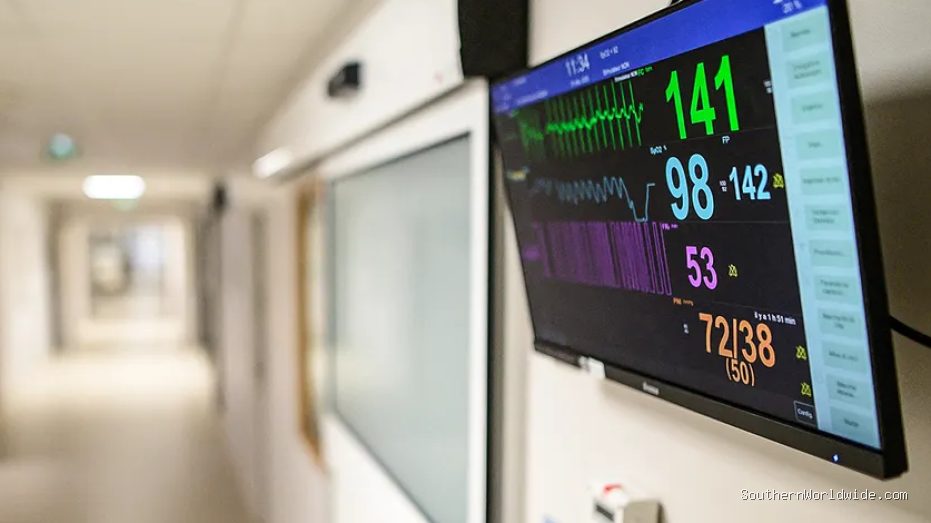
SouthernWorldwide.com – A standard heart test, known as an electrocardiogram (ECG) or EKG, might be harboring subtle indicators of a life-threatening condition that have eluded medical professionals for years. This significant finding emerges from novel research conducted at UC Berkeley and published in the prestigious journal Nature.
Scientists have successfully trained an artificial intelligence (AI) model to meticulously analyze ECGs, specifically searching for patterns associated with sudden cardiac death. This development is particularly crucial because sudden cardiac arrest can affect individuals with pre-existing heart conditions, as well as seemingly healthy young athletes and those unaware of any underlying risk.
Each year, a substantial number of Americans succumb to cardiac arrest. When this event occurs outside of a hospital setting, the chances of survival diminish rapidly. While cardiopulmonary resuscitation (CPR) and the use of a defibrillator are vital for saving lives, the critical factor remains the timeliness of intervention.
Now, AI holds the potential to assist physicians in identifying at-risk patients earlier, even when their hearts appear normal according to current diagnostic methods. This could revolutionize how we approach cardiac risk assessment.
DIABETES DRUG COULD SLASH RISK OF FATAL HEART CONDITION IN ONE GROUP, SCIENTISTS REVEAL
An ECG is a diagnostic tool that records the electrical impulses generated by the heart. It produces a visual representation of spikes and waves that doctors interpret to assess heart rhythm and other cardiac health indicators.
For this particular study, researchers utilized a vast dataset comprising over 440,000 ECGs sourced from Sweden. These scans were then cross-referenced with death certificates and comprehensive health records. Following this data compilation, the AI model was trained to detect specific waveform patterns linked to sudden cardiac death.
Subsequently, the model’s efficacy was rigorously tested using independent patient data from both the United States and Taiwan. This step is paramount, as AI medical tools often demonstrate promising results on one dataset but falter when applied in real-world, diverse clinical environments. In this instance, the AI model maintained its accuracy across vastly different healthcare systems.
Physicians commonly employ a metric known as left ventricular ejection fraction (LVEF) to gauge cardiac risk. In simpler terms, LVEF quantifies the proportion of blood pumped out of the left ventricle with each heartbeat.
If this LVEF value falls below a predetermined threshold, a patient may become eligible for an implantable cardioverter-defibrillator (ICD). This device is designed to deliver an electrical shock to the heart, restoring a normal rhythm during a life-threatening event.
However, this conventional approach has significant limitations. A considerable number of individuals who experience sudden cardiac death have never undergone such in-depth cardiac evaluations. Furthermore, some individuals may possess a normally functioning heart but still be susceptible to dangerous arrhythmias.
The AI model developed at UC Berkeley identified a high-risk group exhibiting an annual sudden cardiac death rate of 7%. In comparison, the standard group identified by reduced LVEF had an annual rate of 4.6%.
Even more remarkably, the majority of patients flagged as high-risk by the AI were not identified through the LVEF method. This implies that a routine ECG may contain crucial warning signs that current screening protocols overlook.
The researchers’ efforts extended beyond simply obtaining a risk score from the AI. They also endeavored to comprehend the underlying rationale behind the AI’s predictions. This investigative step is vital, as medical AI can become an opaque “black box” if clinicians receive an answer without a clear explanation.
To delve deeper, the research team employed an additional AI system to compare ECG patterns from low-risk and high-risk individuals. This process can be likened to observing how a seemingly normal heartbeat pattern might evolve into one associated with elevated risk.
This comparative analysis highlighted a discernible feature within a specific segment of the ECG known as the aVL lead. The aVL lead is one of the standard views used by clinicians to interpret the heart’s electrical activity. The identified feature was located within the QRS complex, which represents the heart’s primary electrical signal during each contraction.
According to the researchers, this particular signal proved to be a strong predictor of sudden cardiac death. They also noted that this predictive feature had not been previously documented in existing medical literature. This observation opens up a compelling possibility: AI may empower physicians to make more accurate predictions and identify warning signs that have historically gone unnoticed by human observation.
LATEST COVID VACCINE MAY HAVE UNEXPECTED HEALTH BENEFIT, STUDY SUGGESTS
While an implantable defibrillator can be life-saving, its implantation in an inappropriate candidate carries inherent risks. The procedure itself can be invasive and costly. Furthermore, a significant number of ICDs implanted under current guidelines are never activated, meaning they were not needed.
Consequently, healthcare professionals face a challenging dilemma. Failing to identify a patient who requires an ICD can have fatal consequences. Conversely, implanting too many devices exposes patients to unnecessary procedures.
This novel AI tool has the potential to help bridge this critical gap. It could identify patients who warrant closer observation before more invasive interventions are considered.
The next phase of research is already in progress. Scientists are collaborating with healthcare systems in Sweden, Taiwan, and the United States to evaluate the algorithm’s performance on large-scale hospital ECG databases.
If the AI tool flags an ECG as high-risk, patients could be contacted for further evaluation. This might involve wearing a heart-monitoring patch, which could provide more detailed insights into potentially dangerous arrhythmias before they become fatal.
There is another important aspect to consider. Effective medical AI requires access to enormous datasets. The researchers indicated that it took approximately a decade to compile the data used in this study, underscoring the complexity of developing robust clinical AI.
This also raises a pertinent question regarding data ownership and control. When an individual’s ECG is used to train a medical model, who ultimately governs that data? Clear ethical and regulatory frameworks are essential for hospitals, researchers, and AI companies. Patients must be informed about how their health records are protected, shared, and utilized.
Before sharing sensitive health data, it is advisable to review the privacy settings of health applications, login credentials, and overall privacy policies. Health apps can store highly sensitive information, making even minor privacy choices potentially consequential. While enhanced prediction capabilities can save lives, public trust will be a determining factor in the widespread adoption of these advanced tools.
Although this AI tool shows considerable promise, it is not yet available for home use. Individuals cannot currently upload their ECGs to receive personalized risk assessments. The technology is still undergoing rigorous testing before it can be integrated into routine clinical practice. Nevertheless, the underlying concept is powerful: a standard heart test, one that many individuals may have already undergone, could one day reveal a hidden risk that current screening methods fail to detect.
In the interim, it is crucial not to disregard any warning signs. Symptoms such as fainting, unexplained dizziness, a racing heartbeat, or a family history of sudden cardiac death should always be discussed with a medical professional. A routine checkup does not guarantee that all cardiac risks have been eliminated. If a doctor recommends blood pressure monitoring, compatible cuffs can synchronize readings with health tracking platforms. Wearable devices can also offer preliminary insights into heart health, including potential hypertension alerts, but they are not a substitute for professional medical advice.
Furthermore, preparedness for emergencies is vital. Learning CPR is highly recommended. Identifying the locations of Automated External Defibrillators (AEDs) at workplaces, schools, gyms, and public venues is also important. In the event of cardiac arrest, prompt action can significantly improve survival chances.
Your smartphone contains a wealth of personal information, including emails, passwords, photos, banking applications, and other sensitive data. In this replay of a CyberGuy Live session, Kurt the CyberGuy offers a step-by-step guide to enhancing phone security at your own pace. You will learn how to optimize privacy settings, identify the latest phone scams, utilize trusted security tools, and acquire a straightforward checklist to maintain robust protection. Watch the replay and access our checklist at: CyberGuyLive.com
8 COMMON FOOD PRESERVATIVES LINKED TO HIGHER RISK OF HIGH BLOOD PRESSURE AND HEART DISEASE
This AI breakthrough is particularly compelling because it originates from something as commonplace as a routine ECG. Many of us have experienced this procedure, lying down while stickers are placed on the chest, and a machine generates a wave pattern that most people rarely revisit mentally. Now, researchers suggest that AI can potentially uncover a concealed warning sign within that pattern. This is profoundly significant, as sudden cardiac death often leaves families with no time to prepare and doctors with no second chances. However, this tool still requires further validation before it becomes a standard part of medical care. Clinicians need assurance of its efficacy across a broader range of patients. Healthcare institutions must develop clear protocols for responding to AI-generated alerts. Moreover, patients are entitled to robust privacy protections when their medical scans contribute to the training of these sophisticated systems. Despite these ongoing developments, the potential of this technology is undeniable. A common heart test could one day help identify impending danger before an individual experiences a collapse. This prospect, while simultaneously hopeful and unsettling, warrants very close attention and ongoing research into medical AI.
Would you be comfortable with an AI system analyzing your past medical tests for undisclosed health risks? Share your thoughts by contacting us at CyberGuy.com