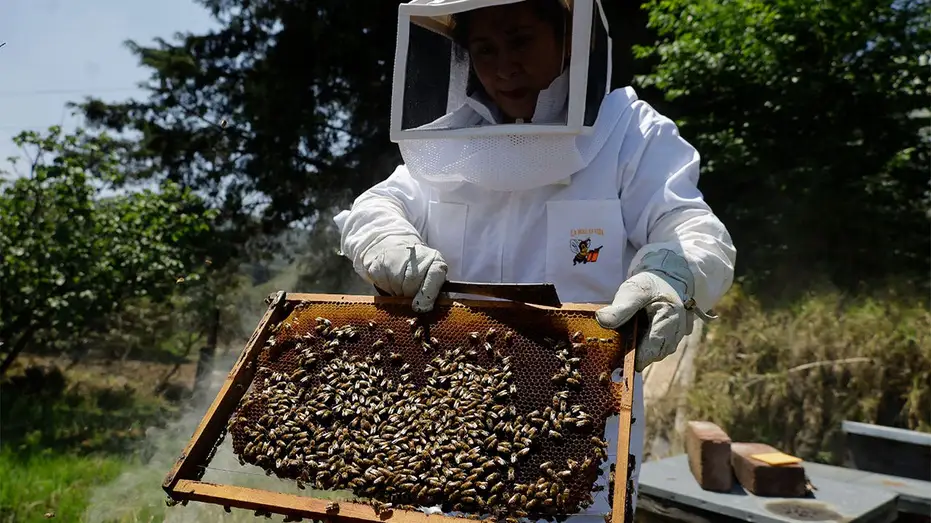
SouthernWorldwide.com – A community in Florida has adopted advanced AI-powered robotic beehives in an effort to combat the alarming decline in bee populations, a crisis that poses a significant threat to the nation’s food supply.
The Angeline development, located in Land O’ Lakes, has become the first master-planned community to implement Beewise’s automated BeeHome system. This innovative system utilizes a sophisticated combination of robotics, sensors, and artificial intelligence to meticulously monitor the health of bee colonies and shield them from various environmental dangers.
This technological intervention comes at a critical time, as bee populations across the United States are under immense pressure. Factors such as parasitic infestations, the widespread use of pesticides, diseases, and the increasing severity of extreme weather conditions are all contributing to a decline that experts warn could devastate agriculture nationwide.
Steve Peck, Beewise Managing Director, highlighted the crucial role of bees in our ecosystem. “Bees pollinate roughly 75% of the crops we eat and about 80% of flowering plants around the world,” he stated. “So, without those bees, our food supply is in jeopardy.”
The Angeline community itself depends on these pollinators for a 2.5-acre farm that provides produce for the entire development, underscoring the local relevance of this initiative.
The BeeHome system is equipped with internal cameras, sensors, and robotic components. These tools work in tandem to conduct thorough inspections of the hives, identifying potential problems that would typically require the direct intervention of a human beekeeper.
“The robotics know where it is in the frame or where it is in the hive at any point,” Peck explained. “It can pick it up just like a beekeeper would, inspect it, and report that back to technicians around the world.” This level of remote monitoring and analysis is unprecedented.
The automated system diligently monitors key indicators of hive health, including the well-being of the queen bee, egg production rates, and the presence of infestations by varroa mites. These mites are recognized as one of the primary drivers behind colony collapse disorder, a devastating phenomenon affecting honeybee populations globally.
Peck further elaborated on the system’s proactive capabilities. “We can treat them within the hive by moving them to a new part of the home that raises the temperature,” he said. “It’s enough to kill the mites, but not the bees. And there, we can prevent that colony collapse, and have shown, basically a 70% reduction to what we’re seeing naturally around the world.” This represents a significant achievement in safeguarding bee colonies.
This advanced bee monitoring technology is already being deployed across hundreds of thousands of acres of agricultural land throughout the United States, demonstrating its scalability and broad applicability.
Project officials have emphasized that the BeeHome system is designed to complement, rather than replace, traditional beekeeping practices. Its purpose is to provide crucial support as bees continue to face escalating environmental pressures.
“Every day, bees run the risk of being destroyed due to just the weather and elements and pesticides,” commented Lisa Gibbings from Metro Development Group, highlighting the constant threats bees face.
Read more : Consumers Are Still Spending, But Signs of Weakness Are Appearing
The precarious state of bee populations has become a major concern for farmers and agricultural experts in recent years. This is due to the indispensable role pollinators play in ensuring food production and maintaining ecological balance across the entire U.S.