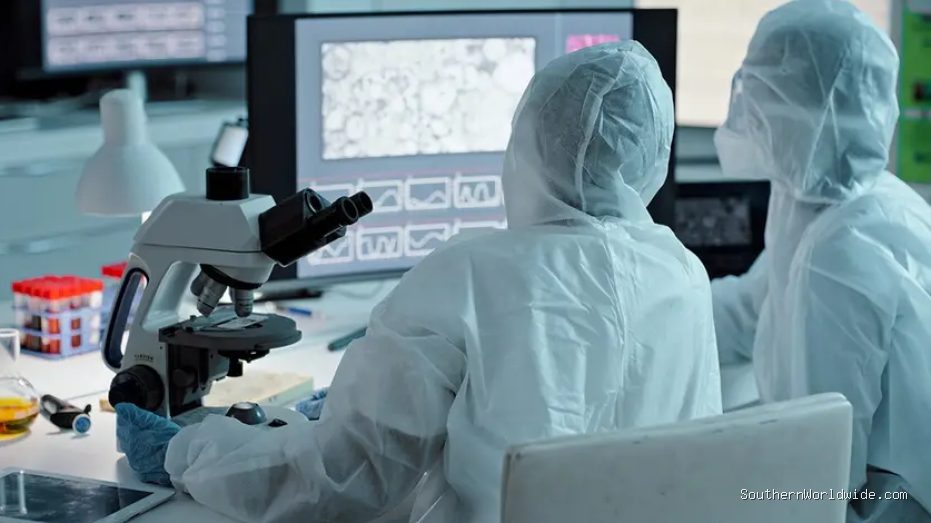
SouthernWorldwide.com – Scientists at the University of Minnesota have reportedly created the most life-like synthetic cell to date, a significant achievement in the pursuit of artificial life.
This laboratory-constructed system, assembled entirely from nonliving components, exhibits several key characteristics of life. It can grow, replicate its genetic material, divide, and even pass on beneficial traits to subsequent generations.
Researchers describe this development as a crucial step toward building artificial life. However, they emphasize that these synthetic cells are not capable of independent survival outside of highly controlled laboratory environments. They require external nutrients and specialized components to facilitate growth and division.
The findings were recently published as a preprint on bioRxiv, indicating that the research has not yet undergone formal peer review.
The scientific community has long pursued the ambitious goal of creating a biochemical system that can transition from mere chemistry to genuine life. This latest work demonstrates a minimal cell with a discernible cell cycle, genetically encoded growth and division, all integrated with processes of selection and competition.
Dubbed “SpudCell,” this synthetic cell differs from previous attempts that began with existing living organisms. SpudCell was meticulously assembled from chemically defined, nonliving materials.
Its genome, comprising 90,000 base pairs, empowers the synthetic cell to synthesize proteins, replicate its DNA, metabolize nutrients, and divide into daughter cells.
In a demonstration of evolutionary principles, the researchers introduced a genetic mutation that accelerated the growth rate in some synthetic cells. Over several generations, these faster-growing variants produced a greater number of offspring, becoming more prevalent within the population, thereby illustrating a rudimentary form of natural selection.
The team considers this research to represent pivotal milestones in the construction of synthetic life. They envision it potentially forming the basis for fully artificial organisms tailored for various biotechnology applications in the future.
Despite these advancements, the researchers acknowledge that the SpudCell system remains significantly less capable than even the simplest forms of natural life. Its inability to survive outside laboratory conditions, its dependence on external nutrient and component supply, and its reliance on ribosomes sourced from E. coli bacteria highlight these limitations.
Furthermore, after five generations, approximately only 30% of the daughter cells successfully inherited the complete synthetic genome, indicating room for improvement in genetic stability.
These constraints mean the current work is far from achieving self-sustaining artificial life. Nevertheless, it effectively demonstrates that many defining characteristics of life can be recreated using nonliving materials.
The researchers also concede that the development of increasingly sophisticated synthetic cells could introduce new biosafety and biosecurity concerns that warrant careful consideration.
The authors note that this project marks a significant step towards the evolvability of synthetic cells, making the prospect of more robust and autonomous systems more likely in the near future. This progress underscores the pressing need to establish a comprehensive safety and security framework for the engineering of future synthetic cells.
Looking ahead, the research team plans to focus on enhancing the self-sufficiency of synthetic cells. This will involve efforts to regenerate more of their internal molecular machinery, improve the accuracy of genome distribution during cell division, and enable mutations to arise more naturally, rather than being artificially introduced by the researchers.