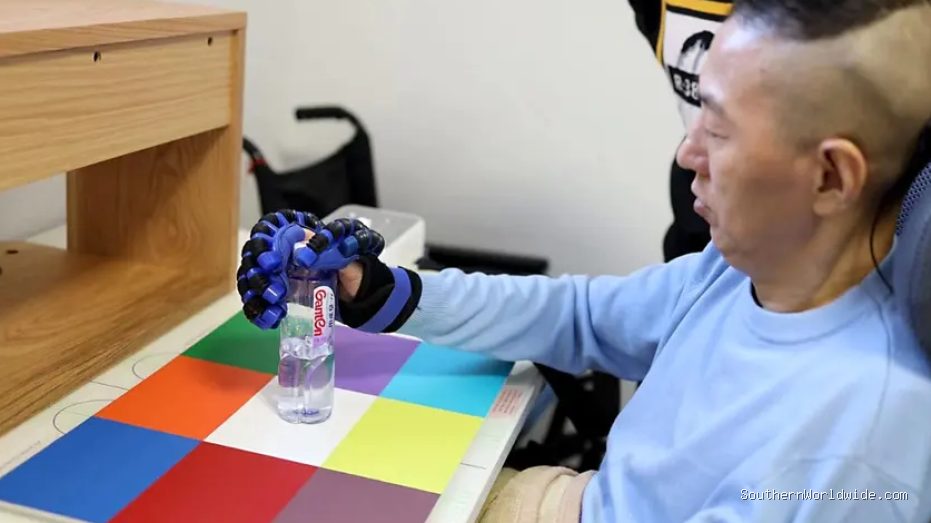
SouthernWorldwide.com – China has given the green light for a brain-computer interface called NEO to be used commercially in specific patients with paralysis caused by spinal cord injuries. This development marks a significant step, moving brain-chip technology beyond research and closer to practical medical applications.
Developed collaboratively by Tsinghua University and Neuracle Technology, NEO is designed to be implanted beneath the skull but positioned on the brain’s outer protective layer, rather than penetrating deep into brain tissue. This less invasive approach could offer an advantage over some competing implants.
For individuals who have lost the ability to move, such technology holds the potential to be life-altering, restoring a degree of independence that may have previously seemed unattainable. However, this advancement also brings critical questions to the forefront. If a brain chip can translate brain signals into digital commands, who will control this data, and how will it be safeguarded?
NEO functions as a brain-computer interface (BCI), a system that interprets brain activity and converts it into commands for external devices. The implant utilizes sensors positioned near the brain’s motor control regions, enabling patients to operate equipment such as robotic gloves or computer interfaces.
What sets NEO apart is its placement strategy. BCIs can be designed with varying degrees of invasiveness; some delve deeper into the brain than others. Neuralink, a prominent brain-chip company co-founded by Elon Musk, employs tiny threads that enter the brain’s cortex. In contrast, NEO adopts a less invasive method by placing electrodes on the dura mater, the protective membrane surrounding the brain.
This design distinction is crucial, as all brain implants carry inherent medical risks. Surgical procedures can lead to complications such as bleeding, swelling, infection, or tissue damage. Even minor complications in critical brain areas can adversely affect speech or motor functions.
China’s approval does not signify that brain chips will be widely available for general use. This remains a specialized medical device intended for a select group of patients. Currently, the primary focus is on assisting individuals with severe paralysis in regaining some level of digital or assisted movement control.
The medical benefits of this technology are undeniable. According to the World Health Organization, over three billion people globally live with neurological conditions. This broad category includes individuals affected by strokes, epilepsy, Parkinson’s disease, spinal cord injuries, and other serious ailments.
For someone who has experienced prolonged limitations in movement or communication, even a small restoration of control can have a profound impact. This is precisely why BCIs are garnering significant attention; they offer the potential to provide patients with new avenues for interacting with their environment.
Neuralink has already demonstrated the real-world capabilities of such technology. Audrey Crews, a participant in a Neuralink trial who has been paralyzed for years, publicly shared her experience of writing her name by controlling a computer solely through her thoughts via the implant.
Elon Musk’s Neuralink has captured a substantial portion of public interest in the United States’ brain-chip endeavors. Musk has frequently discussed the potential for restoring movement, facilitating communication, and eventually addressing vision impairment.
Neuralink has received approval to commence human trials, with reports indicating that over 20 individuals have received its implant as part of these trials. However, it has not yet obtained broad FDA approval for general commercial distribution.
China’s approval of NEO introduces a different dynamic to the field. It signals China’s commitment to integrating BCI technology into its healthcare system and establishing a significant industry around it.
This development aligns with a broader strategic push by China in technological innovation. The country has set ambitious goals, aiming for breakthroughs by 2027 and the establishment of a globally competitive BCI industry by 2030.
Concerns about privacy are already prevalent with devices like smartphones that listen, apps that track location, and smart TVs that monitor viewing habits. Brain-computer interfaces elevate these concerns to an entirely new level.
A BCI collects signals from the nervous system. While current applications may focus on decoding motor intentions, such as the desire to move a cursor, advancements in technology could lead to the collection of far more sensitive data.
This raises significant ethical and legal questions. Who will own the brain data? Can it be sold, shared, or utilized for training AI systems? Could insurance providers, employers, or government entities demand access to this data? What happens if a company modifies its privacy policy after the implant has become an integral part of an individual’s life?
These questions, while seemingly hypothetical, gain weight when considering how many connected devices initially introduced as conveniences have evolved into sophisticated data collection tools.
A brain chip developed for medical assistance should not be repurposed as an advertising platform, a surveillance tool, or a vulnerable database.
The implications for brain-chip technology become particularly serious when considering security. Any device connected to a computer presents security challenges. A BCI amplifies these concerns due to its direct connection to the body’s neural signals and its role in controlling assistive devices.
The primary concern is the potential for unauthorized access to neural data, device settings, or the commands transmitted between the implant and external equipment. Imagine the consequences if a brain chip enables someone to control a robotic hand, a wheelchair, or a communication device; a security breach could compromise not only privacy but also the individual’s independence and safety. This prospect is deeply concerning.
Companies developing these devices must prioritize cybersecurity as a fundamental aspect of the implant’s design, rather than an afterthought or a subsequent software update. Robust encryption, stringent access controls, rigorous medical-grade testing, and transparent update policies should be integral from the outset.
Furthermore, given that a brain implant may remain within a person’s body for an extended period, long-term support is essential. No individual should be left with an outdated implant simply because a company has shifted its focus to new product development.
For the foreseeable future, this technology is intended for individuals with critical medical needs. Therefore, widespread adoption by the general public is not imminent. However, this development warrants attention from everyone.
We already share a significant amount of personal data through our smartphones, wearables, vehicles, and smart home devices. A brain implant takes this data sharing to an unprecedented level, as the data originates from within the body itself, making it exceptionally personal.
Before this technology extends beyond medical settings and research trials, patients require clear and unambiguous information before consenting to any procedure. They must understand who will have access to their data, the duration of its storage, whether it can be shared, and if it will be used for training AI systems.
The medical potential of this technology is extraordinary. Assisting individuals in regaining control or the ability to communicate can be life-changing. However, the privacy safeguards must be as robust as the technology itself.
China’s NEO brain chip represents a potentially significant advancement for individuals living with paralysis. If this technology empowers someone to regain control or communicate, its impact is immense. Nevertheless, a cautious approach is warranted. Once a device bridges brain signals with external technology, the stakes for privacy shift dramatically. We are discussing data intrinsically linked to the nervous system, which is a critical boundary that demands close monitoring.
Brain chips hold the promise of immense good, but clear limitations and regulations must be established for companies and governments before this technology becomes widespread. The potential benefits are tangible, as are the risks. When the data originates from within one’s own mind, a simple assurance of trust will never suffice.
Would you consider a brain implant if it could restore movement or communication, or do the privacy risks feel too personal to accept? Let us know by writing to us at CyberGuy.com.