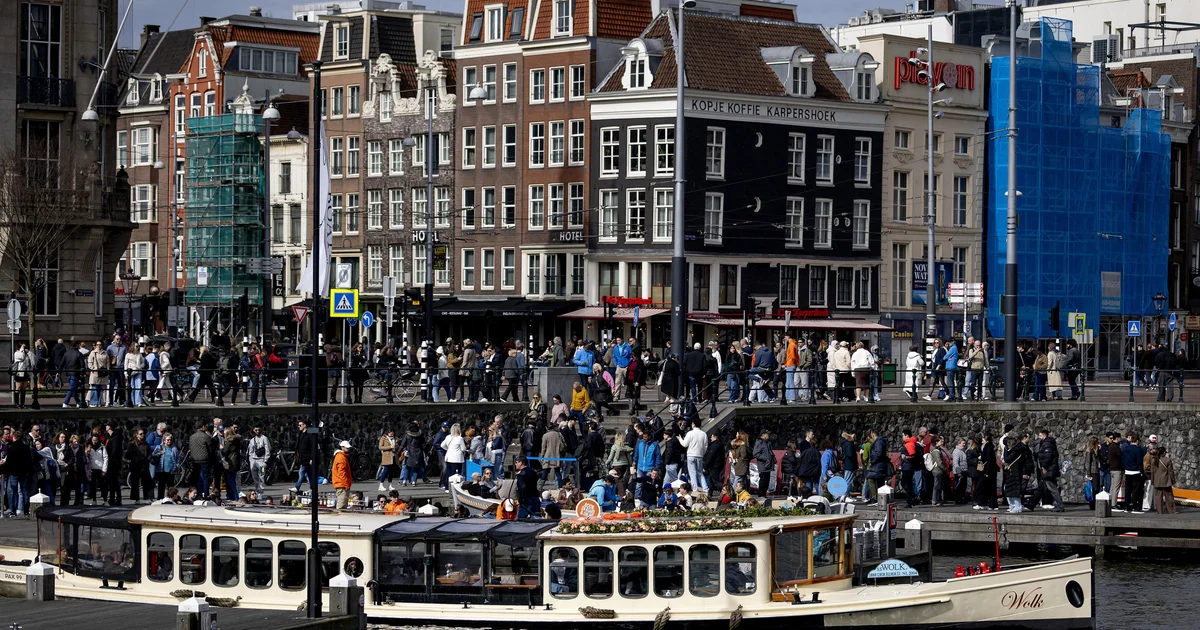
SouthernWorldwide.com – Amsterdam, a city renowned for its progressive stances on various social issues, has now taken a significant step in environmental policy by becoming the first capital city globally to prohibit advertisements for meat and fossil fuels in public spaces.
This landmark decision, effective from May 1, aims to curb spending on products that contribute to high carbon emissions. Advertisements featuring meat products, as well as those for airlines and gasoline-powered cars, are no longer permitted within the city’s public areas.
The initiative was spearheaded by the GreenLeft and Party for the Animals political parties. Their aim is to align public messaging with the city’s commitment to climate action.
Anneke Veenhoff, a city councilor from GreenLeft, articulated the rationale behind the ban. She questioned the logic of investing significant public funds and implementing climate change mitigation policies while simultaneously allowing advertisements that promote the opposite.
Veenhoff drew a parallel to addiction recovery, stating that it is counterproductive to be constantly exposed to the object of one’s addiction. This highlights the psychological aspect the city is addressing through its advertising policy.
The scope of the Amsterdam ban extends to advertisements for cruises and distant holiday destinations, in addition to specific meat products such as beef, chicken, pork, and fish.
This move by Amsterdam follows a similar precedent set by the Dutch city of Haarlem. In 2022, Haarlem became the first city in the world to announce a ban on most meat advertisements in public spaces.
The Haarlem ban officially became law two years later, and it also included a prohibition on fossil fuel advertisements. This indicates a growing trend within the Netherlands towards stricter advertising regulations for environmentally impactful products.
Further solidifying this trend, The Hague, another Dutch city, became the first globally to legally enshrine a ban on fossil fuel advertising in 2025. This demonstrates a coordinated effort among Dutch cities to address climate concerns through policy changes.
However, these progressive measures have not been without opposition. Groups such as the Dutch Advertisers’ Association have voiced their concerns. In October of the previous year, they stated that such bans are inconsistent with fundamental principles of commercial communication and freedom of expression.
The Dutch Association of Travel Agents and Tour Operators has characterized the Amsterdam ban as an excessive restriction on commercial freedom. Similarly, the Dutch Meat Association has labeled it an unwelcome attempt to manipulate consumer choices.
Globally, the trend towards restricting advertisements for environmentally harmful products is gaining momentum. More than 50 cities worldwide have either implemented or are in the process of enacting bans on ads for fossil fuel and meat products.
This collective action is part of a broader push to reduce global carbon consumption and mitigate the effects of climate change. The bans are seen as a critical tool in this effort.
The urgency of the climate crisis was underscored by United Nations Secretary-General Antonio Guterres in June 2024. He called for a ban on advertising for oil, gas, and coal, citing the devastating impact of climate change on a global scale.
Guterres’ stark warning highlighted the severity of the situation, stating, “In the case of climate, we are not the dinosaurs. We are the meteor.” He emphasized that humanity is not merely endangered but is the source of the danger itself.
Read more: CBS Evening News
These advertising bans represent a tangible policy response to the escalating climate crisis, aiming to influence public behavior and reduce the demand for high-carbon products and services.