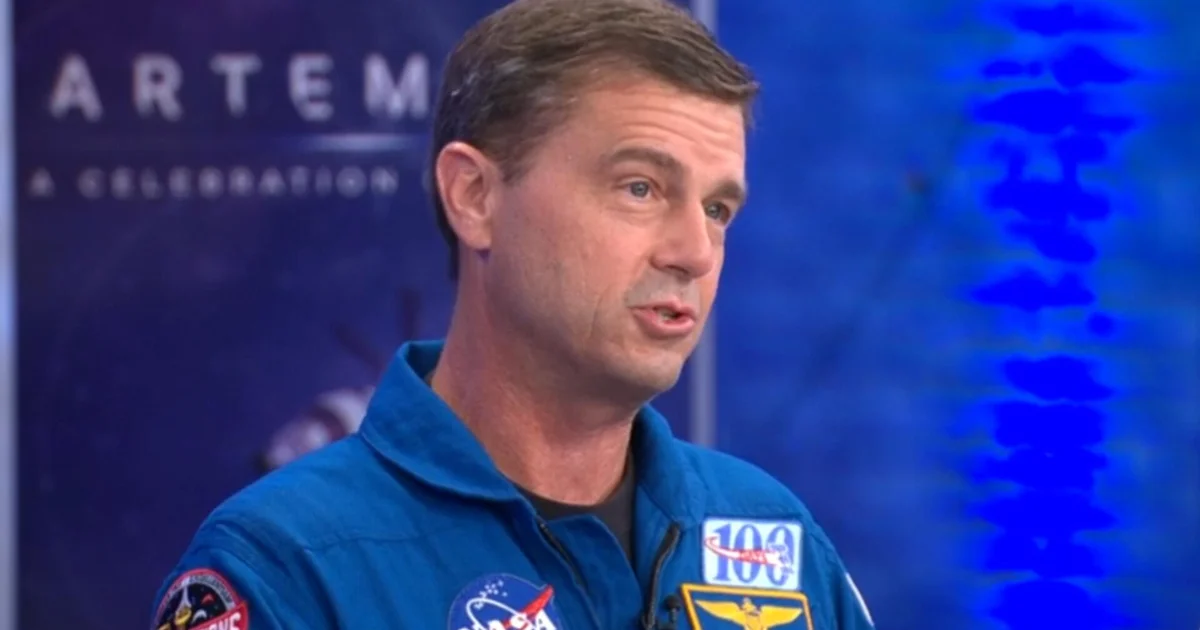
SouthernWorldwide.com – NASA astronaut Reid Wiseman, commander of the upcoming Artemis II mission, recently shared a “dramatic and important warning” encountered during their time in space.
Wiseman revealed the most challenging decision the crew had to make while aboard the Artemis II mission.
The warning, described as both dramatic and significant, occurred in the middle of the night.
This revelation came during a discussion about the intricacies and unexpected challenges of space travel.
The Artemis II mission is a crucial step in NASA’s ambitious program to return humans to the Moon.
Wiseman, a veteran astronaut, has extensive experience in spaceflight, having previously served on the International Space Station.
His insights offer a glimpse into the realities of living and working in the extreme environment of space.
The Artemis program aims to establish a sustainable human presence on the Moon and prepare for future missions to Mars.
Details about the specific nature of the warning were not immediately disclosed, but Wiseman emphasized its impact on the crew.
Such incidents highlight the constant need for vigilance and preparedness among astronauts.
The crew’s ability to handle unexpected situations is a testament to their rigorous training.
Wiseman’s comments underscore the risks inherent in space exploration, even with advanced technology.
Read more : Anthropic's AI Identifies Vulnerabilities in Most Earth-Based Computers. Concern Grows.
The Artemis II mission is designed to test critical systems and technologies necessary for lunar missions.
This includes the Orion spacecraft and its life support systems.
The crew will orbit the Moon, marking the first human lunar voyage in over 50 years.
Their journey will pave the way for the Artemis III mission, which aims to land astronauts on the lunar surface.
Wiseman’s role as commander signifies his leadership and responsibility for the crew’s safety and mission success.
His candidness about the “dramatic warning” provides valuable context for the public understanding of space missions.
It also emphasizes the human element in these complex endeavors.
Astronauts often face unforeseen circumstances that require quick thinking and decisive action.
The crew’s training includes simulations of various emergency scenarios.
These simulations prepare them for potential issues that could arise during a mission.
Wiseman’s description of the warning as a “dramatic and important” event suggests it was a critical moment.
Such events are meticulously reviewed by NASA to improve future mission planning and safety protocols.
The Artemis II mission is not only a technological feat but also a testament to human resilience and courage.
The crew’s experiences, both planned and unplanned, contribute to the collective knowledge of space exploration.
Wiseman’s leadership will be crucial in navigating the challenges of the Artemis II mission.
His ability to communicate these experiences openly is vital for transparency and public engagement.
The mission represents a significant milestone in humanity’s return to the Moon.
The insights shared by Wiseman offer a deeper appreciation for the dedication and expertise of NASA’s astronauts.
Understanding the difficulties and the warnings encountered is part of the ongoing learning process in space exploration.
These experiences are invaluable for ensuring the safety and success of future Artemis missions.
The successful completion of Artemis II will be a major step towards establishing a long-term lunar presence.
Wiseman’s role highlights the importance of leadership in high-stakes environments.
The Artemis program continues to push the boundaries of human exploration.
The crew’s journey is a source of inspiration and a testament to human ingenuity.