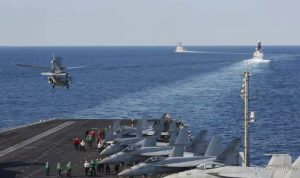
SouthernWorldwide.com – The United Kingdom has announced its intention to deploy military assets to the Strait of Hormuz as part of a defensive mission to ensure freedom of navigation.
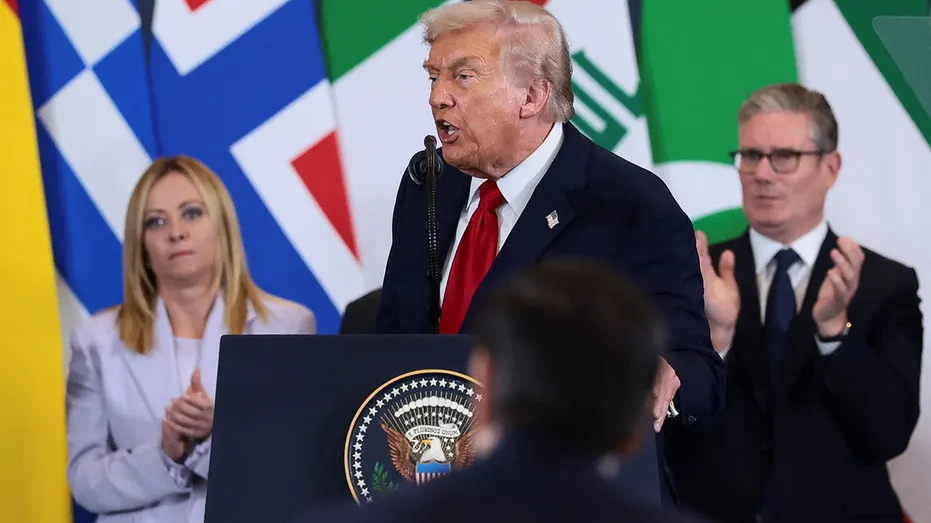
This move comes amidst a backdrop of strained relations with the United States, particularly concerning the ongoing situation with Iran. Prime Minister Keir Starmer’s government has opted not to join the U.S. in offensive operations against Iran, a decision that has drawn criticism from President Donald Trump.
President Trump has publicly expressed his disappointment, stating that the UK was “not there” when needed and has questioned Starmer’s leadership, comparing him unfavorably to Winston Churchill.
The U.K.’s reluctance to engage in offensive actions against Iran, coupled with perceived shortcomings in its military capabilities, has been highlighted by recent analyses.
One report by Matthew Savill, director of military sciences at the Royal United Services Institute (RUSI), titled “Iran War Delivers a Tough Lesson in Hard Power to the U.K.,” suggests that the U.K. faces significant challenges in projecting power internationally.
Savill points to the practical realities constraining the U.K.’s military actions, despite its political intentions. He notes that while the U.K. has been involved in defensive measures, such as downing Iranian drones in support of Jordan and Iraq, its capacity for offensive operations is limited.
A separate report from the House of Lords International Relations and Defense Committee, “Adjusting to new realities: rebalancing the U.K.-U.S. partnership,” further emphasizes the U.K.’s declining defense capabilities and its growing dependency on the United States.
The committee’s report warns that this over-reliance has led to a loss of credibility in Washington and calls for a clear plan to increase defense spending to 5% of GDP.
The reports come as President Trump has previously criticized the state of the Royal Navy, describing British aircraft carriers as “toys” compared to those of the U.S.
Data cited in the analysis reveals a significant reduction in the Royal Navy’s fleet size over the past three decades. In 1996, the U.K. had 63 commissioned vessels, including three aircraft carriers, 15 destroyers, and 17 submarines. As of the reports, this number has dwindled to 25 fighting ships, including two aircraft carriers, six destroyers, and 10 submarines.
This reduction in naval strength has impacted the U.K.’s ability to meet its global responsibilities and project power effectively.
The U.K. government has pledged to increase defense spending to 2.5% of GDP by 2027, with a long-term goal of reaching 3% by the end of the next parliamentary term. This commitment includes an additional £5 billion this financial year and £270 billion in defense investment over the current parliament.
However, experts suggest that these investments may not be sufficient to fully restore the U.K.’s military capabilities in the short term.
Read more : Cardinals fans in an empty section create electric scene during walk-off win over Royals
The situation underscores a broader debate about the U.K.’s role in international defense and its ability to maintain its influence on the global stage amidst evolving geopolitical landscapes and budgetary constraints.
While some within the Trump administration view the U.K.’s stance as a betrayal of the “special relationship,” others interpret it as a stark illustration of the limitations faced by a mid-sized power attempting to sustain a global military presence on a shrinking budget.
The U.K.’s decision to deploy assets for defensive purposes in the Strait of Hormuz signals a commitment to maritime security, even as it navigates complex diplomatic and military challenges.
This strategic move aims to reassure allies and deter potential aggression, while also reflecting the current capabilities and priorities of the British armed forces.
The ongoing discussions about defense spending and military readiness are expected to continue as the U.K. seeks to adapt to a rapidly changing international security environment.
The U.K.’s participation in defensive missions, rather than offensive ones, highlights a strategic choice influenced by both political considerations and practical military limitations.
The reports and the current geopolitical climate suggest a period of re-evaluation for the U.K.’s defense posture and its relationship with key international partners.
The government’s commitment to increasing defense spending is a significant step, but the long-term impact on the U.K.’s global military reach remains a subject of ongoing analysis and debate.
The strategic defense review of 2025, which prioritized a “NATO First” approach, has also been cited as a factor influencing the U.K.’s defense commitments and its capacity for independent global power projection.
The U.K.’s current deployment is part of a broader effort to ensure stability in a critical global waterway, demonstrating a commitment to international security despite its own defense challenges.
The contrasting views on the U.K.’s role in international security, particularly between London and Washington, underscore the complexities of alliance dynamics and the differing perspectives on national defense priorities.
Ultimately, the U.K.’s approach reflects a delicate balance between its international commitments, its relationship with its closest allies, and the realities of its current defense capabilities.