SouthernWorldwide.com – President Donald Trump stated on Tuesday that he anticipates a “long talk” with Chinese President Xi Jinping regarding Iran this week. This issue now overshadows a summit that was initially expected to concentrate on trade, technology, and Taiwan.
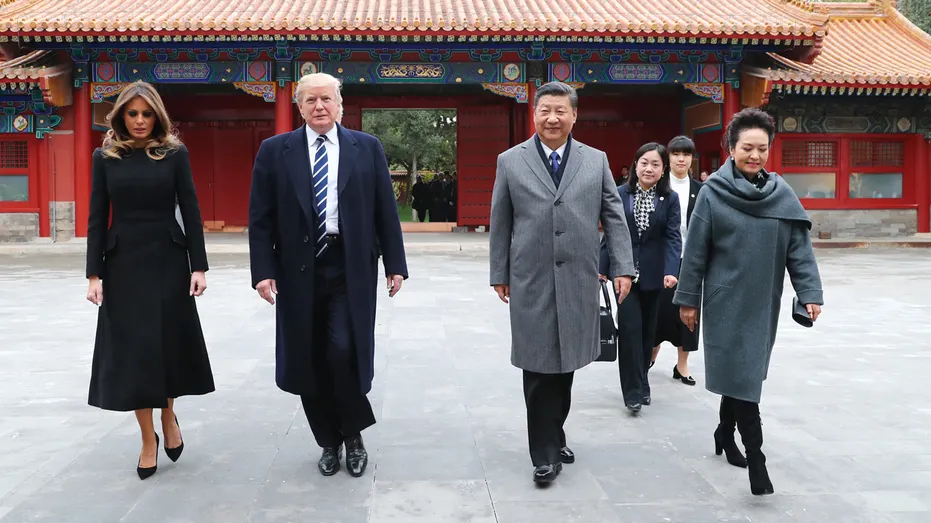
“It was a fantastic day,” Trump remarked on Thursday during a state banquet, describing his welcome to China and initial meetings. “And in particular, I want to thank President Xi, my friend, for this magnificent welcome… and for so graciously hosting us on this very historic state visit. We had positive and productive conversations and meetings today with the Chinese delegation earlier. And this evening is another cherished opportunity to discuss among friends some of the things that we discussed today.”
Instead of arriving in Beijing with the Middle East conflict resolved, Trump faces the additional challenge of confronting Xi over China’s connections to Tehran. This occurs while he attempts to maintain leverage in one of the world’s most critical bilateral relationships.
China’s position as a major purchaser of Iranian oil has long been a source of frustration for U.S. officials. However, with Trump now aiming to cut off Tehran’s economic lifeline, Beijing’s support for Iran is no longer a secondary concern.
TRUMP DELAYS XI MEETING AS IRAN CONFLICT LETS US STRONG-ARM CHINA’S OIL SUPPLY
Ahead of the summit, Trump also seemed to downplay the extent to which Iran would dominate the discussions. He told reporters before departing for Beijing that “we have a lot of things to discuss” and added, “I wouldn’t say Iran is one of them, to be honest with you, because we have Iran very much under control.”
China procures approximately 90% of Iran’s exported oil, making Beijing Tehran’s primary economic support. Nevertheless, Iranian crude constitutes only about 13% to 15% of China’s total oil imports.
The Trump administration has intensified its pressure by implementing secondary sanctions on Chinese refiners that process Iranian oil. This action threatens to isolate these firms from the U.S. financial system, highlighting how the Iran conflict is increasingly intersecting with the broader U.S.-China relationship.
During the first bilateral meeting between Trump and Xi on Thursday morning, the Chinese president expressed interest in purchasing more American energy.
“The two sides agreed that the Strait of Hormuz must remain open to support the free flow of energy,” a White House official stated in a readout of the meeting.
“President Xi also made clear China’s opposition to the militarization of the Strait and any effort to charge a toll for its use, and he expressed interest in purchasing more American oil to reduce China’s dependence on the Strait in the future,” the official continued. “Both countries agreed that Iran can never have a nuclear weapon.”
Beijing, in response, instructed Chinese companies not to comply with these sanctions. This represents a more direct confrontation with Washington than China has typically engaged in during past disputes, where it often quietly circumvented U.S. pressure.
Even as Beijing publicly urged firms to disregard the U.S. sanctions, Chinese regulators quietly directed major banks to suspend new lending to several sanctioned refineries. According to a Bloomberg report, this action indicates Beijing’s effort to shield its financial system from exposure to U.S. secondary sanctions rather than openly escalating the standoff.
TRUMP TARGETS IRANIAN OIL WITH SANCTIONS, INCREASING PRESSURE ON ISLAMIC REPUBLIC TO MAKE DEAL ON NUKES
Elaine Dezenski, who leads the Center on Economic and Financial Power at the Foundation for Defense of Democracies, commented that the Iran conflict is “quietly changing China’s strategic calculus.”
Read more : MJF Signs Hair vs. Title Match Contract, Owen Hart Tournament Field Revealed, and More
“Thus far, China has weathered the economic disruption of the Iran conflict reasonably well,” Dezenski stated during an FDD media briefing previewing the summit. However, she noted that Beijing has been compelled to draw upon strategic oil and gas reserves originally earmarked for a potential Taiwan contingency.
This dynamic has sparked debate in Washington regarding whether the Iran conflict ultimately weakens Trump’s negotiating position with Beijing by diverting U.S. resources to the Middle East, or if it instead underscores China’s own vulnerabilities.
Craig Singleton, senior director of FDD’s China Program, argued that Beijing has minimal interest in allowing the conflict to escalate further.
“China does not want a wider Middle East war,” Singleton asserted. “It does not want sustained energy disruption.”
Even if China is better positioned than many nations to absorb short-term shocks, Singleton contended that Beijing ultimately desires the Strait of Hormuz to be reopened because “China’s export economy depends on predictable energy, transport and insurance conditions.”
However, the Trump administration’s campaign against Iran is increasingly impacting Chinese interests, transforming what was once a regional conflict into a direct point of contention between the world’s two largest powers.
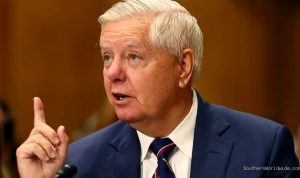
“President Trump, when you go to China, realize that the person you’re talking to is propping up Russia and Iran,” Republican Sen. Lindsey Graham stated during a Senate hearing on Tuesday. He added, “of all the countries on the planet, China could have the most influence of ending this war if they chose to.”
U.S. officials have also accused Chinese and Hong Kong-based entities of assisting Iran in acquiring materials related to its missile and drone programs, further intensifying tensions between Washington and Beijing over Tehran.
Analysts suggest that Trump is unlikely to achieve a significant breakthrough from Beijing on the Iran issue. However, he could push Xi to quietly pressure Tehran to avoid further disruptions to global energy markets.
Chinese cooperation might come with expectations of concessions in other areas of the U.S.-China relationship, even if Beijing’s actual influence over Tehran is limited.
Other experts cautioned against overestimating Beijing’s capacity, or willingness, to influence Iran.
“I would be very careful about making concessions… for some kind of promise that they’re going to whisper in the ears of their friends in Iran,” advised Sarah Cook, a senior fellow at CEPA.
Despite China’s economic significance to Iran, experts point out that Tehran’s decision-making is heavily driven by ideology and regime survival – factors that Beijing cannot fully control.