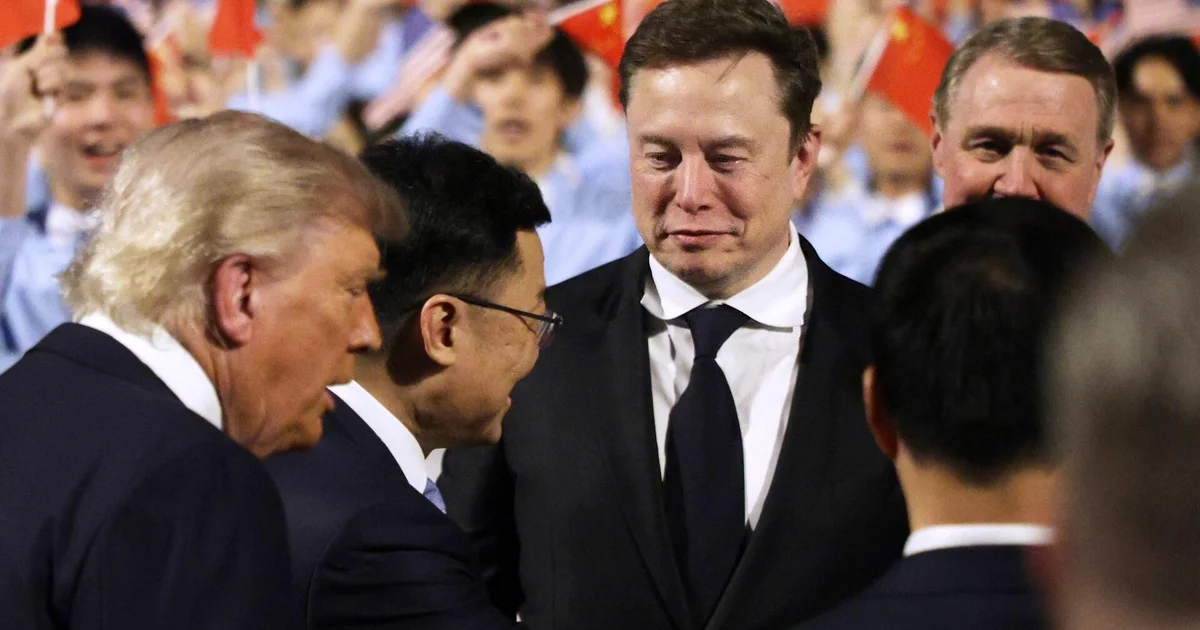
SouthernWorldwide.com – Chinese President Xi Jinping has communicated to U.S. CEOs traveling with President Trump that China will further open its doors to American businesses. This assurance is a primary objective for corporate leaders keen on expanding their operations within the world’s second-largest economy.
Xi engaged in discussions with the delegation of chief executives, which notably includes Apple CEO Tim Cook, Tesla CEO Elon Musk, and Nvidia CEO Jensen Huang. This meeting took place according to a statement released by the Chinese Foreign Ministry on Thursday. The assembled executives, whose collective net worth is estimated to be close to $1 trillion, lead companies with significant stakes in China, despite ongoing trade disputes between the two global economic powerhouses.
China’s commitment to welcoming more foreign investment arrives after a period of heightened trade tensions with the U.S. These tensions included the Trump administration’s decision last year to increase tariffs on Chinese imports, with rates reaching up to 125%. This move followed President Trump’s assertion that China had been taking advantage of the U.S.
Despite these challenges, U.S. companies continue to view China’s growing middle class and extensive consumer base as crucial markets for expansion. This is particularly relevant as generating profits from financially strained consumers in the U.S. and other developed nations has become increasingly difficult.
The White House confirmed that several American business leaders were part of a segment of a larger meeting involving U.S. and Chinese officials. A White House official stated that the discussions focused on avenues to strengthen economic cooperation between the two nations, specifically addressing enhanced market access for American businesses in China and increased Chinese investment.
The list of CEOs accompanying President Trump includes:
- Cristiano Amon, CEO of Qualcomm
- Tim Cook, CEO of Apple
- Lawrence Culp Jr., CEO of GE Aerospace
- Larry Fink, CEO of BlackRock
- Jane Fraser, CEO of Citigroup
- Jensen Huang, CEO of Nvidia
- Ryan McInerney, CEO of Visa
- Sanjay Mehrotra, CEO of Micron Technology
- Michael Miebach, CEO of Mastercard
- Elon Musk, CEO of Tesla and SpaceX
- Kelly Ortberg, CEO of Boeing
- Stephen Schwarzman, CEO of Blackstone
- Brian Sikes, CEO of Cargill
- David Solomon, CEO of Goldman Sachs
- Jacob Thaysen, CEO of Illumina
Conciliatory Measures
Analysts at Eurasia Group, a political risk consultancy, suggest that based on the composition of the CEOs present, China might implement several measures to de-escalate economic tensions with the U.S.
They anticipate that both sides will announce adjustments to trade and tariffs, particularly in non-sensitive sectors. This could involve increased Chinese purchases of U.S. agricultural products, including beef, as well as Boeing aircraft and energy supplies.
Furthermore, China could potentially relax restrictions on foreign financial services firms, reduce antitrust barriers, or grant Tesla approval for the full rollout of its autonomous driving technology. This is according to insights from Eurasia Group.
President Trump indicated that Xi Jinping has also agreed to increase soybean purchases, which would be a significant benefit for U.S. farmers. These farmers have been adversely affected by China’s retaliatory decision a year prior to suspend purchases of this key agricultural export.
Historical Precedent
There is a well-established history of business leaders accompanying U.S. presidents on significant international trips or trade missions.
For instance, during President Obama’s 2015 visit to India, numerous U.S. CEOs participated in a summit aimed at boosting bilateral trade and investment. Similarly, in 2000, President Bill Clinton led a delegation of prominent U.S. executives to India, including representatives from major companies like General Motors, IBM, and Microsoft.
During President Trump’s own visit to China in 2017, he was accompanied by the leaders of major U.S. financial, energy, and technology firms.
Mark Zandi, chief economist at Moody’s Analytics, commented to CBS News that it is not uncommon for CEOs to travel with the president. He highlighted that the U.S.-China relationship is heavily reliant on their business ties, given that they are the two largest economies globally. Their interaction significantly influences the performance of their respective economies and the global economy.
Zandi also suggested that the mere presence of these top executives could facilitate improved communication channels between U.S. companies and Chinese officials and business leaders.
He believes the bar for success on this trip is not exceptionally high. The key objective, according to Zandi, is for participants to leave with the understanding that they have established a reliable channel for quick communication and mutual trust.
Chips and AI
For the U.S. CEOs present on President Trump’s trip, overarching objectives include boosting sales to Chinese consumers and businesses, as well as securing their companies’ positions to win critical manufacturing and trade agreements.
Apple, for example, holds the position of the largest smartphone brand in China. However, the company faces formidable competition from domestic rivals such as Huawei and Xiaomi. Apple also relies heavily on Chinese partners, like Foxconn, the world’s largest contract electronics manufacturer, for the production of most of its products, which are then distributed globally.
Semiconductor giant Nvidia is reportedly seeking expanded access to China’s artificial intelligence market. This comes at a time when U.S. export controls pose a threat to sales of its advanced chips, according to a report by Wedbush Securities analyst Dan Ives. This pursuit of access is happening concurrently with Chinese firms actively developing their own domestic alternatives.
Ives emphasized that the stakes extend beyond a single trip or headline, encompassing the future direction of AI supply chains, the framework of future export controls, and the extent to which U.S. chip leadership can remain profitable in China.
Financial Products
A number of prominent U.S. financial companies are also represented on the trade mission, including BlackRock CEO Larry Fink and Citigroup CEO Jane Fraser.
BlackRock aims to gain broader access to China’s rapidly expanding wealth and retirement markets while navigating increasing political scrutiny from both Washington and Beijing. Citigroup, on the other hand, seeks enhanced access to China’s financial markets, partly to assist its clients with cross-border transactions.
Jane Fraser informed Bloomberg News last year that there has been significant interest from numerous investors and companies looking to understand the developments in China, alongside Chinese companies and investors who are increasingly looking outward.
Also present among the executives in China with U.S. officials is Jacob Thaysen, the sole representative from the biotech industry on the trip. Thaysen indicated to Bloomberg last year that export restrictions have negatively impacted Illumina’s sales of DNA-sequencing technology in China.
Read more : Bessent Credits Senator for Prioritizing Country Over Ideology in Fed Chair Vote
Thaysen expressed a desire for Illumina to be an active participant in China’s market, according to news reports.