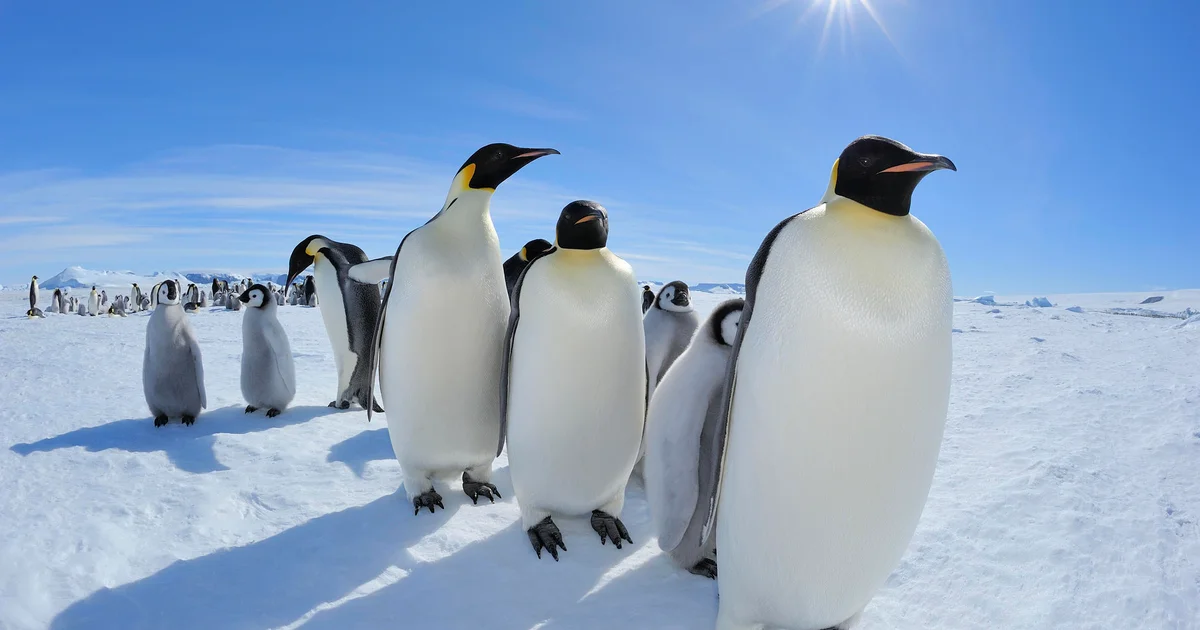
SouthernWorldwide.com – The emperor penguin, an iconic inhabitant of Antarctica, has been officially classified as an endangered species. This designation comes as a direct consequence of climate change, which is significantly impacting the species’ habitat and pushing it closer to extinction.
The International Union for Conservation of Nature (IUCN), the global authority on threatened wildlife, announced the change in status. Previously listed as “near threatened,” the emperor penguin’s new classification highlights the critical danger faced by ice-dependent species due to global warming.
Emperor penguins are intrinsically linked to sea ice for their survival. They rely on these frozen platforms for essential activities such as living, hunting for food, and breeding. The increasing frequency of early sea ice breakup and overall loss of this vital habitat has led to a dramatic decline in their populations.
According to the IUCN, a vast network comprising scientists, governments, and conservation organizations, the changes in sea ice conditions, driven by climate change, are projected to reduce the emperor penguin population by half by the year 2080.
“They concluded that human-induced climate change poses the most significant threat to emperor penguins,” stated Philip Trathan, a member of the IUCN expert group responsible for the Red List assessment. This statement underscores the severity of the situation.
The IUCN Red List of Threatened Species is a globally recognized compendium detailing the extinction risk status of various plants, animals, and fungi. It employs six distinct classifications, ranging from “least concern” to “extinct.” Species categorized as “endangered” are two steps away from being “extinct in the wild,” a status indicating survival only in captivity.
In addition to the emperor penguin, the Antarctic fur seal has also been elevated to the endangered category. This species, which was once on the brink of extinction due to human hunting for its pelts, has experienced a population drop of over 50% since 1999.
The Impact of Climate Change on Emperor Penguins
The IUCN explained that the ongoing decline in fur seal populations is attributed to climate change. Rising ocean temperatures and diminishing sea ice force krill, a primary food source, to descend to greater depths in search of colder waters, thereby reducing food availability for the seals.
Emperor penguins, the largest and heaviest of all penguin species, are characterized by a striking golden-orange streak on their necks and chests. They have become symbolic of the struggle for survival in the extreme conditions of Antarctica.
These penguins undertake their breeding activities on the sea ice during the harsh Antarctic winter. The males depend on the stable, flat ice surface to incubate their eggs beneath their feet. Furthermore, the sea ice serves as a crucial habitat for the chicks and for the penguins during their moulting period, before they develop their waterproof plumage.
However, the escalating effects of climate change are rendering the sea ice increasingly unstable. This instability leads to its premature retreat or early breakup in the spring, disrupting the penguins’ life cycle.
Data from satellite imagery has revealed a significant trend: sea ice extent has been at record low levels since 2016. The consequences for emperor penguins have been starkly evident, with an estimated 20,000 adult penguins, approximately 10% of the total population, disappearing between 2009 and 2018 alone.
“This species is closely associated with sea ice and ice packs,” commented Christophe Barbraud, a scientist at the French research institute CNRS. He further elaborated that the substantial decrease in sea ice extent around Antarctica since 2016-2017 poses a severe threat to the species’ survival.
Trathan highlighted the emperor penguin’s role as a “sentinel species,” serving as an indicator of the changes occurring in our world and reflecting our success in controlling greenhouse gas emissions that drive climate change.
Read more : Americans Leaving U.S. for Overseas Work, Study Reveals
The IUCN also reclassified the southern elephant seal, moving it from the “least concern” category to “vulnerable.” This change was prompted by population declines attributed to a highly contagious and deadly pathogen.