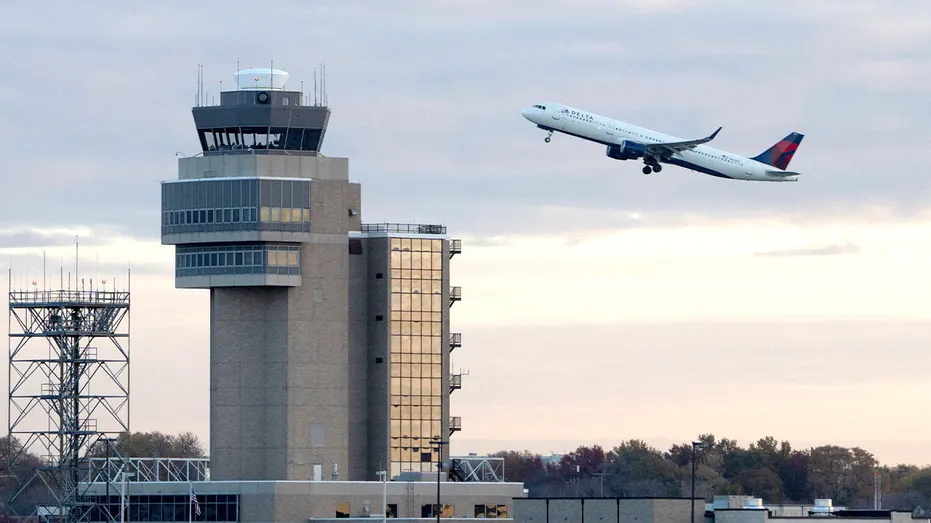
SouthernWorldwide.com – The Federal Aviation Administration (FAA) has launched a comprehensive plan to revitalize its air traffic control system, addressing critical staffing shortages, excessive overtime, and outdated technology.
This new initiative, outlined in the 2026-2028 Air Traffic Controller Workforce Plan, aims to significantly increase the number of air traffic controllers, upgrade scheduling systems, and replace aging infrastructure across the National Airspace System.
The plan follows stark warnings from FAA Administrator Bryan Bedford, who previously informed Congress that the agency’s current structure would prevent air traffic control towers from ever achieving full staffing levels.
Bedford stated during a December congressional hearing that the system was “designed to be chronically understaffed” and that the agency would “never catch up” under the existing framework.
This overhaul also occurs amidst increased scrutiny of aviation safety, prompted by a series of airport disruptions, delays, and near-miss incidents. These events have fueled concerns about the air traffic control infrastructure’s ability to cope with rising travel demand.
Administrator Bedford emphasized that the plan aligns with President Donald J. Trump’s commitment to delivering a world-class air traffic control system for the American flying public. He stressed that this begins with highly trained and professional air traffic controllers.
“We can’t continue to operate the same way and expect better results,” Bedford stated. He highlighted that the FAA is fundamentally changing its approach to hiring, training, and scheduling its controller workforce, while also providing them with state-of-the-art tools.
The FAA has set a target of 12,563 certified professional controllers, based on projected demand. As of April 2026, the agency reported approximately 11,000 certified professional controllers were operating at over 300 air traffic facilities.
Furthermore, the agency has an additional 4,000 controllers in the training pipeline. This includes about 1,000 individuals who were previously certified but are now undergoing training at new facilities.
Rebuilding the workforce is a long-term endeavor. The FAA noted that certifying a new controller can take over two years, depending on the complexity of the facility to which they are assigned.
Read more : Majors With the Best Long-Term ROI
Under the new plan, the FAA intends to hire 2,200 new air traffic controllers in fiscal year 2026, followed by 2,300 in fiscal year 2027, and 2,400 in fiscal year 2028. The agency is also expanding its collaborations with colleges, universities, and technical schools.
The workforce plan explicitly acknowledges the significant strain that excessive overtime has placed on controllers.
The plan states that while a limited amount of overtime is a reasonable measure for managing unexpected work demands, the levels experienced in FY 2023–FY 2025 have “far exceed[ed] any reasonable use of mandatory overtime.”
The report warns that the chronic use of overtime leads to fatigue, controller burnout, and ultimately, a loss of retention within the workforce.
A notable finding in the plan is that workforce scheduling and controller timekeeping are still managed manually by local facility managers.
“It is difficult to understand why no automation tools have been deployed to schedule our workforce or track time, attendance and functional work accomplished,” the report states, highlighting a significant inefficiency.
The FAA believes that increasing the average controller time on position from approximately four hours to over five hours per eight-hour shift could significantly boost effective workforce availability, potentially meeting current staffing targets.
The workforce plan also mandates the replacement of decades-old infrastructure with a fully digital system. It calls for expanded simulator-based training and the utilization of artificial intelligence and machine learning tools to better manage air traffic demand.
Concerns about the age of FAA systems were previously raised by lawmakers during Bedford’s December testimony. Reports indicated that some facilities were still relying on floppy disks for operations.
Rep. Brad Knott, R-N.C., stated during the hearing that “When you’re still using floppy disks, that makes everybody less safe, that makes the agency less effective.”
Rep. Laura Gillen, D-N.Y., also reported witnessing the use of floppy disks during a visit to the FAA’s terminal radar approach control facility on Long Island, which oversees traffic for major New York-area airports.
Administrator Bedford informed lawmakers that the FAA had allocated over $6 billion of the $12.5 billion received under legislation supported by the Trump administration. These funds are designated for investments in telecommunications infrastructure and new radar surveillance systems.
The new workforce plan indicates that the FAA will transition from “decades-old, unreliable, analog infrastructure” to a “fully digital network system.” The agency argues that modern tools will enhance reliability, reduce outages, and provide controllers with a more stable working environment.
The FAA highlighted that the current plan builds upon its fiscal year 2025 hiring efforts, during which the agency recruited 2,028 air traffic controller trainees—the highest number since 2008.
The agency also implemented a nearly 30% increase in starting salaries for academy students and introduced financial incentives for academy completion to boost recruitment.
Despite these efforts, the FAA reported that total workforce losses in fiscal year 2025, encompassing retirements, resignations, promotions, removals, training failures, and academy attrition, amounted to 1,460.
The agency managed to retain nearly 400 retirement-eligible controllers through a newly established bonus structure.
A previous study by the Transportation Research Board of the National Academies found that approximately 30% of FAA facilities were operating with staffing levels more than 10% below targets, while another 30% were staffed more than 10% above targets.
The FAA attributed past hiring disruptions, including sequestration, government shutdowns, and the COVID-19 pandemic, to long-term impacts on staffing levels, particularly at major facilities serving the nation’s largest airports.
Even with the planned hiring of thousands of new controllers, FAA officials acknowledge that the air traffic controller shortage is not expected to be resolved quickly.
Given the multi-year training requirements, ongoing retirements, existing staffing imbalances, and modernization challenges, the agency’s own projections indicate that pressure on America’s air traffic control system is likely to persist, even as air travel demand continues to rise.