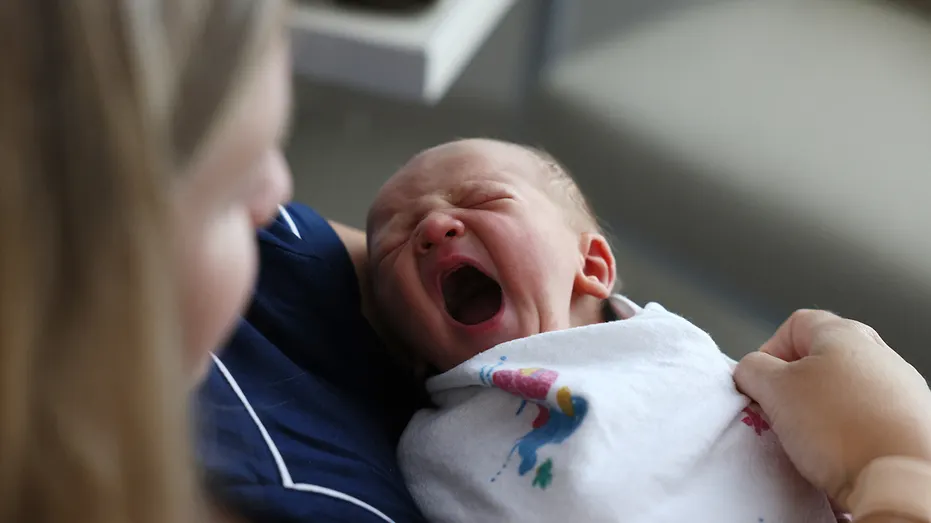
SouthernWorldwide.com – American women are delaying childbirth to an unprecedented extent, with birth rates reaching historic lows. This trend is increasingly highlighting a significant divide between states, often categorized as “red” and “blue,” in terms of when women are first becoming mothers.
A recent analysis of birth rates has brought attention to Washington, D.C., and Mississippi as representative of the diverse patterns observed among first-time mothers. The study’s findings underscore how factors such as educational attainment, economic prospects, the cost of living, and access to reproductive healthcare are collectively influencing the decision of when, or if, Americans choose to start families.
However, the partisan distinction between regions with the highest and lowest average ages for first-time mothers is a notable aspect of these trends.
The ten states that report the highest average age for first-time mothers all voted Democratic in the last five presidential elections. Conversely, nine of the ten states with the lowest average age for first-time mothers have voted Republican in the same elections.
Data indicates that Washington, D.C., where a substantial three-quarters of voters are registered Democrats, has the highest average age for women becoming mothers for the first time, at 30.8 years. In contrast, Mississippi, a staunchly Republican state frequently identified as one of the poorest in the U.S., registers the lowest average age at 24.7 years.
In the decades following the sexual revolution of the 1960s, which saw the widespread availability of oral contraceptives and a reevaluation of traditional gender roles, American women have consistently postponed motherhood. The average age of first-time mothers has risen from 21 in 1972 to 27.5 in 2024, according to data compiled by the Centers for Disease Control and Prevention (CDC).
Furthermore, the analysis detailing the age disparities across different jurisdictions reveals a notable six-year difference between the states where the youngest and oldest first-time mothers reside.
ROGAN WARNS OF US ‘POPULATION COLLAPSE’ DUE TO TOXIC CHEMICALS AND DELAYED PARENTHOOD TANK BIRTH RATES
In Washington, D.C., the trend of later motherhood is closely associated with higher levels of education, expanded career opportunities, and more comprehensive access to reproductive healthcare services.
In stark contrast, women in Mississippi tend to start their families at younger ages. This is in a state where educational achievements are generally lower and economic opportunities are more limited when compared to the nation’s capital.
The ten states with the highest average age for first-time mothers all cast their votes for the Democratic party in the 2024 presidential election, while the ten states with the youngest first-time mothers predominantly voted Republican.
Brad Wilcox, a senior fellow at the Institute for Family Studies, posited that young individuals residing in blue states, particularly in the Northeast, are often more career-driven. He suggested that young people in other regions tend to be more focused on family matters.
“And so what we see as a consequence of that is that the age of first birth is more likely to be markedly higher in blue states, which often also have higher levels of education and income for women as well,” he elaborated.
Data from the CDC supports the observation that women with advanced educational degrees are more inclined to delay having their first child. On average, women holding a professional or doctorate degree tend to have their first child around the age of 34. Meanwhile, women with only a high school diploma are likely to have their first child at an average age of 27.2.
Moreover, women continue to surpass men in obtaining college degrees. Approximately 47% of American women aged 25 to 34 hold a college degree. In comparison, only 37% of men in the same age bracket have completed college degrees, according to research from Pew Research.
Wilcox further suggested that contemporary men are experiencing difficulties in keeping pace within the evolving workplace.
“Men on the employment front are sort of floundering,” Wilcox commented. “And so these trends we’re seeing just make it harder, I think, for men to find their footing and to have a kind of constructive role to play, both in the family and society too often.”
Maggie McKneely, who serves as the director of Government Relations at Concerned Women for America, proposed that women are increasingly seeking partners with a comparable educational or economic standing, a criterion they find harder to meet.
“In cosmopolitan cities especially, women are rewarded for becoming the main character of their own lives first,” observed Debono. “The degree, the promotions, the chic apartment, the solo trip to Italy, the emotionally unavailable boyfriend who ‘isn’t ready right now.'”
“Motherhood becomes something you schedule in between Pilates and a board meeting.”
THE STATES REVEALED AS BEST TO START A FAMILY AMID CRATERING BELIEF IN THE AMERICAN DREAM
Debono also contended that the prevalence of dating apps contributes to the increased difficulty in settling down and forming lasting relationships.
Read more : Radio Host Compares Caitlin Clark to Jeremy Lin, Calling It 'The Exact Same Thing
“Women have never had more freedom, yet many feel more anxious about love, commitment, and timing than ever before,” Debono concluded.