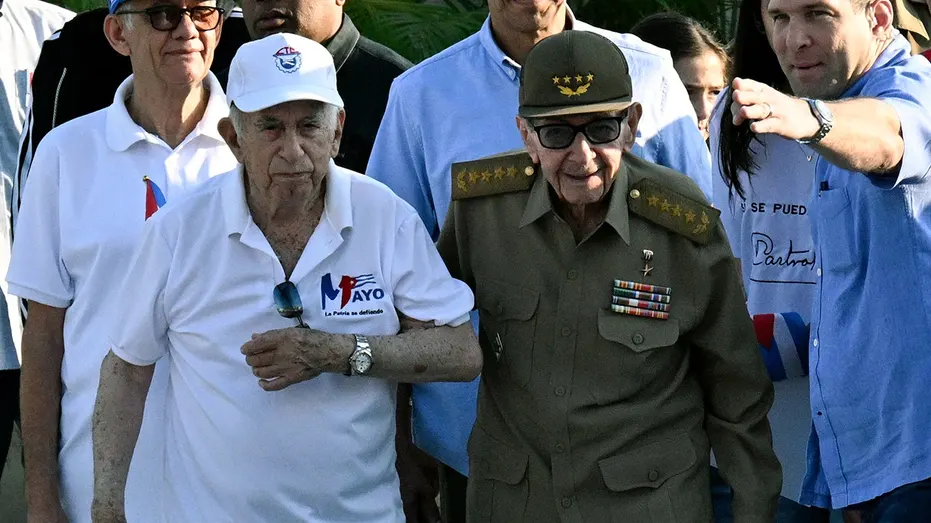
SouthernWorldwide.com – The political landscape in Havana is in a state of uncertainty following the indictment of Raul Castro, exacerbated by ongoing pressure from the Trump administration, according to Cuban-born Republican Representative Carlos Gimenez.
Gimenez, a member of the House Homeland Security Committee, stated that even though Raul Castro officially relinquished his leadership role to Miguel Diaz-Canel in 2021, he still maintains significant control over the instruments of power in Cuba.
The indictment, though long overdue, could offer a measure of justice for the families of American citizens who perished in the 1996 downing of two humanitarian aircraft over the Florida Strait.
Gimenez highlighted that Castro deliberately targeted a group dedicated to searching the waters almost daily for Cuban refugees attempting the perilous 90-mile journey to the United States. This route directly impacts the congressional district Gimenez now represents, which stretches from South Dade to the Florida Keys.
OBAMA’S BASEBALL OUTING WITH CASTRO REIGNITES FURY AFTER TRUMP DOJ DROPS HAMMER ON CUBAN LEADER
“We have him on tape admitting to it,” Gimenez asserted regarding Castro, who was indicted on Cuban Independence Day.
“We cannot stand by while any regime murders American citizens, regardless of their location.”
When questioned about the possibility of a U.S. military intervention in Cuba, similar to the operation in Venezuela that led to the apprehension of an indicted dictator, Gimenez emphasized that each situation is unique, despite ideological and criminal parallels between the regimes.
“I believe the president will allow this situation to develop for a period and continue exerting the pressure we have been applying on the regime,” he commented. He concurred with Secretary of State Marco Rubio, also from Miami, that the Castro/Diaz-Canel regime is faltering due to its own inherent failures.
The current state of suspense, coupled with recent arrests of regime allies in the U.S. and Castro’s charges, is significantly destabilizing the Cuban government, Gimenez observed.
“The island experiences prolonged blackouts, and I suspect President Donald Trump will let this situation unfold. I am confident he is developing plans for all potential scenarios. He now possesses the legal authority to intervene and attempt an arrest, but I do not anticipate he will act immediately.”
Unlike Venezuela or Iran, the United States maintains a strategic presence in Cuba through Guantanamo Bay.
Read more : Platner's 'fat, lazy' attacks on Army soldiers exposed in resurfaced posts
However, Gimenez, who recently visited the base and his homeland for the first time in over six decades since his departure at age six, explained that the geopolitical realities make Guantanamo a useful asset but not a definitive solution.
CUBAN OFFICIAL REVEALS MILITARY ‘PREPARING’ FOR CONFLICT AFTER TRUMP CONSIDERS ‘TAKING’ ISLAND
Guantanamo is situated on the opposite side of Cuba from Havana. Therefore, in the event of any intervention, U.S. assets would need to be positioned closer to the capital.
“Just in case,” he elaborated. “If something were to happen and the people were to rise up – so that Raul Castro cannot sleep soundly at night, never knowing if our helicopters are coming for him.”
He proposed that the most effective strategy currently is to create an environment of continuous psychological pressure on the regime, compelling them to be “looking outward rather than inward, constantly anticipating that Uncle Sam is just offshore, hovering with a massive aircraft carrier.”
Gimenez expressed that the U.S. government appears “genuinely serious this time – this is the first administration to take such decisive action against one of the Castros.”
In previous statements, Gimenez recalled an Orange Bowl event attended by Secretary of State Madeleine Albright shortly after the killings, where the Clinton administration had pledged a response.
Consequently, protesters risking their lives in the streets may perceive that genuine change is imminent, Gimenez suggested, and that unlike in past administrations, the federal government will “support them.”
RUBIO SAYS CUBA NEEDS ‘NEW PEOPLE IN CHARGE’ AS BLACKOUTS, UNREST GRIP ISLAND
“The regime does not engage in wholesale killings of thousands as Iran does, but they do imprison thousands and torture them. Let’s observe how the situation unfolds within the island among the Cuban people themselves.”
The administration also benefits from the vocal support of Marco Rubio, a staunch critic of the Havana regime and the son of Cuban emigrants.
Shortly after the interview, federal authorities in Miami apprehended the head of GAESA, Cuba’s state-controlled military-run conglomerate, which Gimenez identified as the true source of power in Havana. Subsequently, the Department of Homeland Security revoked the green card of Adys Lastres-Morera.
Diaz-Canel serves as a figurehead, according to Gimenez, who pointed out that Castro leads GAESA and therefore holds ultimate authority.
Gimenez humorously recounted a point made by his Miami colleague, Representative Mario Diaz-Balart, who suggested that Cuban “presidents” not bearing the Castro name hold little significance, referencing a past president when asked if they were familiar with anyone not named Castro.
Diaz-Balart also noted that his brother, former Representative Lincoln Diaz-Balart, R-Fla., had urged the Clinton administration to take action in 1996, but no such action was taken.
POST-MADURO, PRESSURE BUILDS ON MEXICO OVER CUBA’S NEW OIL LIFELINE
“Therefore, GAESA is managed by military officers under the control of the Castros and oversees 70% of Cuba’s economy. This demonstrates the existence of a government within a government,” Gimenez stated.
He argued that the estimated $16 billion held by GAESA serves to enrich the regime, while ordinary Cubans face economic devastation and the failure of private businesses.
In a statement delivered in Spanish, Rubio highlighted that GAESA is the reason the island has been “plundered” by its government, refuting any claims of an alleged U.S. oil blockade.
As Gimenez and Rubio were speaking, congressional support for the indictment was already gaining momentum.
“Raul Castro has killed Americans, and I am extremely pleased he has been indicted,” stated Representative Scott, adding that a 16-year-old was recently imprisoned for complaining about his family losing electricity, concurring that an uprising might be on the horizon.
Representative Maria Salazar, R-Fla., who represents the U.S.-Cuban diaspora in Calle Ocho, declared that her community had waited 65 years and through 10 U.S. presidencies to deliver this “message to the Castros.”
“It is time for you to leave.”
Now, with Castro’s indictment and the predictions made by Gimenez, Diaz-Balart, and others, Cuban Independence Day may acquire a profound new significance by the time it is observed again next year.