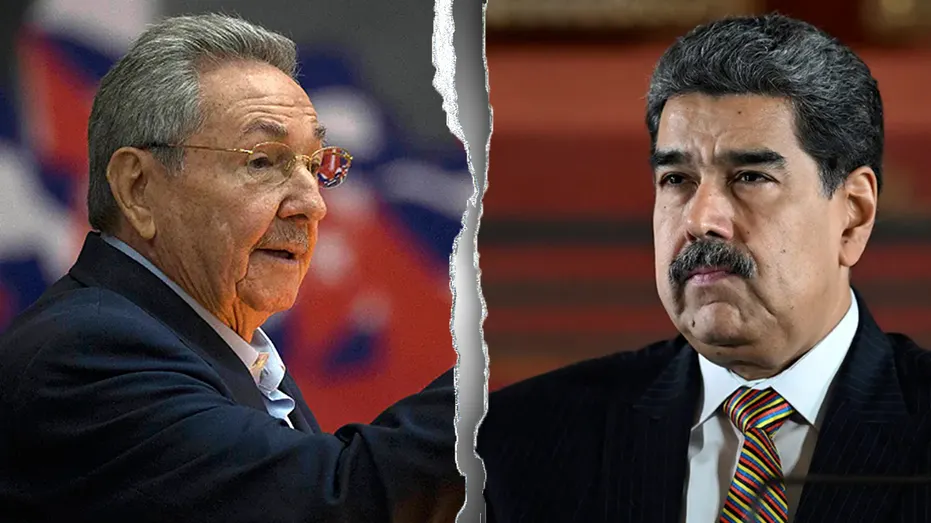
SouthernWorldwide.com – The Trump administration’s decision to indict former Cuban leader Raúl Castro is sparking comparisons to the pressure campaign President Donald Trump previously employed against Venezuelan strongman Nicolás Maduro.
This move comes as the White House intensifies economic pressure, direct appeals to the Cuban populace, and increases military visibility in the Caribbean.
The indictment, linked to Cuba’s 1996 downing of two civilian aircraft that resulted in the deaths of three U.S. citizens, has raised questions about whether the administration is testing a Venezuela-style pressure strategy against Havana’s communist regime.
The USS Nimitz Carrier Strike Group has been operating in the Caribbean under U.S. Southern Command, providing a visible military backdrop to the administration’s increasingly confrontational stance toward Havana. Publicly announced assets include fighter aircraft, electronic warfare aircraft, and guided-missile destroyers.
This broader posture has drawn parallels to the administration’s earlier campaign against Maduro, which similarly began with criminal charges against a long-standing anti-American strongman before expanding into a wider regime-pressure effort. This included sanctions, diplomatic isolation, and heightened U.S. military activity in the Caribbean.
Federal prosecutors charged Castro and several former Cuban officials in connection with the 1996 shootdown of two Brothers to the Rescue civilian aircraft that killed four men, including three U.S. citizens. Castro held the position of Cuba’s defense minister at the time of the attack.
U.S. prosecutors allege that Castro helped authorize the operation after the civilian planes repeatedly entered Cuban airspace. These planes were conducting missions associated with the Miami-based Brothers to the Rescue organization, which was dedicated to searching for Cuban migrants at sea and opposed the communist government in Havana.
Cuban fighter jets ultimately shot down two unarmed aircraft over international waters in 1996, according to the indictment. This incident triggered international condemnation and one of the most severe crises in U.S.-Cuba relations since the Cold War.
During Trump’s earlier pressure campaign against Maduro, the U.S. indicted the Venezuelan leader on narcoterrorism charges. The U.S. also tightened sanctions on Venezuela’s oil sector, supported opposition efforts to remove Maduro, and increased military operations in the Caribbean.
The campaign ultimately culminated in a U.S.-backed operation that removed Maduro from effective power. This also reopened channels of American influence within Venezuela through energy negotiations and cooperation involving senior figures, including Vice President Delcy Rodríguez.
However, some analysts caution that the U.S. may not be preparing the same type of operation against Castro or Cuba itself. Raúl Castro is 94 years old, and it might not be considered worth the trouble.
Despite this, the indictment sends a clear message of unwavering U.S. support for the fall of the Castro regime.
Secretary of State Marco Rubio reinforced this message with a direct appeal to the Cuban people. He accused the communist government of blaming the island’s collapse on the U.S. “blockade” while enriching military-linked elites who control the Cuban economy.
Rubio also highlighted the success of Cubans living abroad, arguing that the Cuban people, not the regime, are capable of prosperity. This statement was intended to undermine Havana’s domestic propaganda and convince Cubans that the regime, rather than the United States, is primarily responsible for the island’s economic collapse.
Read more : NASCAR Champion Kyle Busch's Cause of Death Revealed by Family
Trump further fueled speculation when asked if tensions with Cuba would escalate following the Castro indictment. He stated that there would be no escalation, implying it would not be necessary.
Some analysts interpreted Trump’s comments, combined with Rubio’s direct appeals to ordinary Cubans, as a sign that the administration believes internal pressure against the regime could eventually achieve what direct military escalation could not. This approach is seen as sowing the seeds of counter-revolutionary sentiment.
However, any significant destabilization of Cuba could trigger consequences extending far beyond the island itself. This includes the potential for a mass migration crisis just 90 miles from Florida.
Cuba is already experiencing rolling blackouts, fuel shortages, and a worsening economic crisis as the administration increases pressure on the island’s energy supply lines.
Despite the increasingly confrontational rhetoric, Washington has maintained limited channels of communication with Havana. CIA Director John Ratcliffe traveled to Cuba on May 14 for talks with senior Cuban security officials.
U.S. officials described the meeting as a warning that Cuba could no longer serve as a “safe haven for adversaries.” The meeting also offered the prospect of deeper economic and security engagement if Havana makes “fundamental changes.”
The visit occurred as the Trump administration pushed a $100 million humanitarian aid proposal to address Cuba’s worsening blackout and fuel crisis. Cuban officials indicated openness to accepting assistance distributed through independent humanitarian and religious organizations, rather than directly through the government.
Analysts suggest that Cuba’s armed forces are significantly weaker than during the Cold War, when the island possessed one of Latin America’s largest militaries with Soviet backing. Today, experts describe the Cuban military as severely degraded by decades of economic collapse, fuel shortages, and aging equipment.
Cuba once had a First World military in a Third World country, but it is now a shadow of its former self. This is attributed to economic challenges and aging infrastructure.
Still, analysts caution that Cuba’s weakness does not automatically make the island easy to pressure or destabilize. Unlike Venezuela, where the U.S. has sometimes maintained limited economic engagement despite sanctions, Cuba’s military-linked conglomerate GAESA controls substantial portions of the island’s economy.
This conglomerate’s control extends to key sectors such as tourism, retail, and infrastructure. The deep integration between the regime and the broader Cuban state could complicate any attempt to isolate Havana’s leadership without further destabilizing the country.
The administration has also increasingly framed Cuba as a broader national security concern, extending beyond the island’s deteriorating conventional military capabilities. Rubio recently accused Havana of hosting Chinese and Russian intelligence infrastructure.
For the time being, administration officials have refrained from outlining any specific military plans toward Cuba. However, the combination of criminal charges, economic pressure, information campaigns, and visible U.S. military assets in the region has convinced many Cuba watchers that the White House is exploring whether the Maduro pressure model can be adapted for use just 90 miles from American shores.