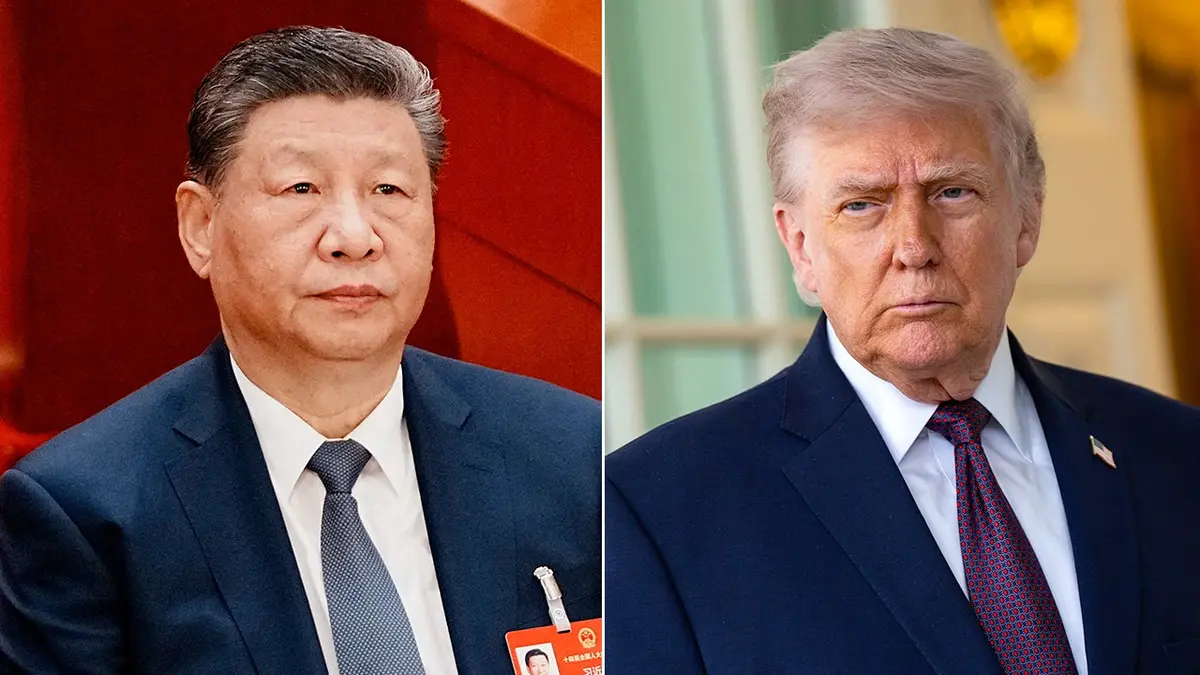
SouthernWorldwide.com – Americans ought to be concerned about the forthcoming summit between President Trump and Chinese President Xi Jinping. Recent discussions from the White House suggest that President Trump might permit Chinese manufacturers to produce goods within the United States. This presents a significant peril to both our economic and national security, and it is an issue that many in Congress, through a rare bipartisan consensus, are prepared to oppose with all their strength. When agreement is reached across the political spectrum on any matter, it typically signals that action is warranted.
This sentiment is reflected in the new bipartisan legislation I am championing, alongside Congressman John Moolenaar. This bill aims to prohibit Chinese automotive companies from operating in the U.S., thereby preventing disruptions to our manufacturing economy, job losses for American auto workers, and risks to our national security.
For many years, the United States embraced globalization with the expectation that increased economic integration would yield mutual benefits and create American jobs. The prevailing narrative was driven by billionaires, economists, and corporate leaders advocating for free trade. However, the reality has deviated significantly from these predictions. America has witnessed the decline and hollowing out of entire industries.
Steel mills have shut down, semiconductor production has shifted overseas, and suppliers have been established in Asia, Mexico, and other parts of the world. Consequently, manufacturing communities, from Michigan to Pennsylvania, have lost jobs that once sustained middle-class families.
China operates under a different set of rules compared to America’s free-market principles. Their ascent to global dominance is attributed to the absence of a level playing field for their competitors, placing the global marketplace at a considerable disadvantage. Chinese enterprises receive substantial financial backing from their government, the Chinese Communist Party, along with preferential financing, intellectual property advantages, currency manipulation, and strategic guidance from Beijing. Permitting these same companies to manufacture within the United States would grant a geopolitical adversary leverage over America’s economy from within.
This concern is particularly acute within the automotive sector. Modern vehicles are no longer mere modes of transportation; they have evolved into sophisticated, mobile computers. Autonomous and connected vehicles continuously gather vast amounts of data, including location information, driving habits, visual data from cameras, mapping details, and personal information linked to drivers and passengers.
These vehicles are equipped with advanced sensors and software capable of tracking Americans’ residences, workplaces, places of worship, healthcare facilities, and educational institutions. While this data is crucial for enhancing safety and fostering innovation, it is imperative to safeguard this information from potential adversaries.
I, along with over 70 Democrats in the House, have alerted the administration to the extensive data collection and transmission activities undertaken by Chinese-connected vehicles. This includes GPS locations, driving behaviors, and in-car conversations. We have warned that if this data is routed to servers controlled by Chinese entities, it will ultimately be accessible to the Chinese government under its national security laws.
This potential threat has raised alarms not only among my Democratic colleagues who co-signed my letter to the President but also among the more than 50 Republican colleagues in the House who have sent a similar communication. Our collective warning is that any measure to reduce barriers for Chinese automobiles or facilitate their entry into the U.S. market would directly jeopardize American manufacturing, workers, and national security.
Lawmakers from both parties are also urging President Trump to uphold existing bans and close any loopholes that might allow Chinese vehicles assembled in Mexico or Canada to enter the United States through USMCA trade provisions. Industry leaders themselves are expressing similar concerns. Ford CEO Jim Farley recently cautioned that admitting Chinese automakers into the U.S. market would be “devastating” for domestic manufacturing. He also highlighted apprehensions regarding the substantial volume of data collected by cameras and connected vehicle technologies.
Ultimately, this issue revolves around national resilience and sovereignty. A nation incapable of producing its essential goods or protecting the data generated by its citizens cannot exercise complete control over its own future. The United States should welcome fair competition and international investment from partners who uphold democratic values and market principles.
However, when it comes to strategic industries vital for national security, economic stability, and personal privacy, America must ensure that the next generation of manufacturing and mobility is developed by companies committed to America’s interests—not dictated by an authoritarian rival. The President must honor his commitment to the American people and prevent China from manufacturing within the U.S.
Baca juga di sini: Seth Lugo's Strong Numbers vs. White Sox Boost Royals' Chances
This stance is not driven by animosity towards the Chinese people or opposition to trade. Rather, it is about protecting American workers, securing supply chains, defending privacy, and preserving America’s long-term economic independence. Sometimes, the most effective negotiation strategy involves knowing when to walk away, as a detrimental agreement with China that undermines American workers, manufacturers, farmers, and communities would inflict far greater costs on the United States than any perceived gains.