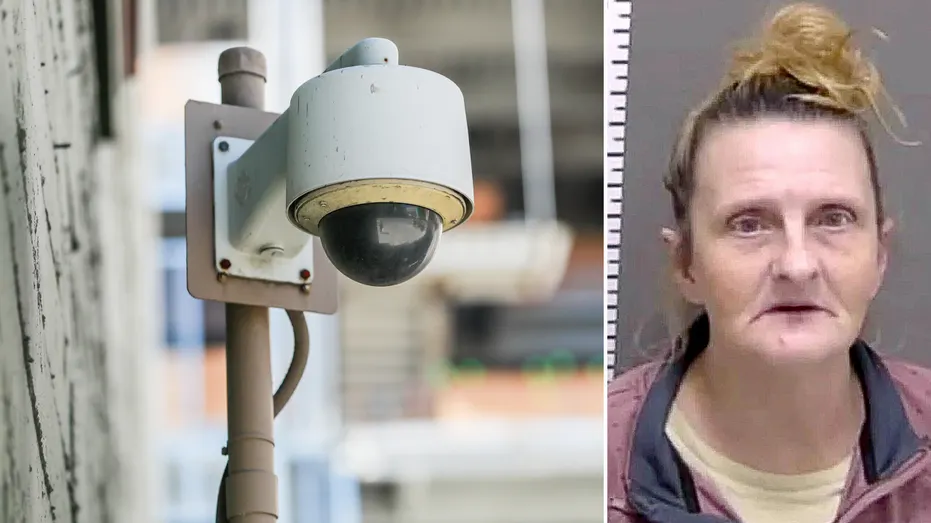
SouthernWorldwide.com – A grandmother from Tennessee, Angela Lipps, found herself wrongfully arrested and imprisoned for over five months due to a facial recognition match that her attorney claims was a grave error. Lipps, a 50-year-old grandmother of five from Elizabethton, Tennessee, had no prior connection to North Dakota, nor had she ever traveled by plane.
Despite these facts, U.S. Marshals apprehended Lipps at her home in July 2025. The arrest was in connection with a bank fraud case that occurred over 1,000 miles away in Fargo, North Dakota. She was not released until Christmas Eve, marking a harrowing period of more than five months in custody before the charges were ultimately dismissed.
The core of the investigation relied on facial recognition software. Investigators used this technology to compare surveillance images from the bank fraud incident with photographs of Lipps obtained from her driver’s license and social media profiles. According to her defense attorney, this technological lead set in motion a case that should never have progressed this far.
The legal proceedings began following reports of bank fraud in Fargo and the adjacent city of West Fargo. Authorities were searching for a suspect accused of using a fraudulent military ID to withdraw funds from bank accounts. Detectives reviewed surveillance footage and employed facial recognition technology to identify a potential suspect.
The former Fargo Police Chief, Dave Zibolski, characterized the tool as “an AI function through the North Dakota State Intelligence Center.” Jay Greenwood, the defense attorney appointed to represent Lipps, shared his insights on the “CyberGuy Report” podcast. He emphasized that while facial recognition can be a valuable tool for law enforcement, it is crucial to independently verify its findings.
Greenwood highlighted the poor quality of the surveillance images used in the case. He described them as “terribly placed security cameras from above” that provided “a couple of still images, poor still images.” These low-quality images were then sent to a company for facial recognition analysis.
The facial recognition search identified Lipps as a potential suspect. Greenwood stated that detectives then examined her social media pages and proceeded with the case without conducting any further independent investigation prior to her arrest. Consequently, an arrest warrant was issued, and Lipps was apprehended in Carter County, Tennessee, as a fugitive from justice.
Lipps recounted that U.S. Marshals arrested her at gunpoint while she was babysitting young children. She was initially taken to a local jail in Elizabethton, Tennessee, pending her extradition to North Dakota. Greenwood noted that Lipps consistently informed authorities that she had never been to North Dakota and had never flown on an airplane, asserting that she rarely ventured more than 100 to 200 miles from her home in Elizabethton.
Despite her claims, Lipps remained incarcerated for several months. Fargo Police Chief Travis Stefonowicz informed CyberGuy that the department’s review indicated Lipps was arrested in Tennessee on July 14, 2025, and held on a probation violation. Tennessee authorities notified the Cass County Sheriff’s Office on October 20, 2025, that Lipps had a waiver of extradition to North Dakota and was available for transport.
Stefonowicz could not ascertain from the available information why Lipps remained in Tennessee custody for an extended period before being transported to North Dakota. He stated that it was unclear whether her prolonged detention in Tennessee was due to serving time for a probation violation or if she contested extradition.
Greenwood confirmed that Lipps did contest extradition and remained in Tennessee until she was transported to North Dakota around Halloween. He described her first plane ride as one taken in custody, en route to face charges in a state she claimed never to have visited.
Stefonowicz assumed the role of interim chief on March 30, following the retirement of former Chief Dave Zibolski on March 27. Fargo Police stated that Zibolski’s retirement was family-related and not connected to Lipps’ case. Stefonowicz was officially selected as Fargo’s next police chief on May 11.
Read more : Here are a few paraphrased options, keeping the meaning, tone, and length similar:
In a statement to CyberGuy, Stefonowicz emphasized that the arrest warrant signified that prosecutors and a judge had determined probable cause existed for the charges. He assured that the Fargo Police Department takes the civil rights and due process of all individuals seriously.
Stefonowicz added that the charges were dismissed without prejudice, meaning they could be refiled if further investigation supported them. He described the case as an ongoing investigation, with efforts still underway to verify information and definitively determine involvement in the bank fraud scheme. Fargo Police also clarified that the department does not own facial recognition technology or directly contract with vendors that provide it.
“However, there are state and national law enforcement intelligence centers that incorporate facial recognition technology and are used by agencies across the country, including in our state,” Stefonowicz said. “On occasion, FPD investigators may submit inquiries to those intelligence centers, in order to help generate leads through facial recognition for potential suspects or persons of interest in local investigations.”
This clarification is significant. Lipps’ defense team maintains she was wrongly accused and later exonerated by straightforward records. Fargo Police, however, states the investigation is ongoing, and they are still working to identify those involved. This distinction is crucial: while Fargo Police may not conduct facial recognition in-house, their investigators can leverage external intelligence centers for leads. This places the spotlight on the safeguards in place before such leads translate into an arrest.
Once Greenwood became involved, he began seeking evidence of Lipps’ whereabouts during the alleged bank fraud. The crucial evidence emerged from everyday records. Her family provided bank statements demonstrating activity in Tennessee, near her home, during the same period Fargo authorities claimed she was in North Dakota. These records showed her depositing Social Security checks and making local purchases, such as Ubers, cigarettes, and gas.
Greenwood forwarded these records to the state’s attorney. Following a police interview, the case was dismissed, and Lipps was released on Christmas Eve. Fargo Police provided a more detailed timeline to CyberGuy. Stefonowicz reported that Lipps made her first court appearance in North Dakota on October 31, 2025, but the detective assigned to the case did not learn she was in custody in North Dakota until December 5.
“Because she had legal representation, attorney consent was required before our detectives could interview her,” Stefonowicz explained. “An interview was first granted by Ms. Lipps’s defense attorney on December 19, 2025.” Following this interview, Fargo Police determined that further investigation was necessary.
“On December 23, 2025, the FPD detective, the Cass County State’s Attorney and the presiding judge mutually agreed to dismiss the charges without prejudice to allow for additional investigation,” Stefonowicz stated. “Ms. Lipps was subsequently released from the Cass County Jail on December 24, 2025.” By this time, Lipps asserts she had lost her home, car, reputation, and even her dog due to the ordeal.
Fargo Police conducted a comprehensive internal review of the case. Stefonowicz mentioned that former Chief Dave Zibolski addressed the investigation at a news conference on March 24, acknowledging areas where the initial investigation could have been more thorough and emphasizing the need for further work to fully understand the scope of the scheme.
Fargo Police subsequently adopted a formal policy for the use of facial recognition technology. Stefonowicz explained that the department had not previously had a standalone policy because they do not conduct facial recognition analysis, provide such services to other agencies, or maintain the technology in-house. “We have since adopted a formal policy for facial recognition technology (FRT) use for our agency,” Stefonowicz confirmed.
He further stated that this case prompted Fargo Police leadership to re-evaluate their approach. “This case has prompted FPD leadership to re-evaluate that approach related to having a specific FRT policy,” Stefonowicz said. “FPD Policy 610, which formally establishes parameters and expectations for the use of FRT, was published as of Wednesday, March 25.” This policy change is significant as it formalizes the process for investigators using facial recognition leads, even when the department does not operate the technology itself.
Facial recognition technology can be instrumental in generating leads. However, critics caution that it is susceptible to producing false matches, particularly when image quality is poor or when comparing faces against vast databases. Some systems draw from publicly available online photos, including social media images, meaning individuals may appear in search databases without their knowledge or consent.
Greenwood stressed that law enforcement should treat facial recognition as one investigative tool among many, not as a substitute for fundamental detective work. “I’ve told numerous people, like, it’s a tool,” Greenwood remarked. “It should be one of the tools that law enforcement can use.”
He elaborated on the necessary next steps: “They’ve got to learn to use the other tools to verify what they’re being told by this machine.” This highlights the critical issue: a facial recognition hit should prompt further inquiry, not conclude the investigation. Angela Lipps is not the first individual to claim facial recognition led to her wrongful arrest; numerous cases involve mistaken matches by the software.
Civil liberties organizations have also raised concerns that facial recognition systems may exhibit disparities in accuracy across different demographic groups, potentially performing worse on individuals with darker skin tones. This raises a critical question for all police departments utilizing this technology: what safeguards are in place before an arrest is made? A misidentification on a screen can escalate to a search warrant and incarceration. For Lipps, this risk materialized with devastating consequences.
While most individuals will not experience such a scenario, the Lipps case underscores how one’s digital footprint can have unforeseen implications. If law enforcement contacts you regarding an alleged offense you did not commit, it is advisable to remain calm and request an attorney. Even innocent individuals can inadvertently say something that is misinterpreted.
Essential documentation such as bank transactions, receipts, phone location records, work schedules, and medical appointments can serve as crucial evidence to establish your whereabouts on a specific date. While meticulously tracking every moment is unnecessary, readily available basic digital records can be invaluable in the event of a significant misunderstanding.
It is also prudent to review the photos you post publicly and those tagged by friends and family. Your image can appear online even if you did not personally upload the photograph. Data broker sites collect and disseminate personal information. A data removal service can assist in removing your details from these databases, though manual removal is also an option, albeit time-consuming and potentially temporary.
Your local government may already employ facial recognition tools. It is important to inquire about the regulations governing police use of AI matches in criminal cases. At a minimum, law enforcement agencies should require independent evidence before proceeding with an arrest. While AI can expedite investigations, speed can lead to risks when fundamental investigative steps are bypassed.
Police still require records, timelines, and common sense. Facial recognition technology is not infallible; it can misinterpret poor-quality images and erroneously identify individuals. When such errors occur, the consequences extend far beyond the digital realm, directly impacting innocent lives. The Lipps case should prompt every police department to exercise caution.
Facial recognition may aid in identifying leads, but it should never be the sole basis for disrupting someone’s life. Angela Lipps contends she lost months of her life behind bars for a crime she did not commit in a state she had never visited. Her attorney asserts that basic records later proved her presence in Tennessee, evidence that should have been considered before her prolonged incarceration.
Greenwood summarized the case as a “ridiculous case never should have happened.” While technology can assist law enforcement in solving crimes, when a computer match supplants thorough detective work, innocent individuals can bear the brunt of the consequences. For the complete discussion with Angela Lipps’ defense attorney and further details on this case, listen to the “CyberGuy Report” podcast.
If a facial recognition match can lead to the imprisonment of a grandmother, the question arises: what safeguards should all police departments be mandated to implement before an individual forfeits their freedom? We invite your thoughts on this matter by writing to us.