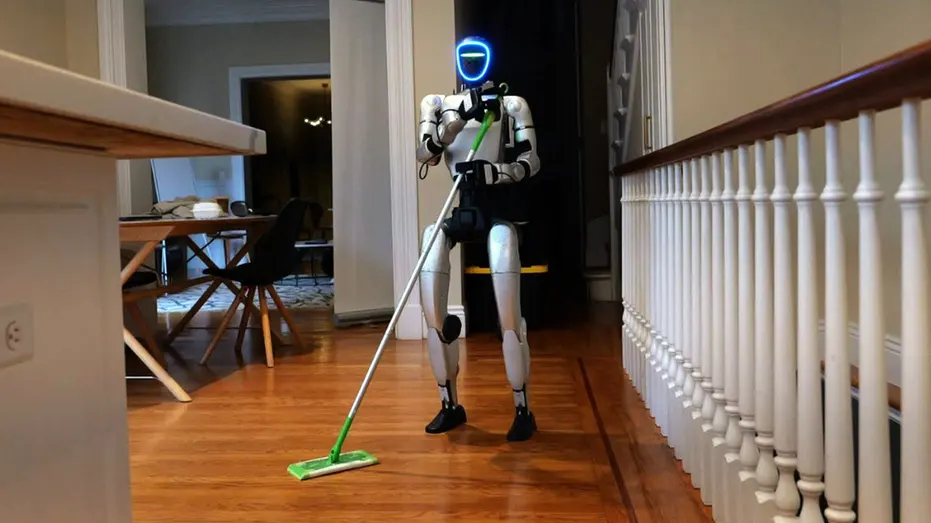
SouthernWorldwide.com – A groundbreaking event has occurred in the United States, marking a significant step forward in home automation and robotics. Gatsby, a robotics startup based in San Francisco, has successfully completed the first-ever consumer home cleaning performed entirely by a humanoid robot in the U.S.
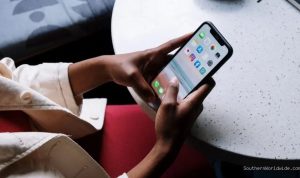
The company, operating under West Egg Labs, announced that a randomly selected customer from their San Francisco waitlist utilized their iOS app to book the service. This innovative approach allows users to book a robot for cleaning needs on demand, much like ordering a ride or food delivery, rather than purchasing an expensive robot for personal use.
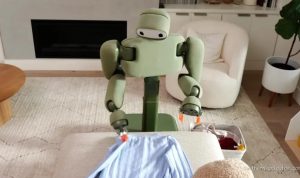
Gatsby positions itself as an on-demand cleaning service that replaces human cleaners with full-size humanoid robots. Users simply access the iOS app, select a convenient time, and a robot arrives to clean their apartment. This service goes beyond basic robot vacuums, with Gatsby’s robots capable of handling a range of chores.
These humanoid robots are designed to navigate apartments and tackle tasks such as washing dishes, cleaning surfaces, tidying floors, making beds, and folding laundry. This comprehensive approach aims to offer a complete home cleaning solution.
The pricing model is also a key feature of Gatsby’s offering. The company charges a flat rate of $150 per cleaning, irrespective of the apartment’s size. This means a studio apartment and a penthouse are priced the same, with no additional tips, hidden fees, or surcharges. Gatsby contrasts this with typical San Francisco cleaning services, which they state often range from $150 to $300.
The company reports that the robot autonomously cleaned the customer’s entire apartment without any human cleaner physically present in the home. A typical cleaning session is estimated to take approximately three hours. In a recent instance, a cleaning session commenced at 8:42 a.m. and concluded at 11:47 a.m., executed by a single robot with no human on-site.
While Gatsby emphasizes the absence of a physical human presence during the cleaning, it’s important to note that human involvement may still occur. For more complex tasks, Gatsby utilizes remote human teleoperation, while routine work is handled autonomously. This means that although no person is physically in the apartment, remote human assistance could be utilized.
This detail, while not diminishing the technological milestone, prompts a deeper consideration of privacy, trust, and the true meaning of “autonomous” within a domestic setting.
House cleaning is a universally relatable chore, with many people experiencing strong feelings about it, whether they dislike it, outsource it, or fit it in when time allows.
Gatsby’s founder and CEO, Aron Frishberg, views housework not merely as an annoying task but as a significant time constraint that disproportionately affects those with already limited time.
“Housework is the largest unpaid job in human history, and it falls hardest on the people with the least time to give,” Frishberg stated. “Right now, somewhere, there’s a parent scrubbing floors who would rather be with their kid. A worker mopping after a sixteen-hour shift. We’ve mapped every neuron and synapse in a fruit fly’s brain, yet we still clean our homes the same way our ancestors did hundreds of years ago. We didn’t build this to clean apartments, we built it to give that time back to humanity.”
Many companies in the humanoid robot sector focus on manufacturing and selling the robots themselves. Gatsby, however, is pursuing a different strategy by aiming to build the consumer distribution layer for humanoid robotics.
This means Gatsby intends to be the app and service layer that connects customers with the most suitable humanoid robot for the job. This approach could prove advantageous in the rapidly evolving robotics market, where newer and more affordable robots are frequently introduced.
Gatsby aims for the flexibility to integrate superior hardware while maintaining the same app, booking process, and service model. The company describes itself as robot-agnostic, meaning it is not solely reliant on one robot manufacturer and intends to collaborate with multiple robot makers as the technology advances.
Home cleaning presents a formidable challenge for robots due to the unpredictable and cluttered nature of apartments, which often contain various objects, cords, pets, tight spaces, and laundry that require careful handling.
Read more : English Police Cuffed Teen Stabbing Victim After Attacker Claimed Racial Attack
Gatsby claims its robots can perform tasks that extend far beyond simple vacuuming, including washing dishes, cleaning surfaces, tidying floors, making beds, and folding laundry. While this is impressive, it also raises the bar for reliability. A robot that can clean one apartment is a significant achievement, but a robot capable of consistently cleaning numerous different homes without failures represents a much greater challenge.
Granting any cleaner access to one’s home necessitates a degree of trust. With robots, this trust becomes more intricate. Gatsby markets its service as a way to avoid having a stranger physically present in the home. However, the use of remote assistance introduces its own privacy concerns. Customers should be aware of what remote operators can see, how home data is managed, and whether any video, audio, or mapping information is stored.
This does not imply that Gatsby is engaging in any wrongdoing. It simply highlights the importance for consumers to ask direct questions before allowing any connected robot into a private space. Before booking any robotic home service, it is advisable to review the privacy policy, understand the data collected by the app, and consider which areas of the home one is comfortable exposing to a connected device.
This is likely a primary concern for many individuals. The idea of a humanoid robot cleaning an apartment may sound convenient until one envisions it potentially damaging furniture or household items.
Gatsby assures customers that they are covered if the robot causes any damage during a cleaning, with the company committing to replace any items broken by the robot. While this is a reassuring promise, customers should still carefully review the terms and conditions before booking.
The introduction of robots into homes may require a similar trust-building process that ride-sharing and food delivery services underwent years ago. Consumers seek convenience, but they also expect accountability when issues arise.
If Gatsby can reliably execute this service, the implications could extend beyond just clean homes. A $150 robot cleaning service could appeal to busy parents, older adults, individuals with mobility challenges, and anyone seeking assistance without the need to coordinate with a human cleaner. It could also exert pressure on traditional cleaning services, particularly in expensive urban areas where domestic help is already costly.
Concurrently, this development raises questions about labor. Human cleaners operate in a challenging market, and a more affordable and convenient robot cleaning service could impact them directly. The immediate future might see robots handling basic tasks while humans continue with deep cleaning, delicate work, and tasks requiring human judgment. However, Gatsby’s initial consumer cleaning demonstrates that home robotics has transitioned from a conceptual idea to a tangible service in people’s homes.
Currently, Gatsby’s service is exclusively available in San Francisco, with a waitlist for other cities. This limited rollout allows Gatsby to test and refine the service in real-world apartment settings before wider expansion. It also provides customers, competitors, and privacy experts with an opportunity to observe the model’s performance outside of a controlled launch environment.
For the time being, this represents an early glimpse into the potential future of home services. Residents of San Francisco may already have Gatsby on their radar. For those elsewhere, the key takeaway is that consumer robots are beginning to emerge as services rather than expensive devices that individuals must own.
This shift could make robotic assistance more accessible and facilitate easier testing of new technologies within actual homes. Therefore, it is important to view this development as promising but still in its early stages. Practical questions should be addressed before forming strong opinions. How does the robot enter and exit? What happens if it breaks something? Can a remote operator view the interior of the home? Is video data recorded by the company? Who handles issues if the cleaning is unsatisfactory? The answers to these questions will be as significant as the robot technology itself.
Your phone contains your emails, passwords, photos, banking apps, and personal data. In this free, live online class, Kurt the CyberGuy will guide you step-by-step through simple phone security fixes you can implement in real time. You will learn how to enhance your privacy settings, identify the latest phone scams, utilize trusted security tools, and receive a straightforward checklist to maintain your protection. Register here: CyberGuyLive.com
Gatsby’s inaugural humanoid robot cleaning service feels like one of those technological moments that initially seems amusing but may eventually become commonplace. The concept of a robot arriving to clean an apartment still feels unusual. However, so did the idea of getting into a stranger’s car through an app not too long ago. The crucial question is whether Gatsby can transform this innovative first cleaning into a service that people genuinely trust. Price is a factor. Convenience is a factor. However, homes are personal spaces, and consumers will require more than just an advanced robot and a polished app. If Gatsby can consistently deliver clean rooms, transparent privacy policies, and dependable service, it has the potential to redefine how people perceive housework.
Would you permit a humanoid robot into your home for cleaning purposes? Please share your thoughts by writing to us at CyberGuy.com